One investment, two sources of money
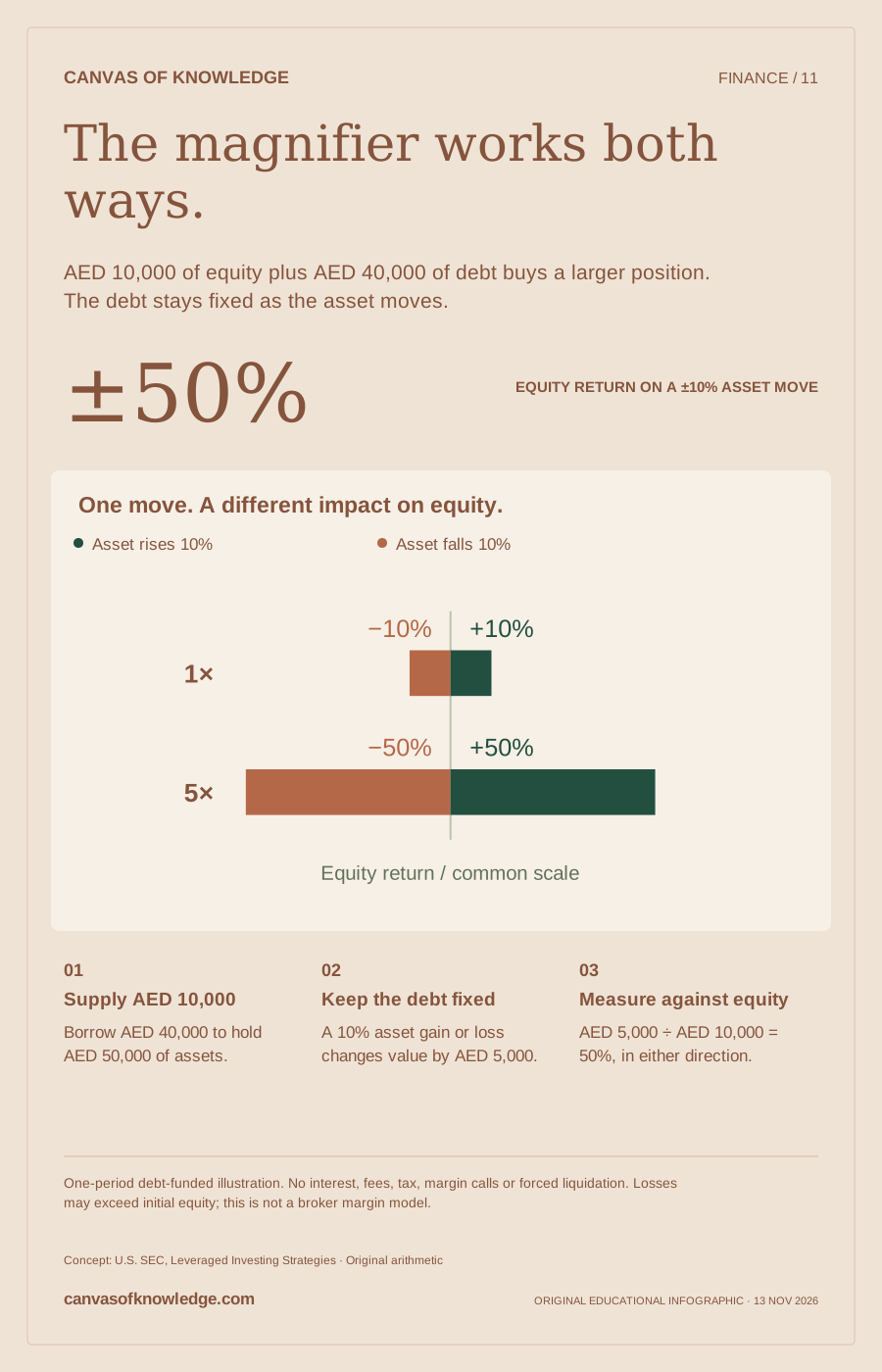
Put in AED 10,000 of your own money and borrow AED 40,000. You now hold an asset worth AED 50,000: five times your starting equity. In this simplified one-period example, the debt stays at AED 40,000.
The gain travels through a smaller base
If the asset rises 10%, it becomes worth AED 55,000. Subtract the debt and equity is AED 15,000. The AED 5,000 gain is 50% of the AED 10,000 you supplied. Without borrowing, a 10% asset rise produces a 10% gain on your own money.
The same mechanism magnifies a loss
If the asset falls 10%, its value becomes AED 45,000. After the unchanged debt, equity is AED 5,000: a 50% loss. A 20% fall wipes out starting equity in this model. A larger fall creates a shortfall beyond the initial equity.
What the model leaves out
Equity return = initial leverage × asset return, before borrowing costs and other charges. Actual financing may involve interest, collateral requirements or forced sales before the model’s endpoint. This is an explanation of exposure, not a trading recommendation or a broker’s margin calculator.
Sources & further reading
Sources checked 13 November 2026. These organisations provide reference material and do not endorse this website.