Growth can build on growth
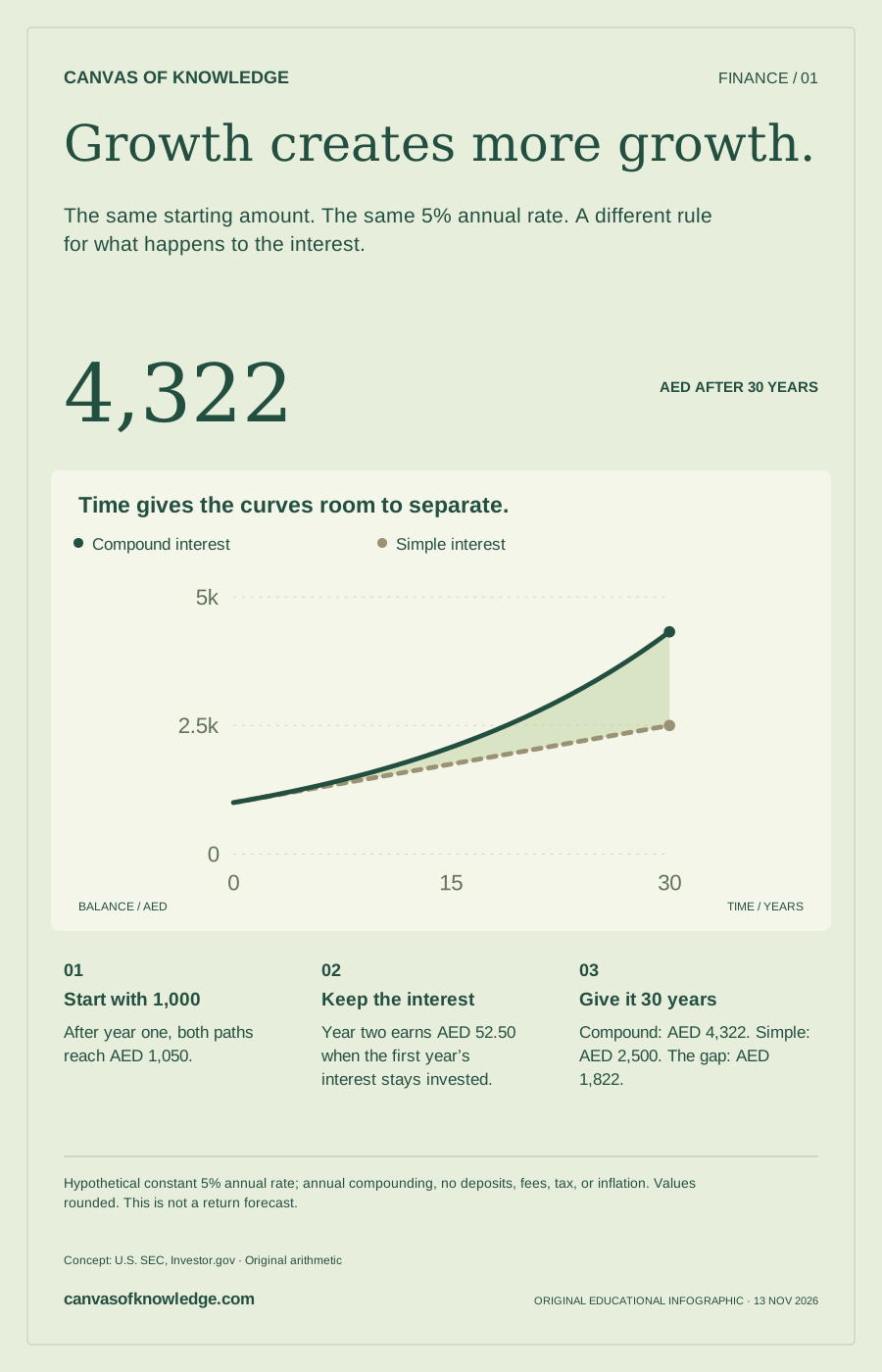
When interest stays in an account, it becomes part of the balance that earns the next round of interest. That is compound interest. Reinvested investment returns can compound too, although market returns are not fixed or guaranteed.
A simple example
Start with 1,000 units of currency at a hypothetical 5% annual rate, compounded once a year. After one year, the balance is 1,050. The next year adds 52.50, bringing the total to 1,102.50. With no deposits, ten years produces approximately 1,628.89. The infographic extends that same annual-compounding example to 30 years: approximately 4,321.94, compared with 2,500 under simple interest.
What changes the outcome
The starting balance, contribution amount, time, rate, and compounding frequency all matter. Regular contributions add new capital. A longer horizon gives earlier contributions more time to compound.
Try the model
The learning lab below uses a nominal annual rate divided into monthly periods, with deposits at each month’s end. It excludes tax, fees, inflation, and market volatility. Change the inputs to understand the mathematics; the curve is an illustration, not an investment forecast.
Sources & further reading
Sources checked 13 November 2026. These organisations provide reference material and do not endorse this website.