A rate, not a price tag
Inflation measures how prices change over a period. Consumer inflation typically tracks a weighted basket of goods and services. The weights matter: a large change in one small item does not necessarily dominate the entire index.
Put numbers to it
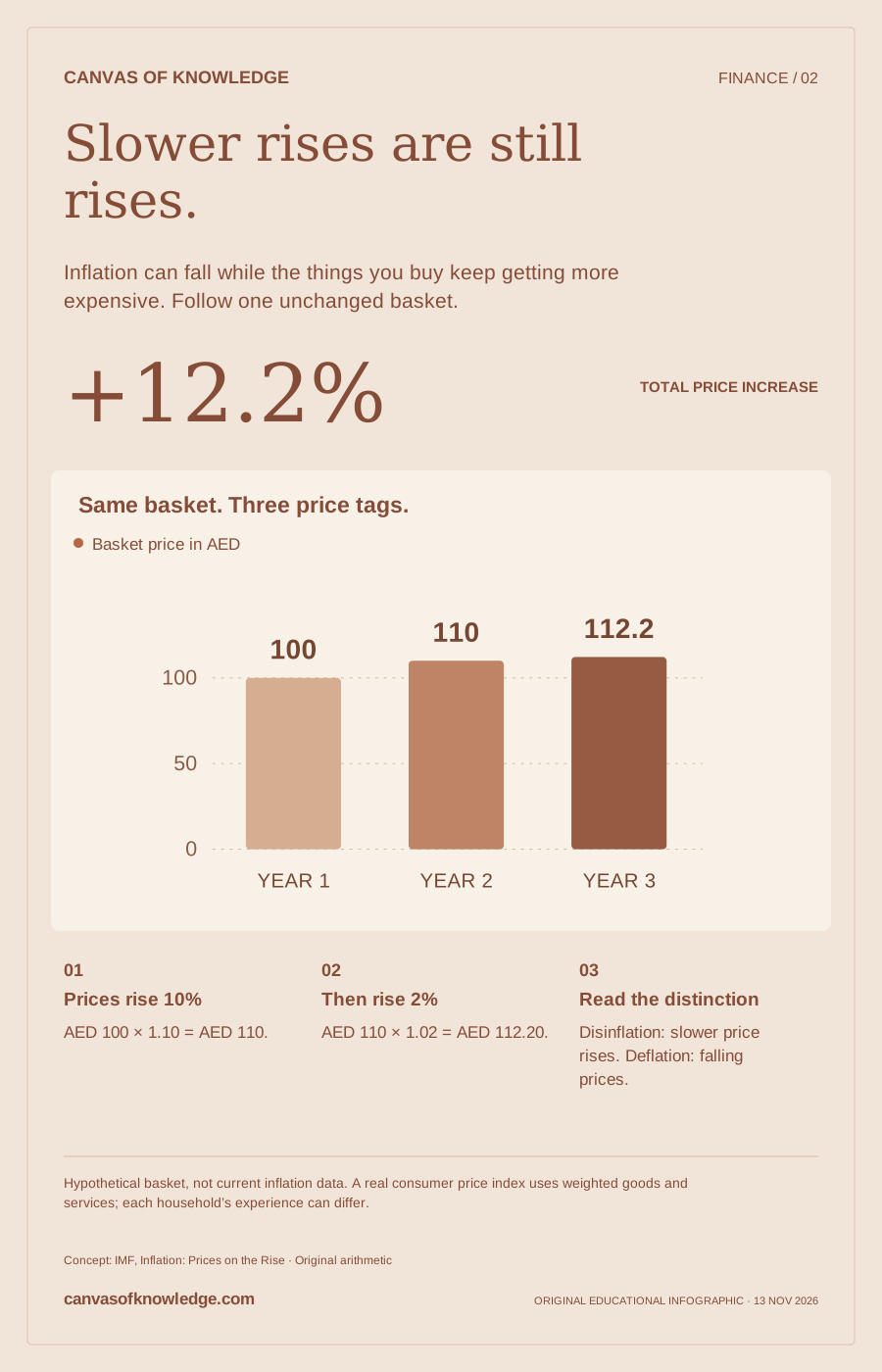
Imagine a basket that costs 100 in year one and 110 in year two. That is 10% inflation. If it then costs 112.20, inflation in the third year is 2%. Prices are still rising, but their rate of increase has slowed.
The personal experience differs
Households buy different things. Someone spending a larger share on rent or food may experience a different change in living costs from the headline index. An average is useful, but it does not describe every household exactly.
Purchasing power is the connection
If your income does not rise as fast as your costs, it buys less. Supply disruptions, demand, policy, and expectations can all influence inflation. The basket here is a numerical illustration, not a report of current prices.
Sources & further reading
Sources checked 13 November 2026. These organisations provide reference material and do not endorse this website.