Read the whole holding period
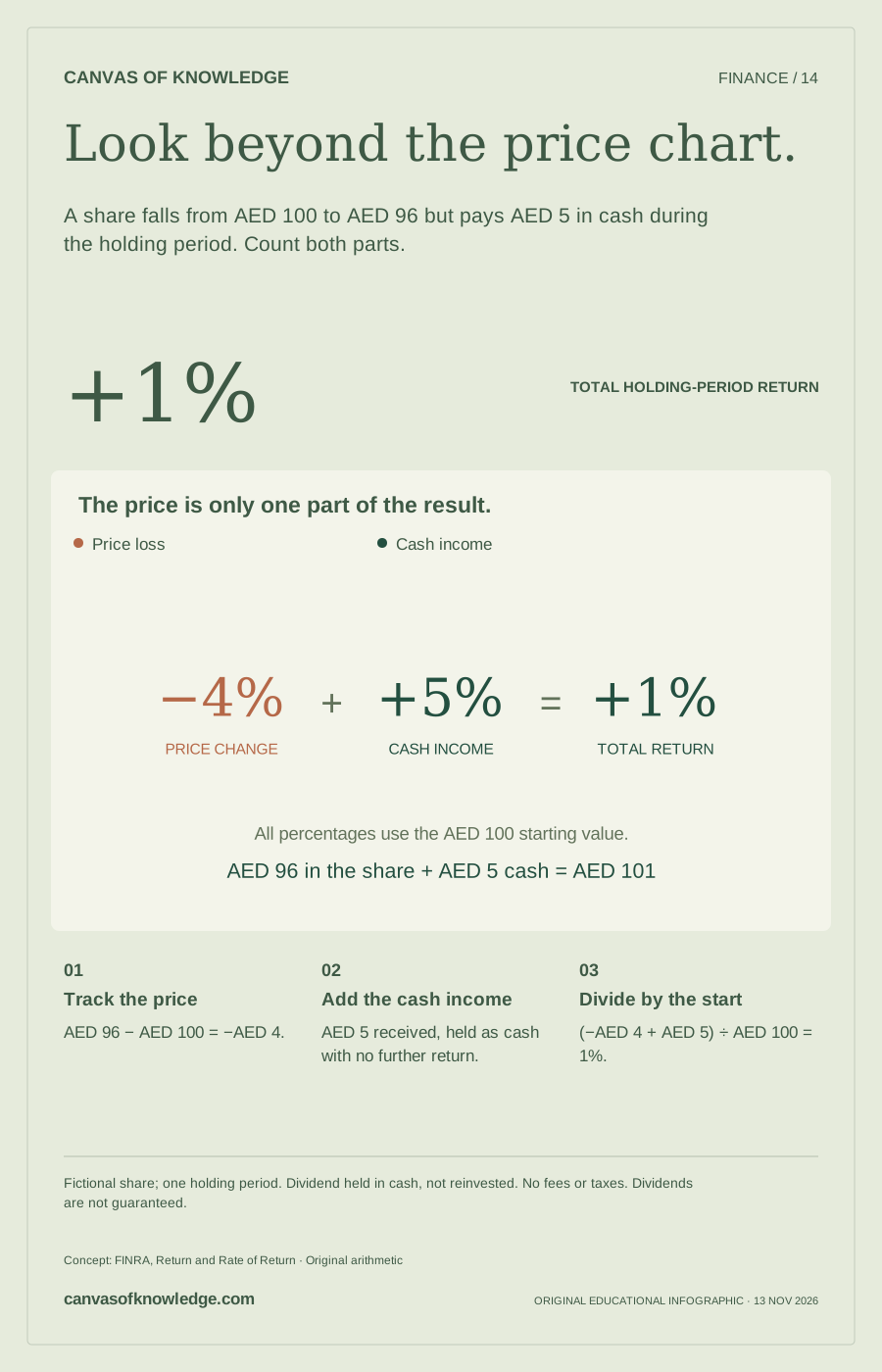
Buy one fictional share for AED 100. At the end of the period, the share is worth AED 96 and you have received AED 5 in cash dividends. You now hold AED 101 across the share and the cash, before costs and tax.
Separate the two contributions
The price change is −AED 4, or −4% of the original AED 100. The cash income is AED 5, or 5% of that same starting amount. Adding those components gives a total return of 1%. The ending price alone would report a 4% loss.
Keep cash and reinvestment distinct
Here, the dividend stays as cash and earns no further return. Reinvesting it would buy additional shares; the outcome would then depend on the reinvestment price and subsequent price changes. Published performance figures may assume reinvestment, so check their methodology.
Income is not a guarantee
A dividend can be cut or omitted. A sufficiently large price fall can outweigh the income. Our formula is (ending price − starting price + cash income) ÷ starting price, with no trading costs or tax. This fictional holding-period example does not claim that paying a dividend creates free value.
Sources & further reading
Sources checked 13 November 2026. These organisations provide reference material and do not endorse this website.