Follow the money through both years
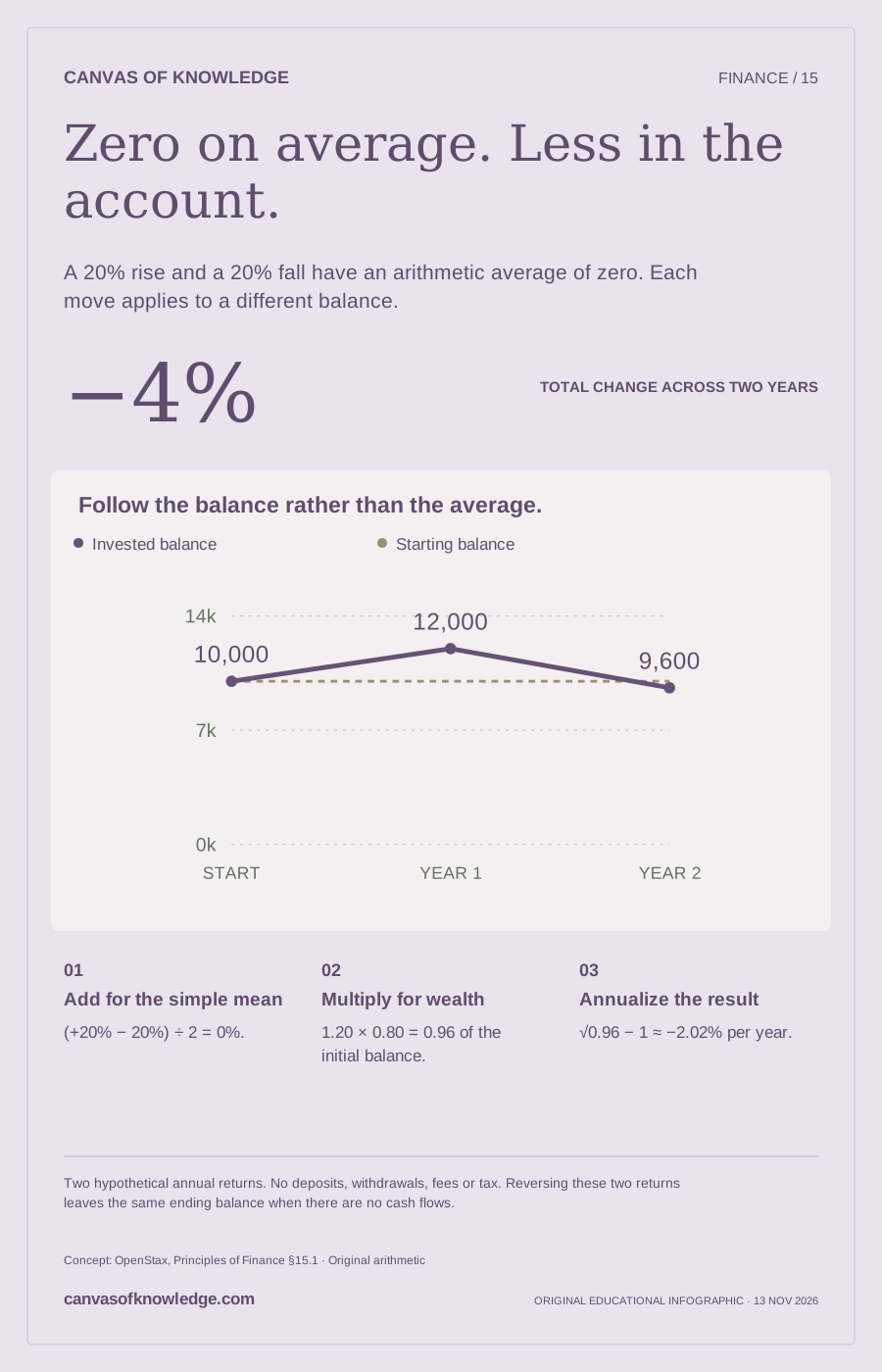
Start with AED 10,000. A 20% gain in year one takes it to AED 12,000. A 20% loss in year two removes AED 2,400 and leaves AED 9,600. The overall loss is 4%, even though the two percentage returns sum to zero.
Ask which average you are reading
The arithmetic mean is (+20% − 20%) ÷ 2 = 0%. The compound annual growth rate is the square root of (9,600 ÷ 10,000), minus one: approximately −2.02% per year. Both figures are correct, but they answer different questions.
The size of the swing matters
For a gain of x followed by a loss of x, the two-period growth factor is (1 + x)(1 − x) = 1 − x². A +10%/−10% pair leaves 99% of the start; a +20%/−20% pair leaves 96%; a +30%/−30% pair leaves 91%. These are controlled examples with the same arithmetic mean.
Distinguish compounding from sequence risk
With no cash moving in or out, reversing these two returns gives the same ending balance: multiplication is commutative. Deposits and withdrawals can make order matter. This example excludes those cash flows, costs and taxes; it illustrates compound growth rather than predicting market returns.
Sources & further reading
Sources checked 13 November 2026. These organisations provide reference material and do not endorse this website.