Costs compound alongside returns
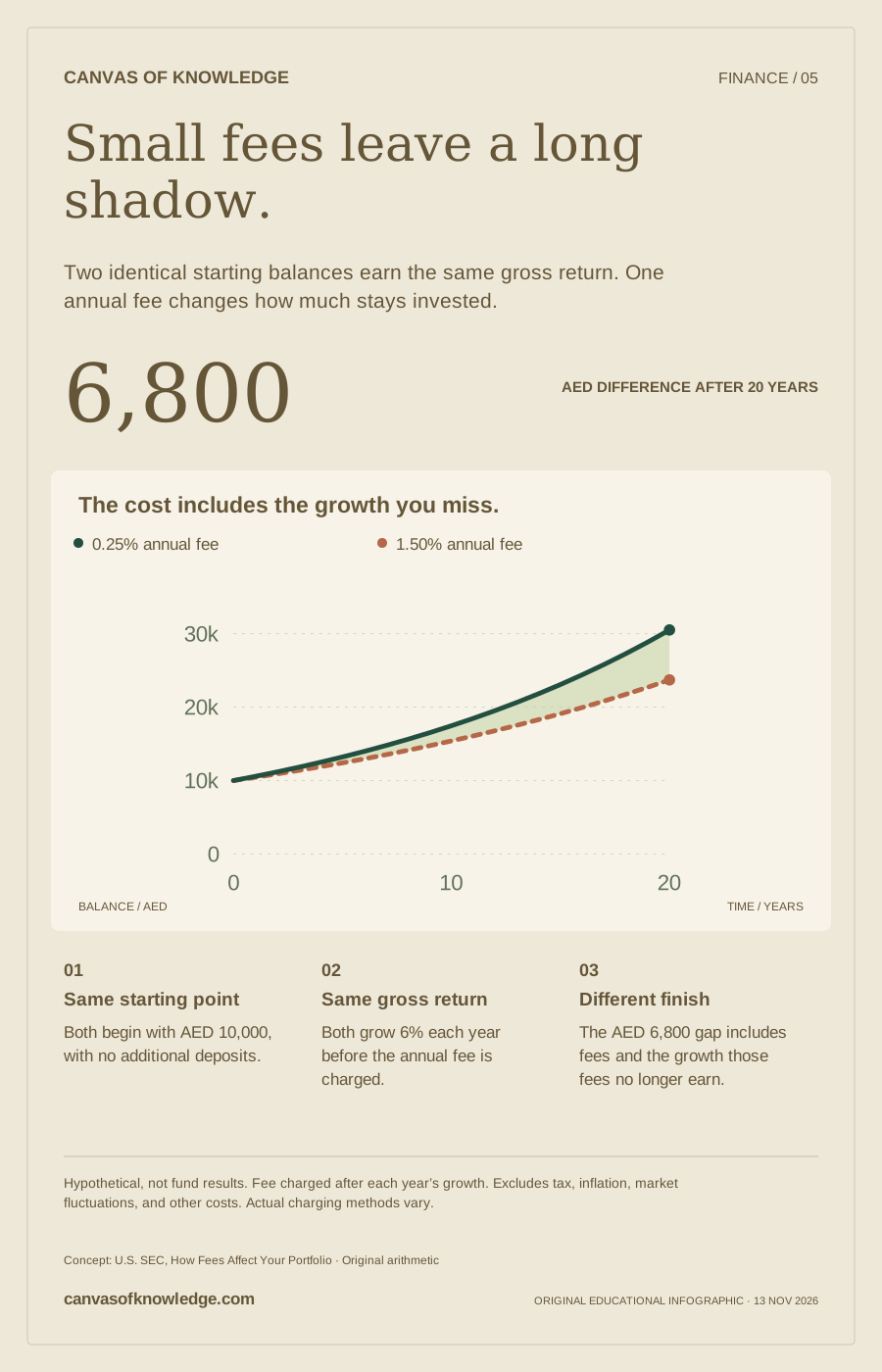
An ongoing fee reduces the balance left invested. Over time, its effect includes both the fee itself and the growth that the deducted money could have earned. Small annual percentages can therefore create a meaningful difference over a long holding period.
Keep everything else the same
Our illustration starts with AED 10,000 and assumes a constant 6% gross annual return for 20 years, without further deposits. Each year, the balance grows first and the fee is then charged on that balance. A 0.25% annual fee leaves approximately AED 30,505; a 1.50% fee leaves AED 23,705. The difference is approximately AED 6,800. These are hypothetical outcomes, not actual fund results.
Know exactly what is being modelled
The calculation is starting balance × [(1 + gross return) × (1 − annual fee)] raised to the number of years. Actual fees may accrue daily, use a different charging basis, or include fixed amounts. This example excludes tax, inflation, trading costs, and market fluctuations. The difference in final wealth is not simply the total of the fees paid.
Look beyond one headline number
An expense ratio may not capture every cost an investor pays. Account charges, commissions, or other transaction costs may also apply. Fund disclosures and fee schedules help identify those layers. Compare costs alongside the investment’s purpose and risks; a lower fee alone does not make two products equivalent.
Sources & further reading
Sources checked 13 November 2026. These organisations provide reference material and do not endorse this website.