The invoice earns a place in the accounts
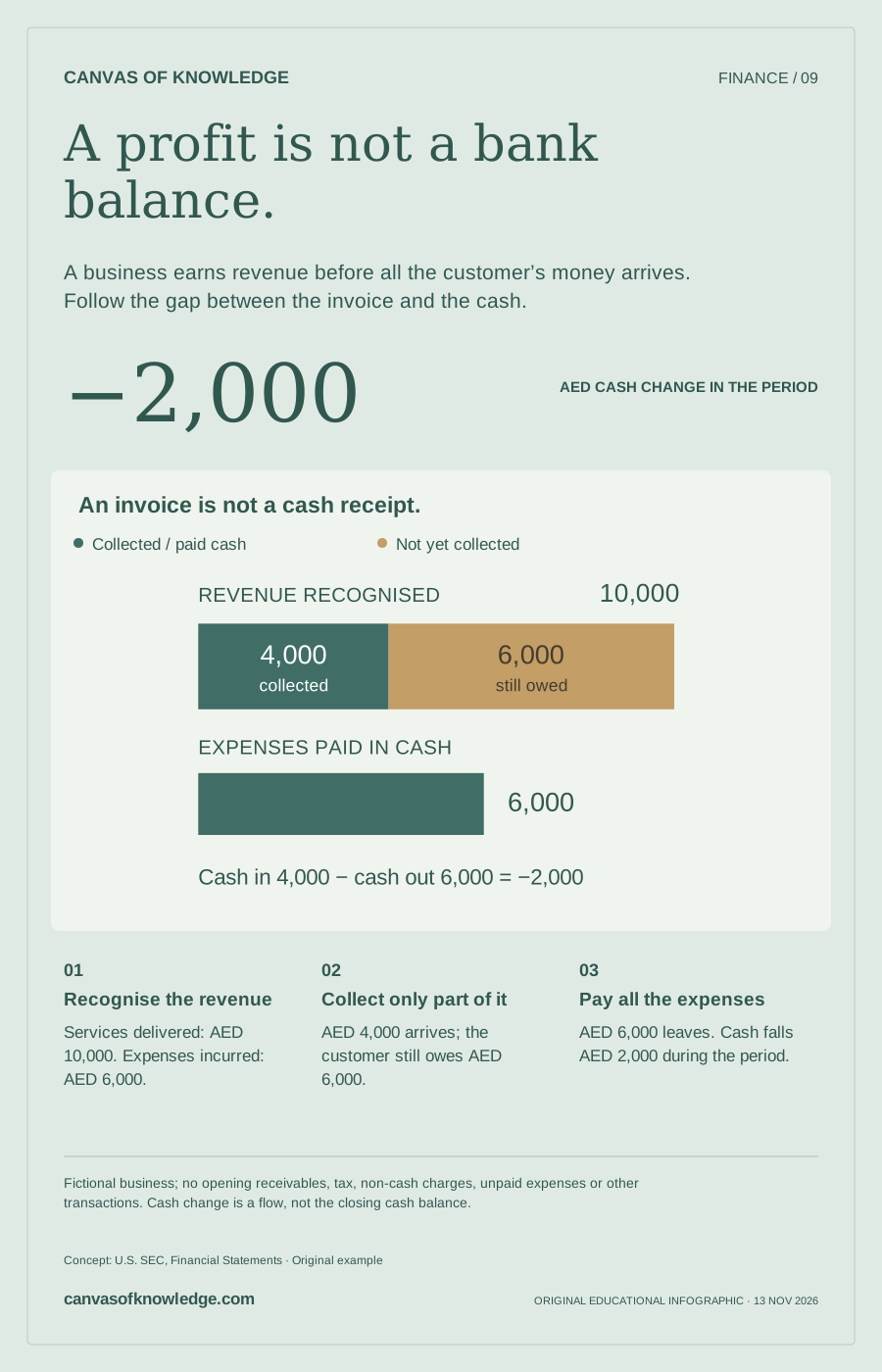
A fictional business delivers services and recognises AED 10,000 of revenue. It incurs AED 6,000 of expenses for that work. With no other income, expenses or tax in our example, profit is AED 4,000.
The customer has not paid it all
The business collects only AED 4,000 during the period, but pays all AED 6,000 of expenses. These transactions therefore reduce cash by AED 2,000. The uncollected AED 6,000 remains a receivable: money owed by the customer, not cash already in the bank.
Bridge the two results
Start with the AED 4,000 profit. Subtract the AED 6,000 increase in receivables. The result is an operating cash outflow of AED 2,000. This deliberately simple bridge assumes no opening receivables, unpaid expenses, non-cash charges, tax or other transactions.
Read both views
If the customer later pays the remaining AED 6,000, cash increases and the receivable falls; that collection does not create another AED 6,000 of revenue. Actual cash-flow statements distinguish operating, investing and financing flows. Profit and cash flow answer different questions, so one cannot stand in for the other.
Sources & further reading
Sources checked 13 November 2026. These organisations provide reference material and do not endorse this website.