The headline number
In its 2025 report Energy and AI, the International Energy Agency estimated that the world's data centres consumed around 415 terawatt-hours of electricity in 2024. That is roughly 1.5% of global electricity use, comparable to the annual consumption of a large European country. Not all of it is AI: data centres also store photos, stream video, run banks and host websites. But AI is the fastest-growing part. The IEA calculates that data centre demand has grown by about 12% a year since 2017, more than four times faster than electricity demand as a whole, and it expects the pace to quicken as businesses and governments build AI into everyday services.
Where the electricity goes
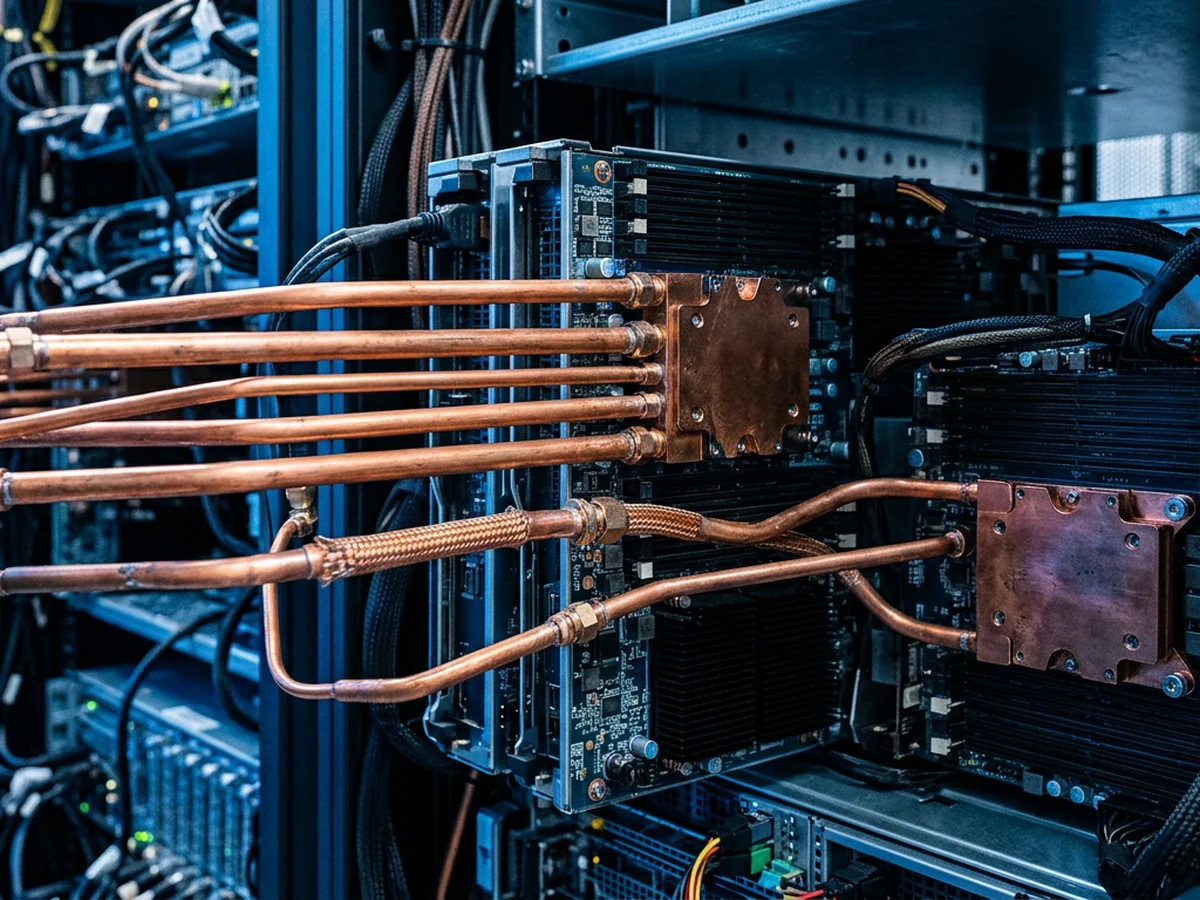
Inside a modern data centre, the servers themselves take the largest share of the power, around 60% on average according to the IEA. Storage systems take roughly another 5%, and networking equipment a little more. The rest goes mostly to keeping the machines cool. Cooling is where efficiency differs the most: in the best hyperscale facilities it can be as little as 7% of total consumption, while older or less efficient enterprise data centres can spend more than 30% of their power just removing heat. That gap matters, because it means the same AI workload can have a very different footprint depending on where and how it runs.
Why AI changes the picture
Traditional servers handle tasks such as web pages and email. AI relies on accelerated servers packed with graphics processors and other specialised chips that perform enormous numbers of calculations in parallel. These draw far more power per rack. The IEA expects electricity use by accelerated servers to grow by about 30% a year, compared with roughly 9% for conventional servers, and to account for almost half of the increase in data centre demand to 2030. Training a frontier model can occupy tens of thousands of chips for months, while answering billions of daily questions, known as inference, adds a steady and growing load on top.
Concentrated, not spread out
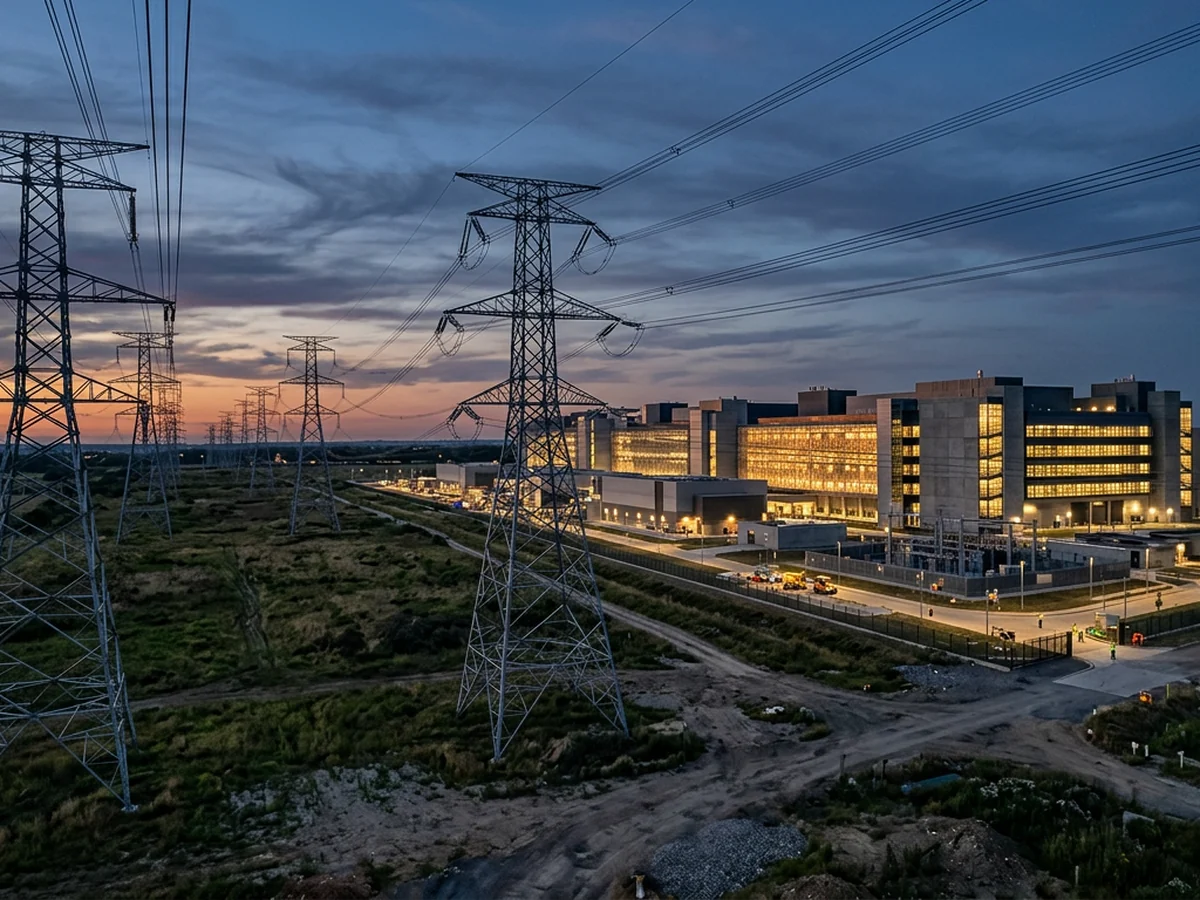
The global share hides a local story. The United States accounted for about 45% of data centre electricity use in 2024, China for 25% and Europe for 15%, and within those regions the buildings cluster around fibre routes and power supply. Nearly half of US data centre capacity sits in five regional clusters. A large AI campus can draw as much power as an aluminium smelter, so where several are built close together they can strain local grids, raise questions about electricity prices and delay other connections. The IEA warns that around a fifth of planned projects could face delays if grids are not strengthened in time.
One question in perspective
For an individual user the numbers are small. In August 2025 Google published measurements showing that the median text prompt to its Gemini apps used about 0.24 watt-hours of electricity, roughly the energy a television uses in nine seconds. The figure includes idle machines, cooling and other overheads; counting only the active chips it falls to about 0.10 watt-hours. Google also reported that the energy per median prompt fell 33-fold over a single year through better software, hardware and serving. The catch is scale: billions of prompts a day, plus image and video generation, which use much more, add up to a real and rising demand.
The growth ahead
In the IEA's Base Case, data centre consumption reaches around 945 terawatt-hours by 2030, slightly more than Japan's entire electricity use today, and about 1,200 terawatt-hours by 2035. Even then it would be just under 3% of global electricity in 2030, and, the IEA notes, a smaller part of global demand growth than electric vehicles or air conditioning. In the United States, however, data centres account for nearly half of all expected growth in electricity demand this decade. That is why utilities, regulators and technology companies are racing to plan new generation, transmission lines and storage alongside the data centres themselves.
What could bend the curve
Projections are uncertain in both directions. Efficiency gains in chips, cooling and software have repeatedly beaten expectations, and the IEA's own high-efficiency scenario shows noticeably lower demand. Supply is changing too: the agency expects renewables to meet about half of the growth in data centre demand, supported by storage, with natural gas covering much of the rest and the first small modular nuclear reactors arriving around 2030. AI can also cut energy use elsewhere, from optimising power grids to designing better batteries. Whether AI ends up a net burden or a net help for the energy system depends on choices being made now.
Sources & further reading
- IEA · Energy and AI (2025) ↗
- IEA · Energy demand from AI ↗
- Google Cloud · Measuring the environmental impact of AI inference ↗
Figures are estimates and projections from the IEA's Base Case; actual demand depends on technology and policy. Photograph: original AI-generated illustration (Adobe Firefly). Reference organisations do not endorse this website.