Why screening needs help
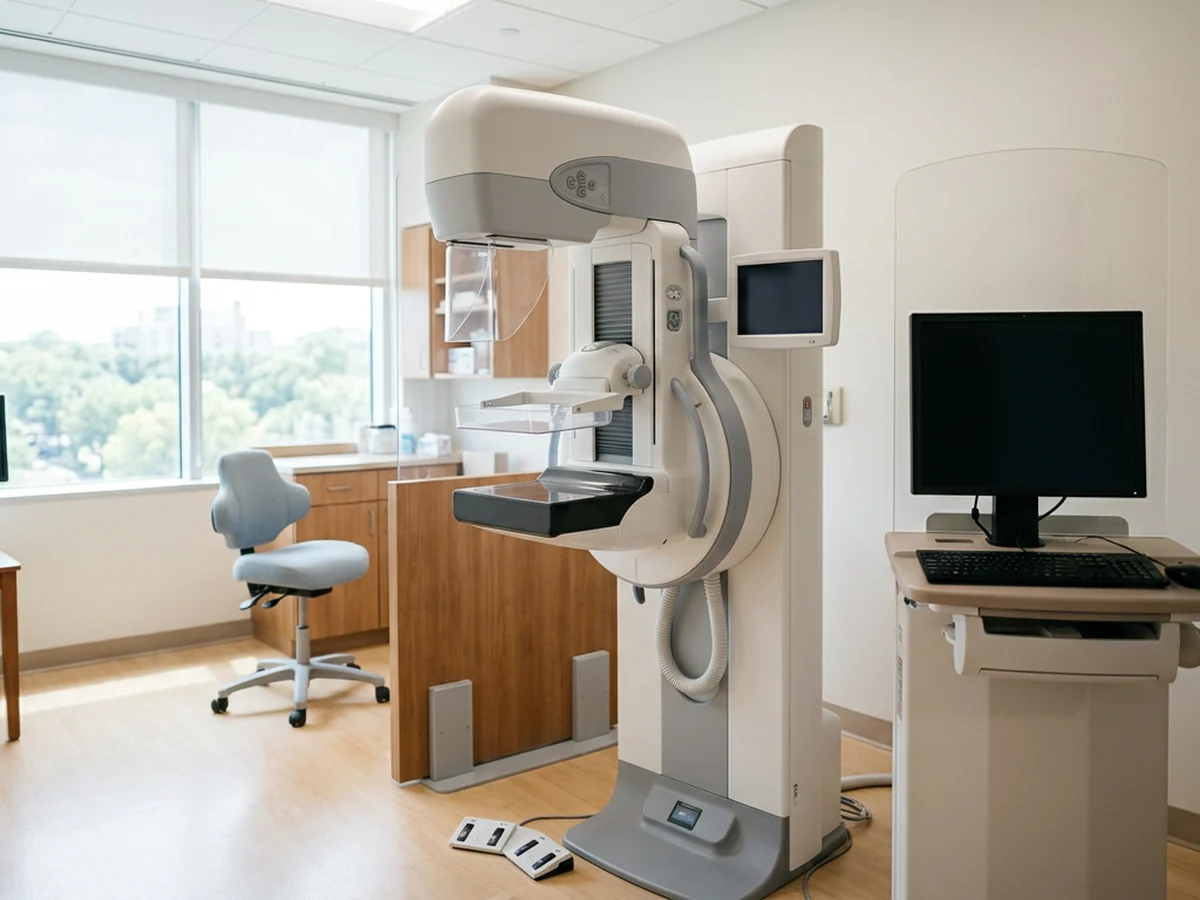
Many countries screen women for breast cancer with regular mammograms. In Europe the standard is double reading: two specialist radiologists look at every image independently. It is accurate but labour-intensive, and there are not enough breast radiologists to go round. Most screening images show no cancer at all, so experts spend much of their time confirming normal results. Researchers have long wondered whether AI could take some of that load while keeping, or even improving, accuracy. Until recently the evidence came mostly from looking back at old images, which cannot show how AI performs in real clinics.
How the trial worked
The Mammography Screening with Artificial Intelligence trial, known as MASAI, was run in Sweden by researchers at Lund University. Women attending routine screening were randomly assigned either to standard double reading or to AI-supported reading. In the AI group, a commercial system called Transpara gave each examination a risk score. Lower-risk scans were read by one radiologist, higher-risk ones by two, and the AI marked suspicious areas on the image. Radiologists always made the final decision about recalling a woman for further tests. More than 105,000 women took part.
The first results
An interim safety analysis of about 80,000 women, published in The Lancet Oncology in August 2023, found that AI-supported screening detected cancer at a similar rate to standard double reading and did not increase false positives, while reducing the screen-reading workload by 44%. A further analysis in The Lancet Digital Health reported that AI-supported screening found 29% more cancers than standard reading, again without more false alarms. Some of the extra detections were small, early-stage or in situ cancers, which raised the question of whether AI might lead to over-diagnosis.
The result that matters most
The key test of any screening programme is interval cancers: tumours found between scheduled screenings, which tend to be more aggressive and are often missed or too small to see earlier. The full MASAI results, published in The Lancet in early 2026, found that AI-supported screening reduced interval cancers by 12% and was non-inferior to standard reading on this primary measure. A larger share of all cancers was caught at the screening appointment itself, about 81% compared with 74%, and the researchers reported fewer aggressive interval cancers in the AI group.
What the AI looks at
Systems like the one used in MASAI are deep-learning models trained on very large collections of mammograms whose outcomes are known, including images from women later diagnosed with cancer. They learn to recognise masses, clusters of tiny calcium deposits, distortions in tissue structure and differences between the left and right breast, combining several views of each breast. The output is not a diagnosis but a probability, expressed as a risk score, plus marks on the image showing the regions that drove that score. Radiologists can accept or overrule the suggestion, and in MASAI they remained responsible for every decision to recall a woman.
What it does not show
The trial was run in one country, with one AI product and highly experienced radiologists, so results may differ elsewhere. AI-supported reading still depended on human experts for every recall decision. Longer follow-up is needed to see whether finding more small cancers improves survival or leads to some women being treated for tumours that would never have harmed them. Costs, legal responsibility and how radiologists' skills are maintained when they read fewer normal scans are also open questions that health services must answer before scaling up.
Why it matters beyond Sweden
MASAI is significant because it is a large randomised controlled trial, the strongest kind of evidence in medicine, rather than a laboratory demonstration. It suggests a practical model: let AI sort the easy cases and focus human attention on the hard ones. With radiologist shortages in many countries, including in the Gulf, such tools could help screening programmes expand without lowering quality. Several European health systems are now running their own evaluations, and regulators increasingly expect this level of evidence before AI is used routinely.
The bigger lesson
The trial shows how AI tends to help most in healthcare: as a partner that handles volume and highlights risk, while clinicians keep responsibility. It also shows the value of testing AI the way new drugs are tested, with randomisation and long-term outcomes rather than accuracy scores alone. For patients, the promise is fewer missed cancers and faster results. For health systems, it is the ability to do more with scarce specialists. Both depend on careful rollout, ongoing monitoring and keeping a human expert in the loop.
Sources & further reading
- The Lancet Oncology · MASAI interim safety analysis (2023) ↗
- The Lancet · MASAI full results (2026) ↗
- EurekAlert · First full results of MASAI trial ↗
Results apply to the Swedish programme studied; this is not medical advice. Photograph: original AI-generated illustration (Adobe Firefly). Reference organisations do not endorse this website.