Why computers need water
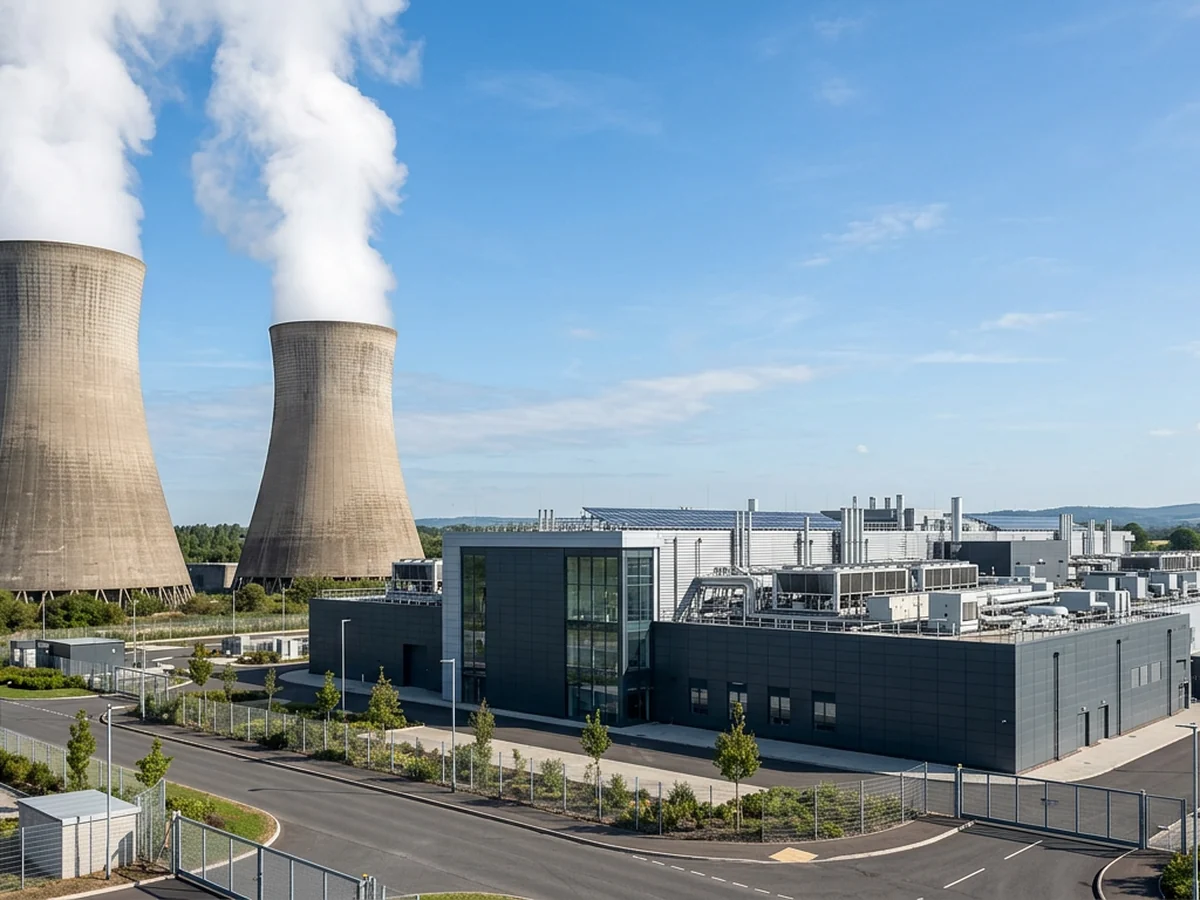
Computer chips turn almost all the electricity they use into heat, and AI chips are especially dense. Many data centres remove that heat with evaporative cooling: warm water is sprayed through cooling towers, part of it evaporates and carries the heat away, and fresh water is added to replace what is lost. It is the same principle as sweating. Evaporative cooling is popular because it uses less electricity than running large refrigeration plants, especially in hot climates. The trade-off is that the evaporated water leaves the local supply, which is why data centre water use draws attention in dry regions.
Two kinds of water
Researchers separate direct and indirect use. Direct, or on-site, water is what the data centre itself consumes for cooling and humidity control. Indirect, or off-site, water is consumed by the power stations that generate the data centre's electricity, since thermal and nuclear plants also rely on cooling. Companies usually report the first; academic studies often add the second. There is also a difference between withdrawal, water taken from a river or aquifer and later returned, and consumption, water that evaporates and is lost. Mixing these terms is one reason headlines about AI and water often seem to contradict each other.
What the companies report
In August 2025 Google published a detailed estimate for its Gemini apps: the median text prompt consumed about 0.26 millilitres of water, roughly five drops, counting the data centre's cooling and overheads. OpenAI's chief executive has said an average ChatGPT query uses about 0.000085 gallons, around a third of a millilitre. These numbers describe a typical short text answer at today's efficiency. They do not include the water used to build the chips or the data centres, and they exclude image and video generation, which require much more computing and therefore more cooling.
Why other estimates are higher
A widely cited 2023 study by researchers at the University of California, Riverside estimated that an older model, GPT-3, could consume around half a litre of water for every 10 to 50 responses, depending on where and when it ran. That works out at roughly 10 to 50 millilitres per response. The study counted water used by power plants as well as on-site cooling and assumed older, less efficient hardware. The lead researcher has argued that company figures leave out the off-site share. Both views can be true at once: the true footprint depends on location, season, hardware and what you choose to include.
Where it really matters
Global totals are less important than local conditions. A data centre in a cool, wet climate that uses outside air most of the year has a very different impact from one in a hot desert relying on evaporative cooling from a stressed aquifer. Clusters raise the stakes: data centres around Ashburn in northern Virginia, the world's largest hub, consumed more than seven billion litres of water in 2023, according to reporting by the Financial Times, a sharp rise from 2019. Communities in Arizona, Chile, Uruguay and elsewhere have questioned new projects for this reason, and some local authorities now attach water conditions to approvals.
What is improving
Water efficiency is measured as water usage effectiveness, or litres per kilowatt-hour of computing. Microsoft reports that its average fell from 0.49 litres in 2021 to 0.30 litres in fiscal 2024, and since August 2024 its new data centre designs use closed-loop, chip-level liquid cooling that evaporates no water for cooling at all. Other operators use recycled wastewater, harvest rainwater, or site new halls in cooler regions where outside air does most of the work. Using less electricity per answer also cuts the water needed at power plants, so efficiency gains in chips and software help on both fronts.
Questions worth asking
Because figures are hard to compare, a few questions help. Does the number count only on-site cooling, or also electricity generation? Is it withdrawal or consumption? Is it per short text answer, or for heavier tasks such as images and video? And where is the data centre: in a water-rich region or a drought-prone one? Clear, comparable reporting is improving but still patchy. As AI use grows, the most useful disclosures will be local, showing how much water each site consumes, where it comes from and how that compares with other users in the same basin.
Sources & further reading
- Google Cloud · Measuring the environmental impact of AI inference (2025) ↗
- Li, Yang, Islam & Ren · Making AI Less Thirsty (arXiv) ↗
- Microsoft · Next-generation datacenters consume zero water for cooling ↗
Estimates differ by method; company figures are self-reported. Photograph: original AI-generated illustration (Adobe Firefly). Reference organisations do not endorse this website.