The mystery jam
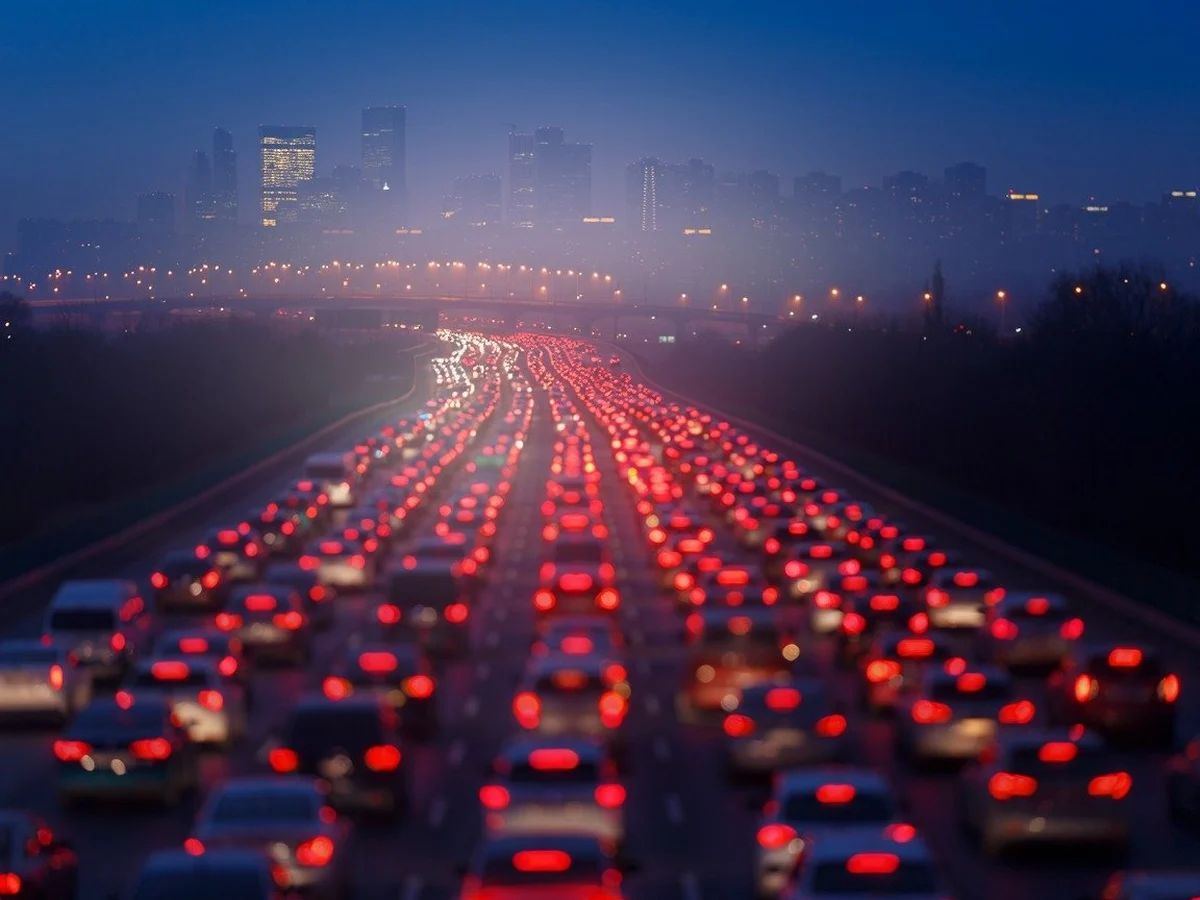
Most drivers have experienced it. Traffic slows to a crawl, stops, starts again, and after a while everything flows freely, with no crash, lane closure or obvious cause. Traffic engineers call these phantom jams or jamitons. They are not caused by a single event on the road but by the way human drivers react to each other when roads are busy. Understanding them helps engineers design better roads and technology to keep traffic moving.
A famous experiment
In 2008, researchers in Japan asked 22 drivers to drive around a circular track about 230 metres long at a steady speed of around 30 kilometres per hour. There were no traffic lights, no junctions and no obstacles. At first, the cars moved smoothly. But small variations in speed soon grew. Within minutes, a cluster of cars came to a stop and a stop-and-go wave began travelling around the track, even though nothing had blocked the road.
How the wave grows
In dense traffic, drivers leave short gaps. If one driver taps the brakes, perhaps because they were distracted or a car changed lanes, the driver behind sees brake lights and slows down too, often a little more to be safe. The next driver does the same. Each reaction adds delay and extra braking. A tiny slowdown at the front can grow into a complete stop a few hundred metres back. Researchers call this amplification string instability.
A wave that travels backwards
Interestingly, the jam itself moves in the opposite direction to the traffic. Cars enter the back of the jam and leave from the front, so the cluster of stopped vehicles drifts backwards along the road, often at around 15 to 20 kilometres per hour. That is why you can drive into a jam, crawl through it and come out the other side without seeing any reason for the delay: the cause may have happened minutes earlier, far ahead.
The tipping point
Phantom jams only form when traffic is dense enough. On a quiet road, a driver who brakes slightly has plenty of space behind them, and the slowdown fades away. As more cars join, gaps shrink until the road reaches a critical density. Beyond that point, small disturbances are amplified instead of absorbed. Traffic flow can then suddenly drop, so a road carrying lots of fast-moving cars can tip into stop-and-go conditions within minutes.
Merging and lane changes
Lane changes are a common trigger. When a driver squeezes into a small gap, the car behind must brake. On-ramps, where cars join a highway, are hotspots for this. Traffic engineers recommend the zipper merge in heavy traffic: using both lanes fully until the merge point, then taking turns. This keeps queues shorter and reduces sudden braking compared with drivers merging early and others cutting in at the last moment.
Technology to smooth flow
Some highways use variable speed limits that lower the limit before congestion, encouraging drivers to slow gently and keep more even spacing. Ramp meters, traffic lights on on-ramps, release cars one at a time to avoid sudden surges. In experiments, a single automated car driving smoothly on a ring road was able to dampen stop-and-go waves. As adaptive cruise control and connected vehicles spread, they may help reduce phantom jams further.
Roads in the UAE
Busy highways in the UAE, such as Sheikh Zayed Road in Dubai and the main routes between emirates, see heavy commuter traffic at peak hours. Authorities use smart traffic systems, overhead message signs, variable speed limits on some roads and real-time monitoring to manage flow. Public transport such as the Dubai Metro and expanding bus networks also help reduce the number of cars on the road during busy times.
What drivers can do
Drivers can help prevent phantom jams. Keep a safe distance from the car in front, ideally at least two to three seconds, so you can slow gently rather than brake hard. Look further ahead so you can react early and smoothly. Avoid unnecessary lane changes. Accelerate gently when traffic starts moving. If enough drivers adopt this calmer style, small disturbances fade instead of growing, and everyone gets home a little sooner and more safely.
Sources & further reading
- New Journal of Physics · Sugiyama et al. (2008) ↗
- Wikipedia · Traffic wave ↗
- U.S. FHWA · Traffic congestion ↗
General information; speeds and distances are typical values from research. Photograph: original AI-generated illustration (Adobe Firefly). Reference organisations do not endorse this website.