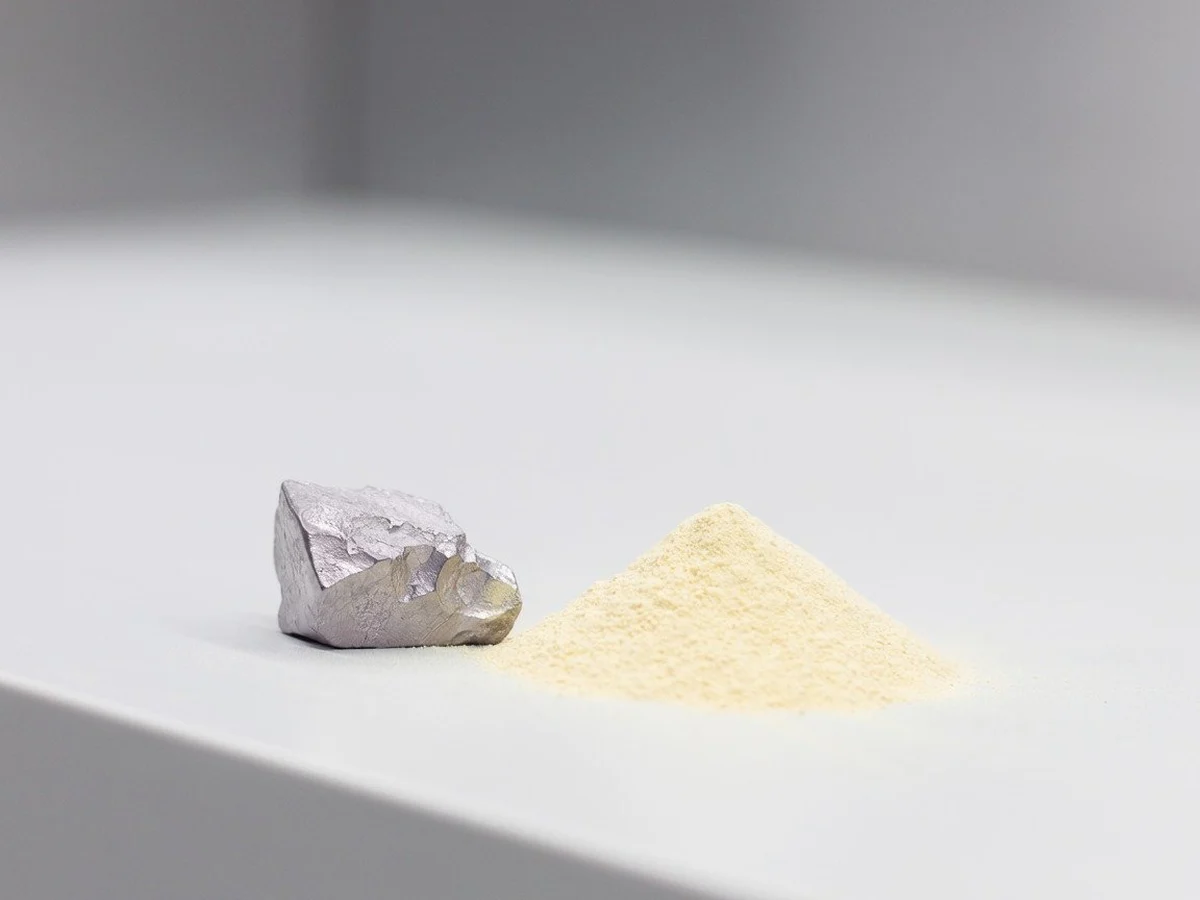
A misleading name
The rare earth elements are a group of 17 metals: the 15 lanthanides plus scandium and yttrium. Despite the name, most are not especially rare. Cerium, the most abundant, makes up about 66 parts per million of Earth's crust, slightly more than copper. The rare part of the name comes from history: these elements were first found in unusual minerals and were very difficult to separate from each other, because their chemical properties are so similar.
Discovery
Cerium was discovered in 1803 in Sweden by Jöns Jacob Berzelius and Wilhelm Hisinger, and independently in Germany by Martin Heinrich Klaproth. They found it in a heavy mineral now called cerite. Cerium was named after the dwarf planet Ceres, which had been discovered just two years earlier. Pure cerium metal was not isolated until 1875. Its chemical symbol is Ce and its atomic number is 58.
Where it comes from
Cerium is found in minerals such as bastnäsite and monazite, together with other rare earths. China has dominated rare earth mining and especially processing for decades, while the United States, Australia, Myanmar and other countries also produce them. Separating cerium from its neighbours involves crushing the ore, dissolving it in acids and running it through many stages of solvent extraction. Cerium is often the easiest to separate because it can change its chemical form more readily.
Polishing glass
One of cerium's most important uses is polishing. Cerium oxide powder is the standard compound for giving glass a perfectly smooth, clear finish. It is used for mirrors, camera lenses, eyeglasses, telescope optics and the screens of phones, tablets and televisions. Cerium oxide works both mechanically and chemically, reacting slightly with the glass surface to remove tiny scratches. Without it, many optical products would be harder and more costly to make.
Cleaning exhaust
Cerium also helps clean car exhaust. In catalytic converters, cerium oxide acts as an oxygen store: it can release or absorb oxygen as engine conditions change, helping precious metal catalysts such as platinum and palladium convert harmful gases into less harmful ones. Cerium compounds are also added to some diesel fuels to help burn off soot in particulate filters, reducing the black smoke that older engines produced.
Sparks and alloys
Scratch a piece of cerium and it can throw off sparks. That property is used in ferrocerium, an alloy of cerium, iron and other rare earths, used as the flint in lighters and in fire starters carried by campers. Cerium is also part of mischmetal, a mix of rare earth metals added to steels and other alloys to improve their properties. Small amounts of cerium can make aluminium and magnesium alloys stronger and more heat resistant.
In the kitchen and the lab
Cerium oxide is used in the coatings of some self-cleaning ovens, where it helps break down cooking residues at high temperatures. In glassmaking, cerium compounds can remove unwanted colour or absorb ultraviolet light, protecting the contents of bottles or the eyes of people wearing sunglasses. Researchers are studying cerium oxide nanoparticles for uses in fuel cells, solar panels and medicine, where they may act as antioxidants.
Rare earths and the energy transition
Rare earths are often in the news because some of them, especially neodymium, praseodymium, dysprosium and terbium, are needed for powerful magnets in electric vehicle motors and wind turbines. Cerium is less critical for those magnets, and it is often produced in surplus alongside more sought-after rare earths. Finding new uses for cerium can therefore improve the economics of rare earth mining overall, which matters as countries try to diversify supply.
Cerium in glass and light
Cerium compounds also play a role in lighting and displays. Some phosphors, the materials that glow in certain lamps and screens, contain cerium, which helps produce efficient yellow light when combined with blue LEDs in white LED bulbs. In this way, a small amount of cerium may be helping to light the room you are sitting in right now, while using far less electricity than older bulbs.
Safety and the environment
Cerium itself has low toxicity, but rare earth mining and processing can create environmental problems if poorly managed, including acidic waste, radioactive thorium and uranium in some ores, and large volumes of tailings. Modern regulations and better processing aim to reduce these impacts. Recycling rare earths from old magnets, lamps and polishing powders is still limited but growing. Cerium shows how an everyday element can quietly support many technologies.
Sources & further reading
General information; crustal abundance figures are estimates and vary between sources. Photograph: original AI-generated illustration (Adobe Firefly). Reference organisations do not endorse this website.