A newer kind of agency
Many international organisations were created in the years after the Second World War. The International Renewable Energy Agency, or IRENA, is much younger. It was founded at a conference in Bonn, Germany, on 26 January 2009, by governments that wanted a dedicated global body to promote renewable energy. Its statute entered into force in July 2010. IRENA is an intergovernmental organisation, meaning it is created and governed by its member states rather than by any single country or company.
Why Abu Dhabi
In 2009, member states chose Abu Dhabi as IRENA's permanent headquarters, with offices also in Bonn for innovation and technology and in New York for liaison with the United Nations. The choice made IRENA the first major international organisation to be headquartered in the Middle East. Its headquarters building in Masdar City, a planned low-carbon district of Abu Dhabi, was designed with energy efficiency in mind and opened in 2015.
Members and leadership
IRENA has grown quickly. Today it has around 170 members, with more countries in the process of joining, covering almost every region of the world. Members meet each year at the IRENA Assembly in Abu Dhabi, where ministers and officials discuss priorities, approve the budget and launch major reports. A Council oversees the agency's work between Assemblies. The agency is led by a Director-General; Francesco La Camera of Italy has held the post since 2019.
The world's renewable scorekeeper
One of IRENA's best-known roles is collecting data. Every year it publishes Renewable Capacity Statistics, which track how much solar, wind, hydropower, bioenergy and geothermal capacity is installed in each country. These figures are widely used by governments, journalists and investors. According to IRENA's 2026 report, the world added a record 692 gigawatts of renewable capacity in 2025, bringing the global total to about 5,149 gigawatts, roughly half of all installed power capacity.
Solar takes the lead
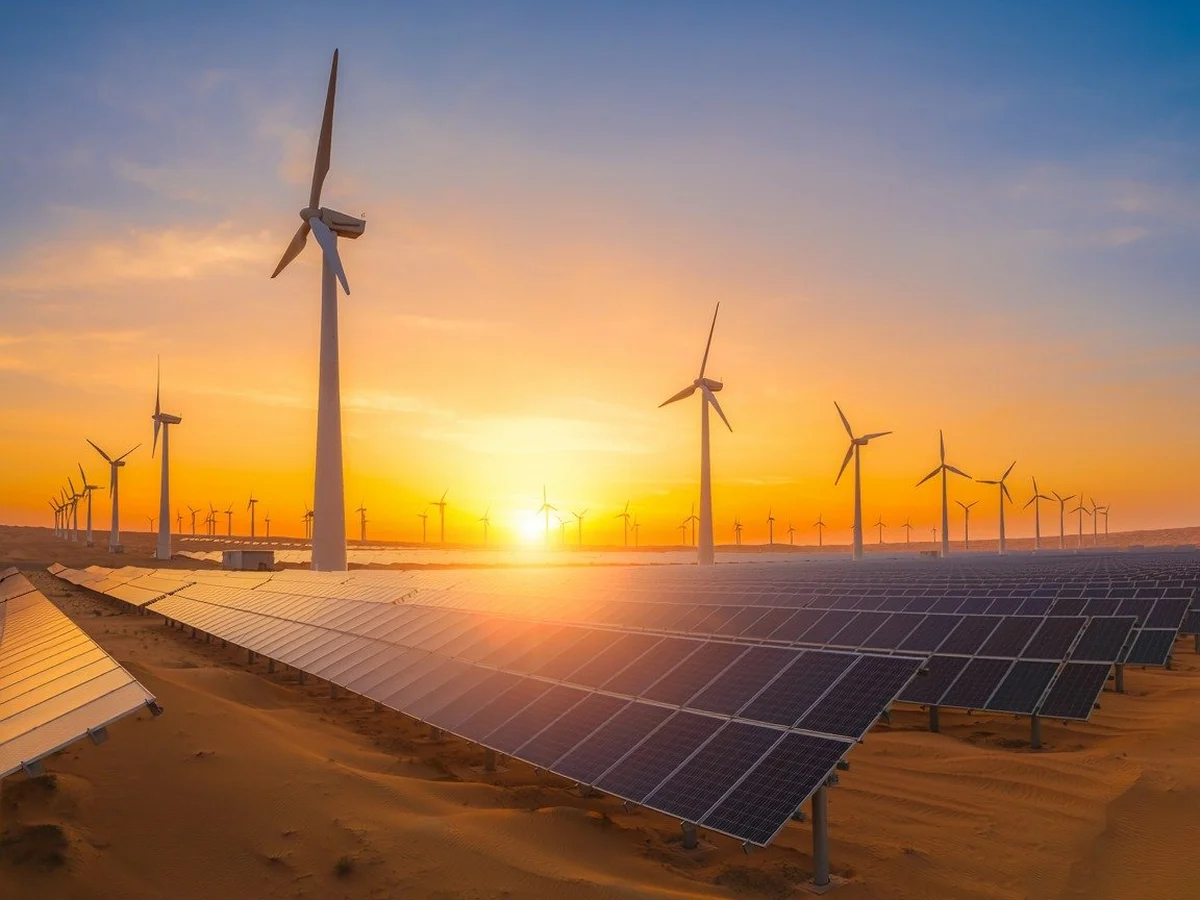
The data shows how dramatically the energy mix is changing. Solar power accounted for about 511 gigawatts, or roughly three-quarters, of all new renewable capacity added in 2025, followed by wind at about 159 gigawatts. Asia led the growth, with China alone adding hundreds of gigawatts. IRENA also highlights gaps: Africa and some other regions still receive a small share of investment, even though they have excellent solar and wind resources.
Tripling renewables
At the COP28 climate conference held in Dubai in 2023, countries agreed to work towards tripling global renewable energy capacity by 2030 and doubling the rate of energy-efficiency improvements. IRENA tracks progress towards that goal and publishes analysis of what is needed in terms of investment, grids, storage and policies. Its World Energy Transitions Outlook sets out pathways for limiting global warming while expanding access to affordable, reliable energy.
Advice and finance
Beyond data, IRENA advises governments on how to design energy policies, plan power grids that can handle more renewables and create markets that attract investment. It runs renewables readiness assessments for individual countries and training for officials. Through the Energy Transition Accelerator Financing platform, created with the Abu Dhabi Fund for Development, it helps connect renewable projects in developing countries with funding from public and private sources.
The UAE's clean-energy story
Hosting IRENA has gone hand in hand with the UAE's own investment in clean energy. The country is home to some of the world's largest solar plants, including Noor Abu Dhabi, Al Dhafra Solar and the Mohammed bin Rashid Al Maktoum Solar Park in Dubai, as well as the Barakah nuclear power plant. Masdar, the Abu Dhabi clean-energy company, invests in renewable projects across dozens of countries, and Abu Dhabi Sustainability Week brings global leaders to the capital each January.
Why it matters
As countries race to cut emissions, secure energy supplies and keep electricity affordable, reliable information and practical advice are vital. IRENA's data helps people see what is really happening in the global energy transition, and its analysis helps governments decide what to do next. For the UAE, the agency's presence in Abu Dhabi is also a symbol of the country's ambition to be a bridge between traditional energy and the low-carbon future.
Sources & further reading
- IRENA · Renewable Capacity Statistics 2026 ↗
- IRENA · About IRENA ↗
- Wikipedia · International Renewable Energy Agency ↗
General information; membership and statistics are updated regularly by IRENA. Photograph: original AI-generated illustration (Adobe Firefly). Reference organisations do not endorse this website.