Before transformers
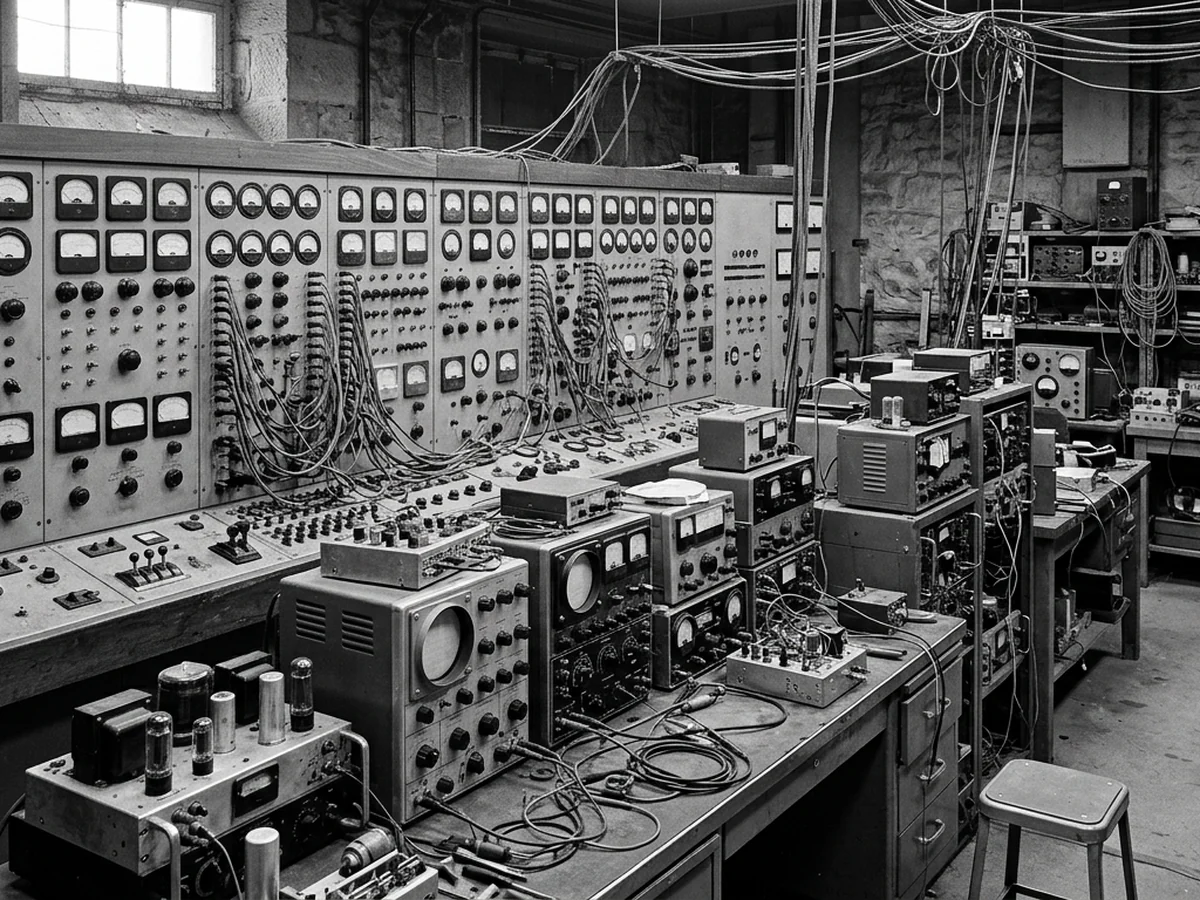
Before 2017, the best language systems used recurrent neural networks, which read text one word at a time, carrying a kind of memory forward. This was slow, because each step had to wait for the previous one, and the memory faded over long passages, so models struggled to connect words far apart. Translation systems based on these networks had improved greatly, but they were hard to scale up. Researchers were looking for a design that could process text in parallel.
Attention is all you need
In June 2017, eight researchers at Google published a paper titled Attention Is All You Need, introducing the transformer. It dropped recurrence entirely and relied on a mechanism called attention, which lets the model look at all the words in a passage at once and decide which ones matter most for understanding each word. The paper focused on translation and set new records, but its impact went far beyond. It has become one of the most cited papers in modern computer science.
How attention works
Consider the sentence: the animal did not cross the street because it was too tired. To understand what it refers to, a reader links it to animal rather than street. Attention lets a model make such links mathematically. For each word, the model calculates how strongly it should attend to every other word, then blends their information accordingly. Transformers use many attention heads in parallel, each able to track different relationships, such as grammar, meaning or references.
Why it scales
Because attention processes all words in parallel, transformers can be trained efficiently on graphics processing units, which excel at doing many calculations at once. This made it practical to train much bigger models on much more data. Researchers discovered that transformers keep improving as they grow, following predictable patterns called scaling laws. Bigger models trained on more text with more computing power became steadily more capable, launching the race to build ever larger systems.
GPT, BERT and beyond
Soon after 2017, researchers built influential models on the transformer. OpenAI's GPT, short for generative pre-trained transformer, learned to generate text by predicting the next word. Google's BERT, released in 2018, learned to understand text by filling in missing words and greatly improved search. Successive GPT models grew rapidly, and in 2022 ChatGPT brought transformer-based chatbots to the public. Today's leading models from many companies are all transformers at heart.
Not just for words
Transformers turned out to work for many kinds of data. Vision transformers treat patches of an image like words in a sentence. Transformers are used in speech recognition, music generation, protein structure prediction, weather forecasting and robotics. Modern multimodal models handle text, images, audio and video together. The design's flexibility is a major reason AI progress accelerated across so many fields at once in the years after 2017.
Limits and improvements
Standard attention compares every token with every other token, so the computing cost grows rapidly as passages get longer. This makes very long documents expensive to process. Researchers have developed many improvements, such as more efficient attention methods, mixture-of-experts layers that activate only part of a model at a time, and alternative designs that aim to match transformer quality at lower cost. Whether transformers will remain dominant is an open question.
The people behind it
The paper's eight authors, Ashish Vaswani, Noam Shazeer, Niki Parmar, Jakob Uszkoreit, Llion Jones, Aidan Gomez, Lukasz Kaiser and Illia Polosukhin, all later left Google, although Noam Shazeer returned in 2024, and several founded or joined prominent AI companies. Their story is often told as an example of how a single research idea, freely published, can reshape an entire industry. Google's decision to publish openly allowed researchers worldwide, including its competitors, to build on the work.
Why it matters to you
Every time you ask a chatbot a question, get an AI summary of a document, use a translation app or see AI-generated captions, there is very likely a transformer working behind the scenes. Understanding the basic idea, that these models learn statistical relationships between pieces of text and predict what comes next, helps explain both their impressive fluency and their tendency to sometimes produce confident but incorrect answers.
Sources & further reading
- arXiv · Attention Is All You Need (Vaswani et al., 2017) ↗
- Google Research · Transformer: a novel neural network architecture for language understanding ↗
- Wikipedia · Transformer (deep learning architecture) ↗
A simplified explanation of a technical topic. Photograph: original AI-generated illustration (Adobe Firefly). Reference organisations do not endorse this website.