The data problem
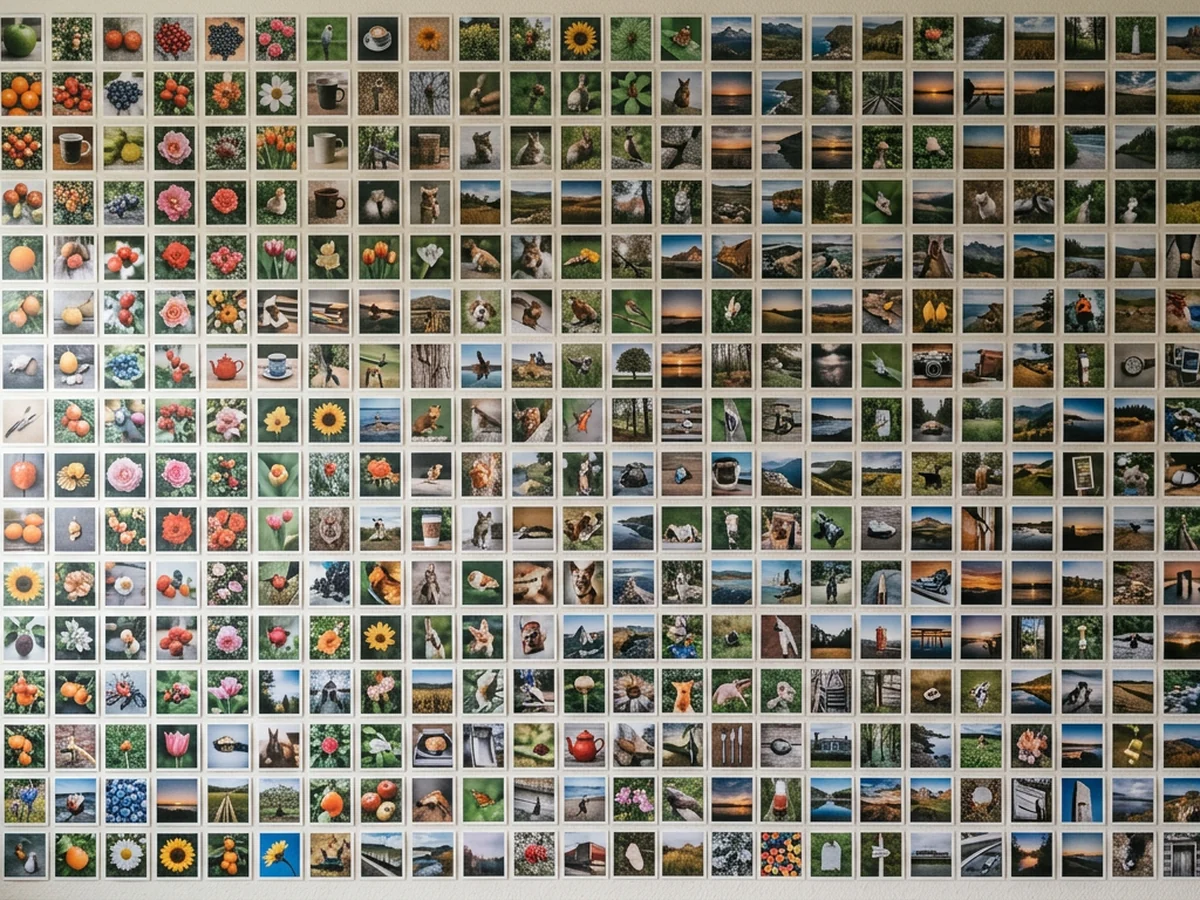
In the mid-2000s, computer vision researchers had clever algorithms but little data. Most image datasets contained a few thousand pictures in a handful of categories. Fei-Fei Li, then a young professor at Princeton and later at Stanford, believed that the key to progress was data on a much larger scale, mirroring the vast visual experience a child accumulates while growing up. She set out to map the entire world of objects.
Building ImageNet
Li's team began building ImageNet in 2007, organising images according to WordNet, a database of English words grouped by meaning. They gathered images from the internet and used Amazon Mechanical Turk, an online platform for small paid tasks, to have tens of thousands of workers worldwide label them. ImageNet was presented in 2009 and eventually grew to more than 14 million images in over 20,000 categories, an unprecedented resource for the field.
A yearly contest
From 2010, the ImageNet Large Scale Visual Recognition Challenge invited teams to build systems that could classify images into 1,000 categories, from breeds of dog to types of vehicle. Performance was often measured by top-5 error: the share of images where the correct label was not among a system's five best guesses. In the first two years, the best systems used traditional methods and achieved error rates of around 25 to 28 percent.
AlexNet arrives
In 2012, a team from the University of Toronto, Alex Krizhevsky, Ilya Sutskever and their supervisor Geoffrey Hinton, entered a deep convolutional neural network later called AlexNet. It achieved a top-5 error of 15.3%, compared with 26.2% for the next best entry, an enormous leap in a field used to small improvements. The result shocked many computer vision researchers, who had been sceptical of neural networks.
The secret ingredients
AlexNet combined several elements. It was a deep network with eight learned layers and about 60 million parameters. It was trained on two Nvidia graphics cards designed for video games, whose ability to perform many calculations in parallel made training large networks practical. It used techniques such as the ReLU activation function and dropout, which helped it learn faster and avoid memorising the training data. And crucially, it had ImageNet's vast labelled dataset.
Why GPUs mattered
Graphics processing units were designed to render video game scenes by performing huge numbers of simple calculations simultaneously. Training a neural network involves exactly that kind of work: multiplying large grids of numbers again and again. Krizhevsky wrote specialised code to run AlexNet on two consumer graphics cards, and training took about a week. Without GPUs it might have taken months. Nvidia, whose cards were used, later became the leading supplier of AI chips.
The race begins
After 2012, nearly every competitive entry used deep neural networks, and error rates fell rapidly. In 2015, a Microsoft Research network called ResNet, with 152 layers, achieved a top-5 error of about 3.6%, below the roughly 5% often cited for a human expert on the task. The contest ended in 2017, its main goal achieved. Technology companies rushed to hire deep learning researchers, and Google acquired Hinton's small company in 2013.
Beyond images
The deep learning methods proven on ImageNet spread to speech recognition, translation, medical imaging, self-driving cars and eventually language models. Networks pre-trained on ImageNet became starting points for countless other vision tasks, a practice called transfer learning. The recipe that emerged, large datasets, large neural networks and powerful graphics chips, remains the foundation of modern AI, now applied at a vastly greater scale.
Concerns about the data
ImageNet also revealed problems with large datasets. Researchers later found that some categories, particularly those describing people, contained offensive or biased labels inherited from WordNet and from crowd workers. In 2019 the ImageNet team removed many of the person categories, and it later blurred faces in images to address privacy concerns. These lessons about data quality, consent and bias are central to debates about the huge datasets used to train today's AI.
The people behind it
The breakthrough made its creators famous. Fei-Fei Li became a leading voice for human-centred AI and co-founded Stanford's Institute for Human-Centered Artificial Intelligence. Ilya Sutskever co-founded OpenAI in 2015. Geoffrey Hinton received the Turing Award in 2018 and the Nobel Prize in Physics in 2024. Alex Krizhevsky, whose code made AlexNet work, largely stepped away from public life. Their 2012 paper is one of the most cited in computer science.
Sources & further reading
- ImageNet · Large Scale Visual Recognition Challenge 2012 results ↗
- NeurIPS · ImageNet Classification with Deep Convolutional Neural Networks (2012) ↗
- Wikipedia · ImageNet ↗
Error rates refer to the classification task of the ImageNet challenge. Photograph: original AI-generated illustration (Adobe Firefly). Reference organisations do not endorse this website.