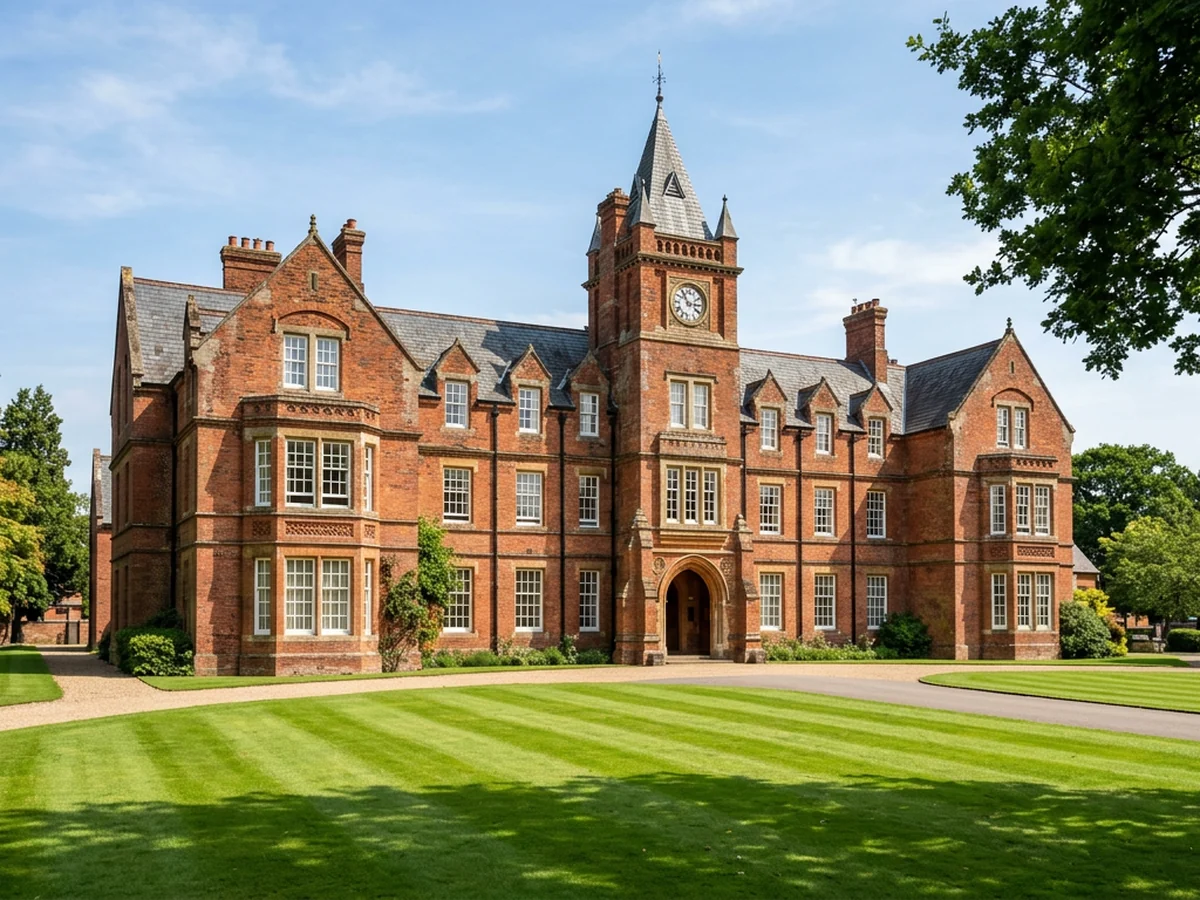
A bold proposal
In August 1955, four scientists wrote to the Rockefeller Foundation asking for funding for a two-month study. John McCarthy was a young mathematics professor at Dartmouth College, Marvin Minsky a researcher at Harvard, Nathaniel Rochester a designer of IBM computers and Claude Shannon the founder of information theory at Bell Labs. Their proposal stated that every aspect of learning or any other feature of intelligence could in principle be described so precisely that a machine could be made to simulate it.
Naming the field
The proposal introduced the term artificial intelligence. McCarthy later explained that he chose the phrase partly to distinguish the new field from cybernetics, a related area focused on feedback and control, and from narrower work on automata. The name was not universally liked at first; some researchers preferred terms such as complex information processing. But it stuck, and it has shaped public imagination about thinking machines ever since.
The summer of 1956
The workshop took place over roughly eight weeks in the summer of 1956 in Hanover, New Hampshire. It was less a structured conference than an extended brainstorming session, with participants coming and going. Besides the four organisers, attendees included Ray Solomonoff, Oliver Selfridge, Trenchard More, Arthur Samuel, and Allen Newell and Herbert Simon, who arrived with one of the first working AI programs.
The Logic Theorist
Newell and Simon, working with programmer Cliff Shaw, had created the Logic Theorist, a program that could prove mathematical theorems from Principia Mathematica, the famous work by Bertrand Russell and Alfred North Whitehead. It even found a more elegant proof for one theorem. The program showed that computers could manipulate symbols and reason in ways previously thought to require human intelligence, and it impressed many at the workshop.
Ambitious goals
The proposal listed topics that remain central to AI today: how to make machines use language, form abstractions and concepts, solve problems then reserved for humans, and improve themselves. It also discussed neural networks and randomness in creative thinking. The organisers believed that significant progress could be made by a carefully selected group in a single summer, a famously optimistic assumption.
What came next
The workshop did not produce a single breakthrough, but it created a community with a shared identity and goals. Its participants went on to found the leading AI laboratories of the following decades, including those at the Massachusetts Institute of Technology, Carnegie Mellon University and Stanford University. McCarthy later invented the programming language Lisp, which became the standard language of AI research for decades.
Claude Shannon's role
Claude Shannon, one of the organisers, was already famous for founding information theory in 1948, which showed how any message could be represented as binary digits. He had also built a mechanical mouse called Theseus that could learn its way through a maze, and he wrote an influential early paper on programming computers to play chess. His involvement gave the young field credibility and connected it to the broader science of communication and computing.
Over-optimism
Early AI pioneers made bold predictions. In 1957 Simon predicted that within ten years a computer would be the world chess champion; it took forty years. In 1970 Minsky reportedly said machines with the general intelligence of an average human might arrive within three to eight years. The gap between such forecasts and actual progress contributed to periods of disappointment and reduced funding known as AI winters.
A lasting legacy
Today's AI looks very different from what the Dartmouth founders imagined. They focused largely on symbolic reasoning, writing rules and logic for computers to follow, whereas modern AI relies mainly on machine learning from huge amounts of data. Yet many of their questions about language, learning, creativity and self-improvement are exactly the ones researchers are working on now. Dartmouth College marked the workshop's 50th anniversary in 2006 with a conference attended by several surviving participants.
Why it still matters
The story of Dartmouth is a reminder that AI is both older and newer than it seems. The idea of thinking machines has a long history, but practical progress came in waves, often after decades of slow work. As AI now changes economies and daily life, the field's founders' blend of ambition and underestimation of difficulty offers a useful lesson: transformative technologies often take longer than predicted, then arrive faster than expected.
Sources & further reading
- Dartmouth College · Artificial Intelligence Coined at Dartmouth ↗
- AI Magazine · A Proposal for the Dartmouth Summer Research Project on Artificial Intelligence ↗
- Wikipedia · Dartmouth workshop ↗
Historical accounts of who attended and when vary slightly. Photograph: original AI-generated illustration (Adobe Firefly). Reference organisations do not endorse this website.