How each forms
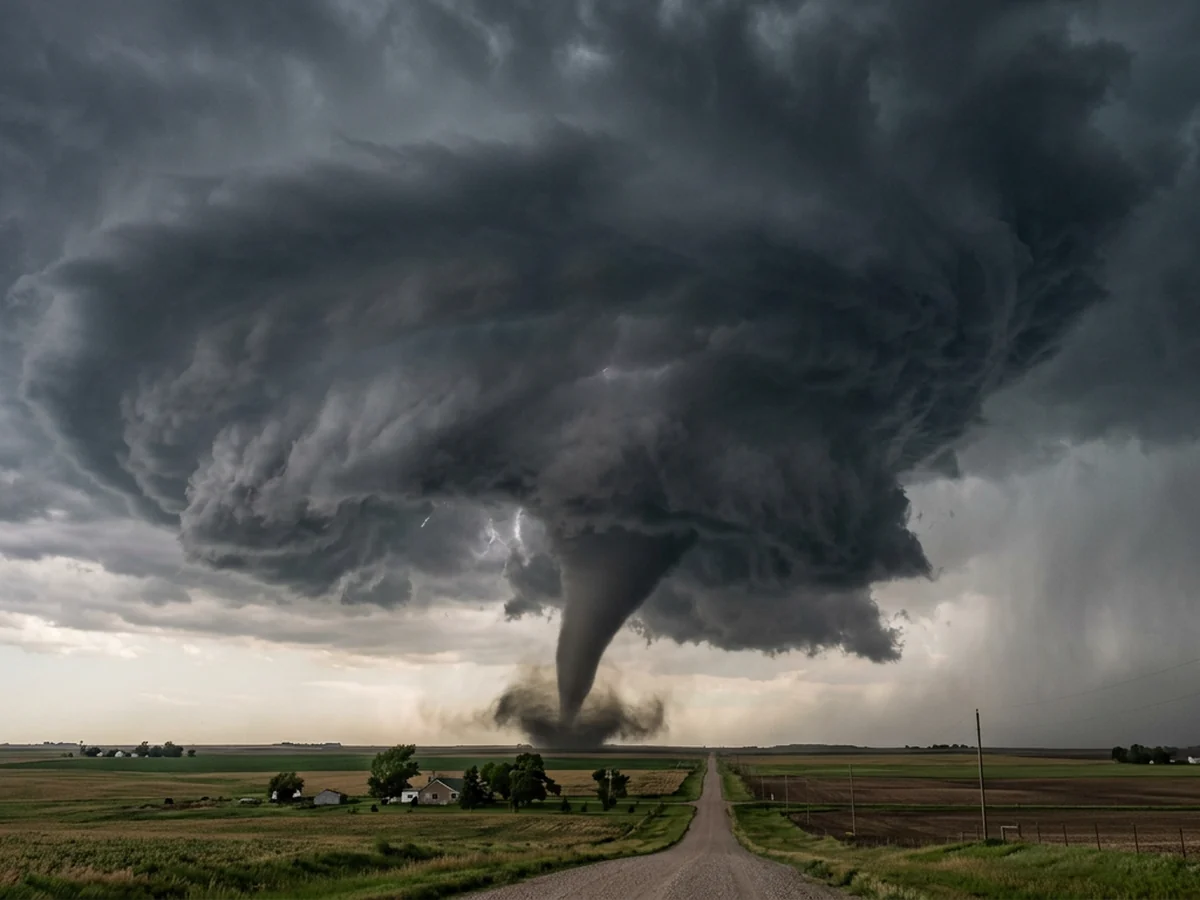
Tornadoes form beneath strong thunderstorms, often rotating supercells, when changing winds with height create spin that is stretched into a narrow vortex. Hurricanes form over ocean water warmer than about 26.5 °C, where evaporation fuels clusters of storms that organise around a central low.
Size and duration
Most tornadoes are less than a few hundred metres wide and last under ten minutes. Hurricanes span hundreds of kilometres and can churn for a week or more, tracking thousands of kilometres across oceans.
Wind and damage
The strongest tornado winds can exceed 400 km/h, faster than any hurricane, but they affect a narrow path. Hurricanes bring damaging winds over huge areas, plus storm surge and torrential rain, which usually cause the greatest loss of life.
Warnings
Hurricanes can be tracked by satellite for days, allowing evacuations. Tornadoes develop quickly, so warnings may give only minutes. The US, especially the Great Plains, has more tornadoes than anywhere else.
Sources & further reading
Sizes and speeds are approximate. Photograph: original AI-generated illustration (Adobe Firefly). Reference organisations do not endorse this website.