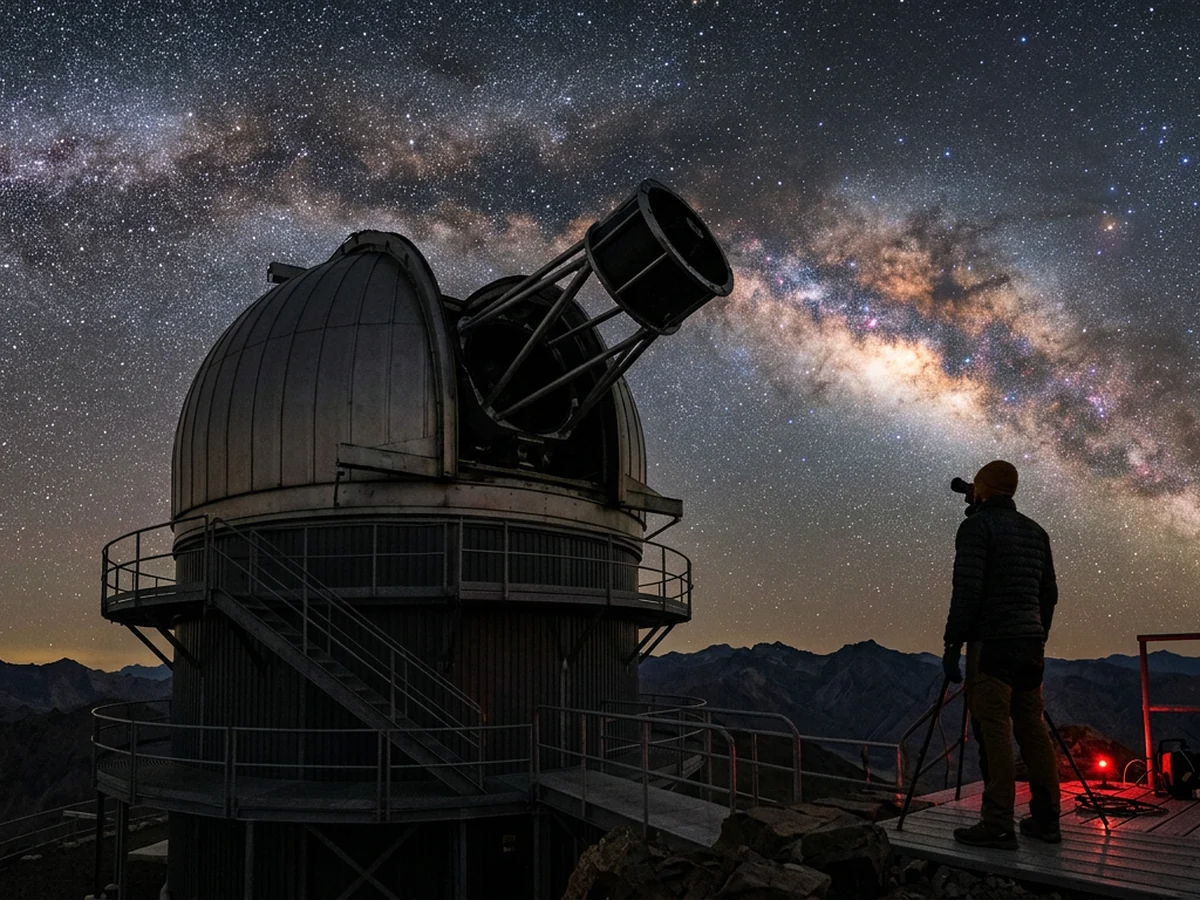
Common roots
Ancient Babylonian, Egyptian, Greek, Indian and Islamic scholars carefully tracked the movements of the Sun, Moon and planets. Much of that work served calendars, navigation and astrology at the same time.
Astronomy today
Modern astronomy uses telescopes, spacecraft and physics to study everything from exoplanets to the early universe. Its predictions, such as the timing of eclipses or a comet's return, can be checked precisely.
Astrology's claims
Western astrology assigns meaning to the zodiac signs and planetary positions at a person's birth. Most of its system was set about 2,000 years ago, and because of the slow wobble of Earth's axis, the Sun's actual position against the constellations has since shifted by nearly a whole sign.
What tests show
Researchers have tested whether astrologers can match birth charts to personality profiles better than chance. Well-designed studies, such as one published in Nature in 1985, found no such ability. Astrology remains popular as a cultural tradition rather than a science.
Sources & further reading
This chapter describes evidence; it does not judge personal beliefs. Photograph: original AI-generated illustration (Adobe Firefly). Reference organisations do not endorse this website.