What a solstice is
Because Earth's axis is tilted, the point where the Sun is directly overhead moves between the Tropic of Cancer and the Tropic of Capricorn during the year. The solstices are the turning points: around 21 June it reaches the Tropic of Cancer, and around 21 December the Tropic of Capricorn.
What an equinox is
Around 20 March and 22 or 23 September, the Sun is directly over the equator. Day and night are close to 12 hours each everywhere, although refraction of light and the Sun's disc size make daylight slightly longer.
Opposite hemispheres
When the Northern Hemisphere has its June solstice and longest day, the Southern Hemisphere has its shortest day and midwinter. Seasons are reversed between the two halves of the world.
Culture and calendars
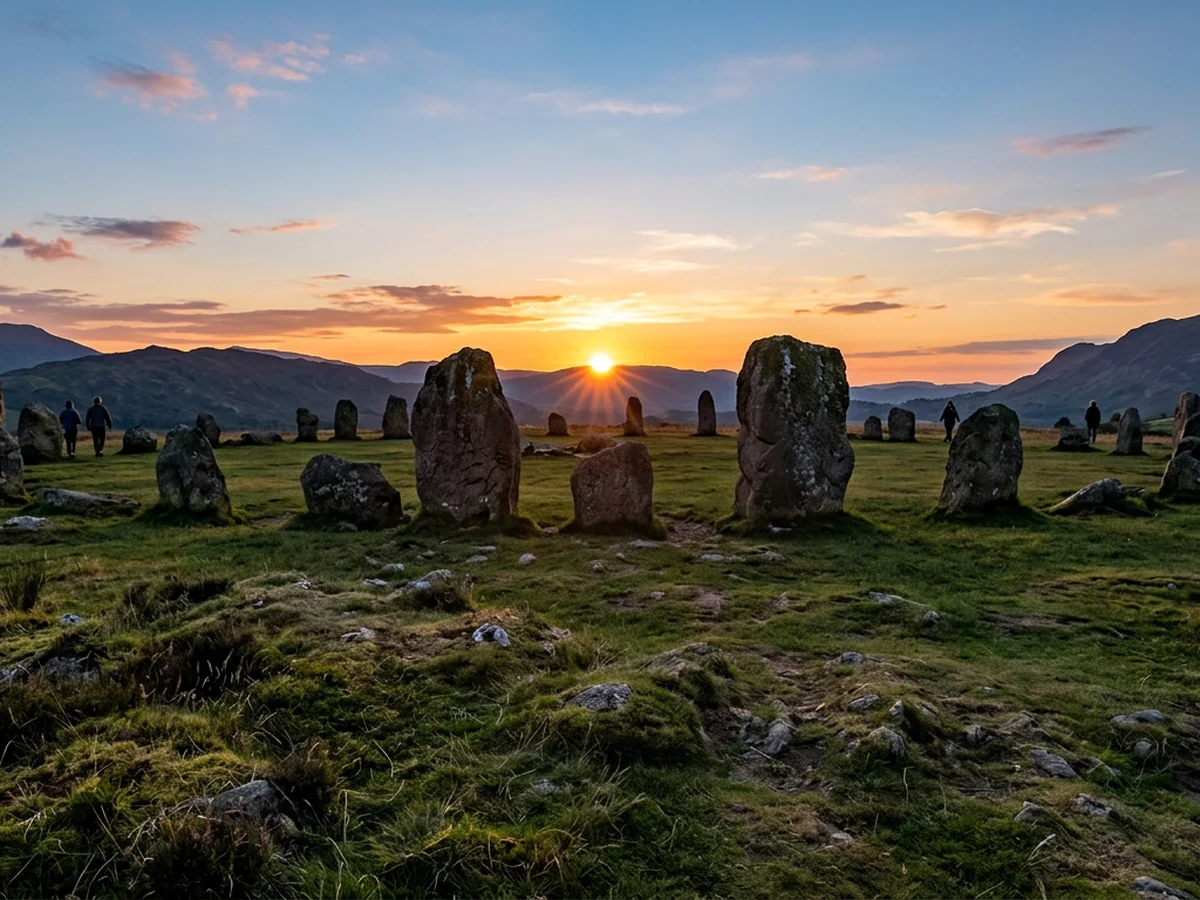
Many cultures mark these dates. Nowruz, the Persian new year, falls on the March equinox, and ancient builders aligned temples and stone circles to solstice sunrises and sunsets.
Sources & further reading
Dates vary by a day or so from year to year. Photograph: original AI-generated illustration (Adobe Firefly). Reference organisations do not endorse this website.