A new kind of divide
The digital divide once meant the gap between those with and without internet access. AI has created a new divide based on who has the computing power, data, skills and money to build and use advanced AI. Countries that control these resources can develop their own AI, shape its rules and capture its economic benefits. Those without them must rely on others, often paying for access and accepting foreign terms.
Mapping the compute
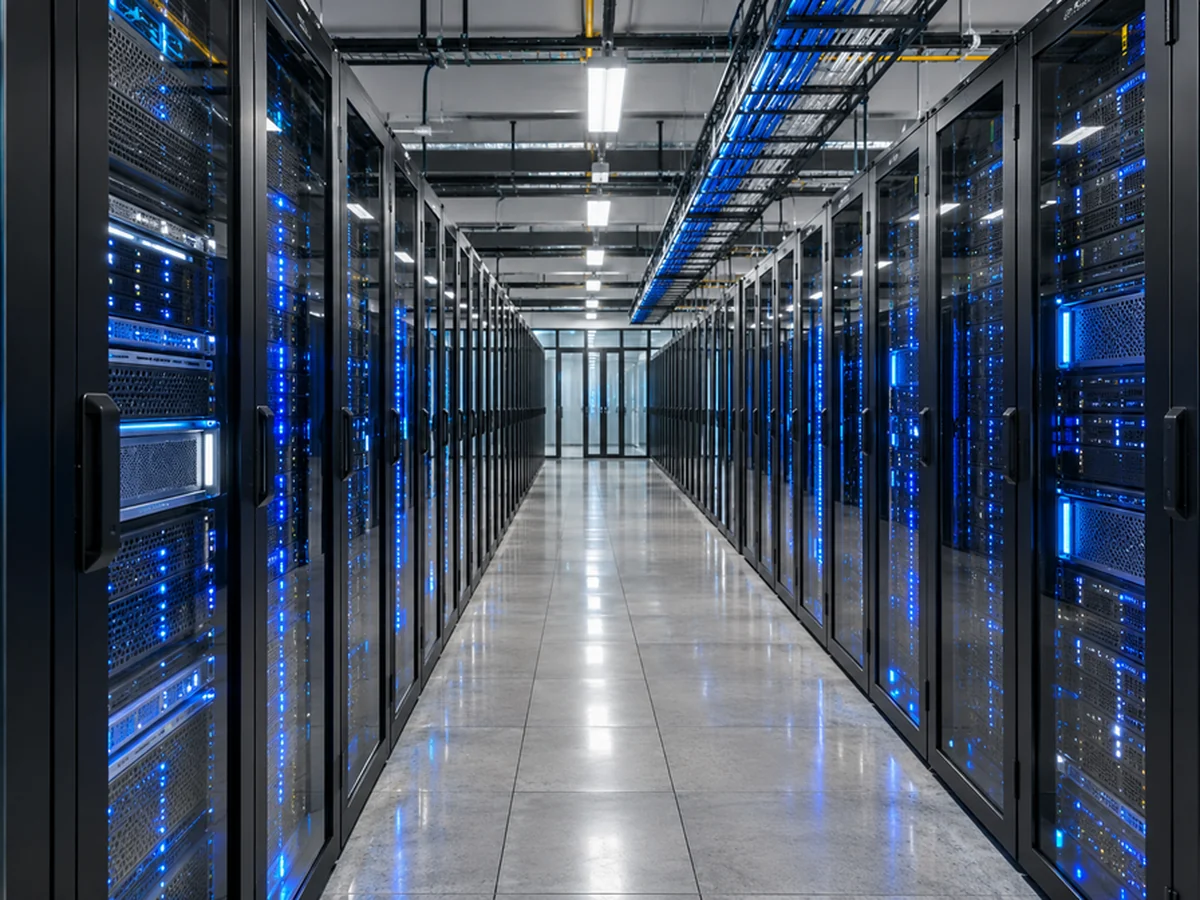
In 2025, researchers at the Oxford Internet Institute, led by Vili Lehdonvirta, mapped the world's public cloud AI computing infrastructure. They found that only about 32 countries, roughly 16% of nations, host specialised AI data centres. The United States, China and the European Union host more than half of the most powerful facilities. More than 150 countries have none, and US and Chinese companies operate the vast majority of AI computing used by others.
Compute north and south
The Oxford researchers described a world divided into a Compute North, with infrastructure suitable for training AI models; a Compute South, with infrastructure mainly for running existing models; and Compute Deserts with no public AI computing at all. Lehdonvirta compared AI computing to oil, suggesting that countries producing it could gain outsized international influence, just as oil-producing countries have in the past.
Africa and Latin America
Africa and Latin America together account for only a few per cent of global AI computing capacity, according to analyses cited by the Brookings Institution. In South America, Brazil hosts most public cloud AI computing. Many African countries face additional challenges, including unreliable electricity, limited internet connectivity, high costs and a shortage of AI specialists, though the continent has a young, fast-growing population and vibrant technology hubs.
Language and data gaps
AI models work best in languages with large amounts of online text, especially English. Thousands of languages, including many spoken by millions of people in Africa and Asia, are poorly supported. This means that AI tools may be less useful, less accurate and less culturally appropriate for billions of people. Projects in Africa, India and elsewhere are building datasets and models for local languages to address this.
Skills and adoption
Adoption of AI tools is much higher in wealthier, digitally connected countries. Research by technology companies and international organisations has found large gaps between high-income and low-income countries in the share of people using generative AI. The UAE and Singapore are among the leaders in everyday AI use. Training teachers, workers and officials is essential for countries to benefit, as is affordable internet access.
The UAE's initiative
In November 2025, at the G20 summit in Johannesburg, the UAE announced a one billion dollar AI for Development initiative to support and finance AI projects in African countries, in areas such as education, healthcare, agriculture, climate adaptation and digital infrastructure. It is led by the Abu Dhabi Exports Office, part of the Abu Dhabi Fund for Development, and the UAE Foreign Aid Agency. Officials later said demand for funding exceeded the allocation.
Other efforts
International organisations, governments and companies have launched programmes to spread AI's benefits. The United Nations has established an independent scientific panel and a global dialogue on AI governance, with discussions on capacity building. India has promoted low-cost AI infrastructure and digital public goods. Technology companies offer training programmes and data centre investments in emerging markets, though critics warn this can deepen dependence on foreign firms.
Risks and opportunities
If AI's productivity gains flow mainly to rich countries and companies, global inequality could widen, and countries that relied on low-cost labour for outsourcing could lose jobs to automation. But AI could also help developing countries leapfrog, as mobile phones did, delivering education, healthcare advice, agricultural guidance and financial services to people who previously lacked access. Which outcome prevails depends on policy choices and investment.
Why it matters
AI is becoming as important to economic development as electricity and the internet. Ensuring that its benefits are widely shared, rather than concentrated in a few countries, is one of the great challenges of the AI age. Countries such as the UAE, which have invested heavily in AI infrastructure, are in a position to help others, and the choices made now will shape global prosperity for decades.
Sources & further reading
- Oxford Research Archive · Compute North vs. Compute South (Lehdonvirta, Wú and Hawkins) ↗
- Brookings · How to bridge the global AI divide (2026) ↗
- WAM · UAE launches 1 billion dollar AI for Development initiative (2025) ↗
Data centre counts depend on definitions and change as new facilities open. Photograph: original AI-generated illustration (Adobe Firefly). Reference organisations do not endorse this website.