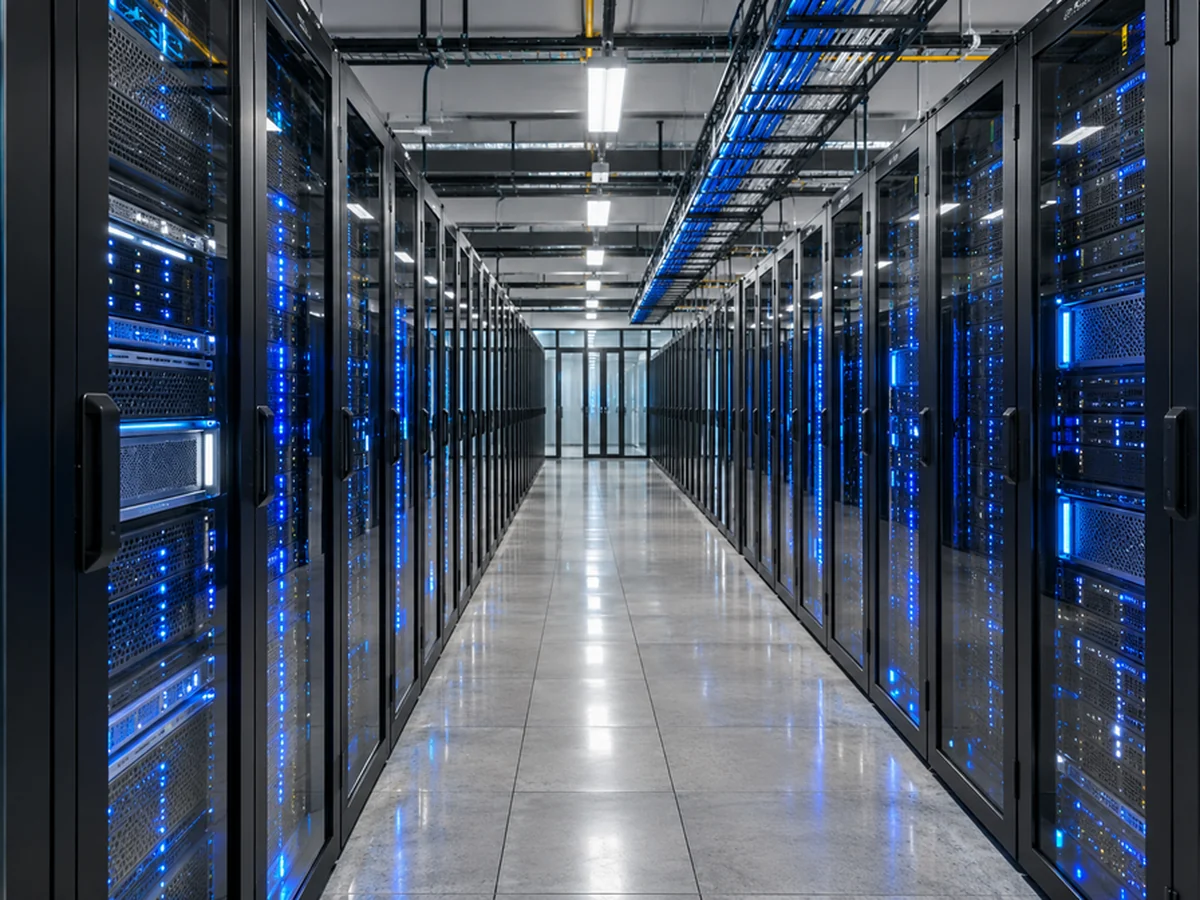
What a supercomputer is
A supercomputer is a machine that combines thousands of processors, often tens of thousands of chips, working together on one problem. Scientists use them for tasks too large for ordinary computers, such as simulating the climate, modelling nuclear reactions, designing aircraft, studying the universe and discovering new medicines and materials. The most powerful systems fill large halls, cost hundreds of millions of dollars and use as much electricity as a small town.
The TOP500 list
Since 1993, the TOP500 project has ranked the world's most powerful publicly known supercomputers twice a year, in June and November. Systems are measured using a benchmark called High Performance Linpack, which solves a huge system of equations, and speed is reported in floating-point operations per second, or flops. One of the list's editors, Horst Simon, is director of ADIA Lab in Abu Dhabi, linking the list to the UAE.
The exascale era
An exaflop is a billion billion calculations per second, or 10 to the power of 18. The first system to pass this mark on the TOP500 benchmark was Frontier at Oak Ridge National Laboratory in the United States in 2022. Aurora at Argonne and El Capitan at Lawrence Livermore followed. In November 2025, Germany's JUPITER Booster became Europe's first exascale system, at exactly one exaflop.
A surprise leader
In June 2026, a previously unlisted Chinese system, LineShine, at the National Supercomputer Center in Shenzhen, debuted at number one with about 2.2 exaflops, ending El Capitan's run at the top. It was the first time since 2017 that a Chinese machine had led the list. China had largely stopped submitting its most powerful systems in recent years, so LineShine's appearance surprised many observers.
November 2026
On the November 2026 list, announced at the SC26 conference in Chicago, the top ten were unchanged from June: LineShine first, El Capitan second at about 1.8 exaflops, Frontier third, Aurora fourth and JUPITER Booster fifth. Systems in Italy, the United States, Japan and Switzerland completed the top ten. Only 27 of the 500 systems were new, the lowest turnover in the list's history.
Countries on the list
The United States had by far the most systems on the November 2026 list, with about 163, followed by Germany and Japan with more than 40 each, according to analyses of TOP500 data. Despite holding first place, China had relatively few systems listed. Supercomputers are a source of national prestige and scientific strength, and countries invest heavily in them as strategic infrastructure. Japan's Fugaku, once the world's fastest, remained in the top ten more than five years after it first took the lead.
Supercomputers and AI
Many supercomputers use graphics processors from Nvidia or AMD, the same kinds of chips that power AI. Scientists increasingly use them to train AI models for science, such as weather forecasting and protein design. A related benchmark, HPL-MxP, measures performance using lower-precision calculations common in AI, on which El Capitan led. AMD chips power two of the three fastest systems.
Why turnover is falling
Analysts suggest that the record-low number of new systems reflects a shift in investment towards giant AI data centres, sometimes called AI factories, built by technology companies. Many of these clusters, with hundreds of thousands of AI chips, are not submitted to the TOP500 list. Measured in the low-precision arithmetic used for AI, the largest private AI clusters may exceed the computing power of listed supercomputers.
Energy efficiency
Supercomputers consume enormous amounts of electricity, so efficiency matters. A companion list, the Green500, ranks systems by calculations per watt. Modern exascale systems are far more efficient than older ones; El Capitan, for example, delivered about 61 billion calculations per watt in November 2025. Improving efficiency helps reduce running costs and environmental impact as computing demand grows.
Why it matters
Supercomputers help humanity tackle some of its hardest problems, from predicting extreme weather to designing clean energy technologies and new medicines. The race among countries to build faster machines reflects their importance for science, industry and security. As AI and traditional supercomputing converge, these machines will play a growing role in scientific discovery and in the global competition over computing power. Watching how the list changes over the next few years will show whether public science or private AI companies set the pace.
Sources & further reading
- TOP500 · November 2026 list ↗
- TOP500 · LineShine debuts at No. 1 as the TOP500 enters a new global exascale era (June 2026) ↗
- HPCwire · No change at the top of TOP500; LineShine still No. 1 (2026) ↗
Rankings change twice a year; figures are from the November 2026 list. Photograph: original AI-generated illustration (Adobe Firefly). Reference organisations do not endorse this website.