A hidden danger
Atrial fibrillation, often called AFib, is the most common type of irregular heart rhythm. In AFib, the upper chambers of the heart beat chaotically instead of contracting properly. Many people have no symptoms, or only mild ones such as palpitations, tiredness or breathlessness. But AFib can cause blood clots to form in the heart, which can travel to the brain and cause a stroke. It makes a stroke several times more likely.
Why early detection matters
If AFib is diagnosed, doctors can offer treatments, including blood-thinning medicines that greatly reduce the risk of stroke. The problem is that AFib often comes and goes and may not appear during a short check-up or a single electrocardiogram, or ECG, the test that records the heart's electrical activity. Many people are only diagnosed after they have already had a stroke, making continuous monitoring potentially valuable.
How a watch checks the heart
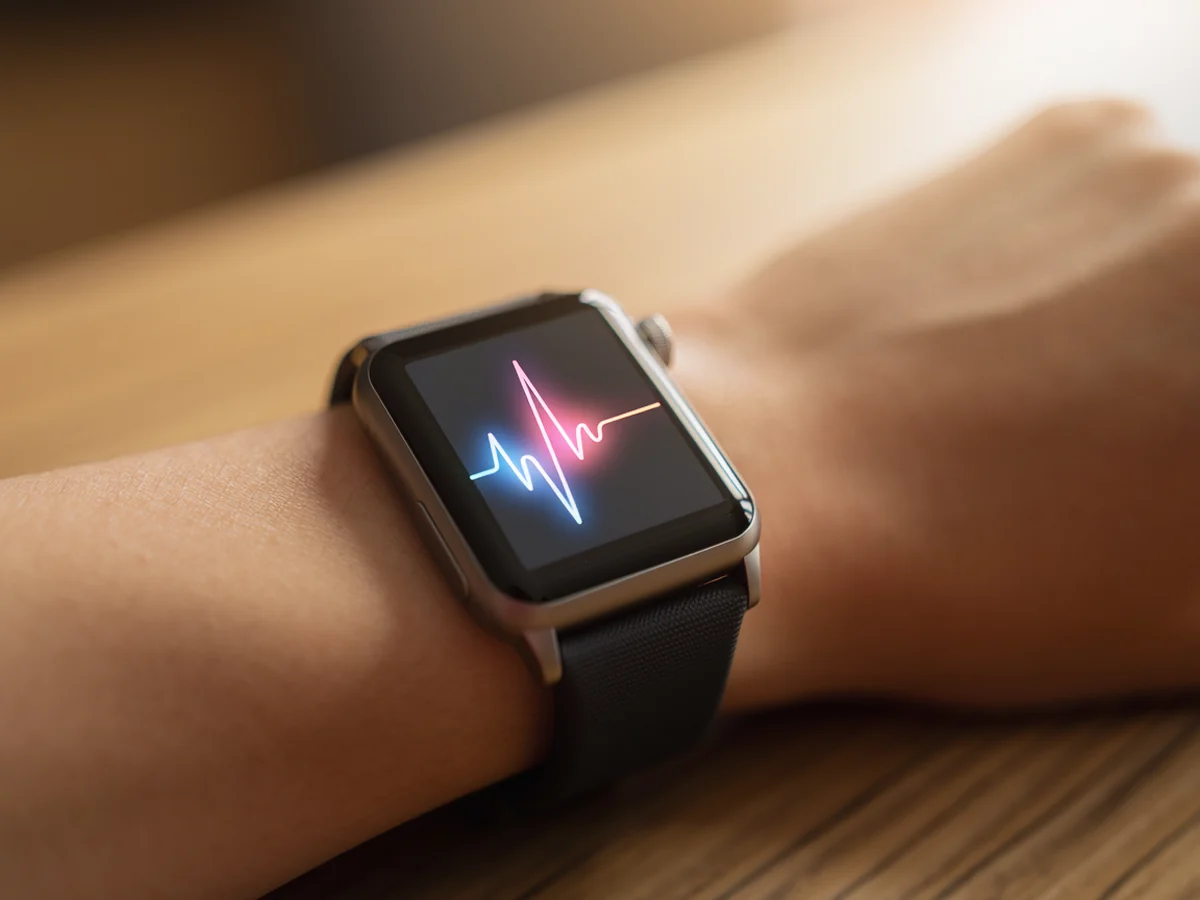
Most smartwatches have optical sensors on the back that shine light into the skin and measure tiny changes in blood flow with each heartbeat. Algorithms analyse the timing between beats and look for the irregular pattern typical of AFib. Some watches also have electrodes that allow users to record a single-lead ECG by touching the watch's crown or frame, providing a more detailed reading that can be shared with a doctor.
Regulatory clearance
In 2018, the US Food and Drug Administration cleared Apple Watch features for detecting irregular heart rhythms and recording ECGs, among the first such features in a consumer smartwatch. Other companies, including Samsung, Fitbit, owned by Google, and Withings, have since received clearance for similar features. Clearance means the features were reviewed for their intended use, but they are not designed to diagnose heart attacks or other conditions.
The Apple Heart Study
To test the technology at scale, Apple and Stanford Medicine ran the Apple Heart Study, which enrolled 419,297 participants in the United States. Results were published in the New England Journal of Medicine in November 2019. About 0.52% of participants received a notification of an irregular pulse. Those notified were offered an ECG patch to wear for up to a week, to check whether they really had AFib.
What the study found
Among participants who received a notification while wearing the ECG patch at the same time, 84% were confirmed to have AFib, showing that notifications were usually accurate. Many notified participants contacted a doctor. The study showed it was possible to screen for heart rhythm problems among hundreds of thousands of people using consumer devices, though it was not designed to show whether this reduced strokes.
AI makes it better
Newer algorithms use machine learning trained on large datasets of heart rhythms to improve accuracy and reduce false alarms. Some watches now offer features that estimate how much time a person with diagnosed AFib spends in the rhythm, helping them and their doctors monitor the condition. Researchers are also developing AI that can detect other heart problems from smartwatch data, such as signs of weak heart pumping.
Limits and false alarms
Smartwatch alerts are not a diagnosis. False alarms can happen, causing anxiety and extra medical visits, and a watch may miss AFib. Most features are designed for adults and may not be suitable for people with certain existing heart conditions. Health experts advise that anyone receiving an alert should see a doctor for proper testing, and that people with symptoms such as chest pain should seek urgent care rather than relying on a watch.
Wearables in the Gulf
Smartwatches are popular in the UAE and across the Gulf, where rates of heart disease, diabetes and high blood pressure are high. Health authorities in the region have encouraged digital health and preventive care, and some doctors use data from patients' wearables as part of consultations. Wearables could help detect heart rhythm problems in people who would otherwise not be screened.
Why it matters
Strokes cause death and disability for millions of people every year, and many could be prevented if AFib were detected earlier. Smartwatches bring heart monitoring to people's wrists, continuously and at low cost. Used wisely, with medical follow-up, they are one of the clearest examples of AI-powered consumer technology helping to protect health.
Sources & further reading
- New England Journal of Medicine · Large-scale assessment of a smartwatch to identify atrial fibrillation (Perez et al., 2019) ↗
- Wikipedia · Atrial fibrillation ↗
- American Heart Association · What is atrial fibrillation? ↗
General information, not medical advice. See a doctor if you receive an alert or have symptoms. Photograph: original AI-generated illustration (Adobe Firefly). Reference organisations do not endorse this website.