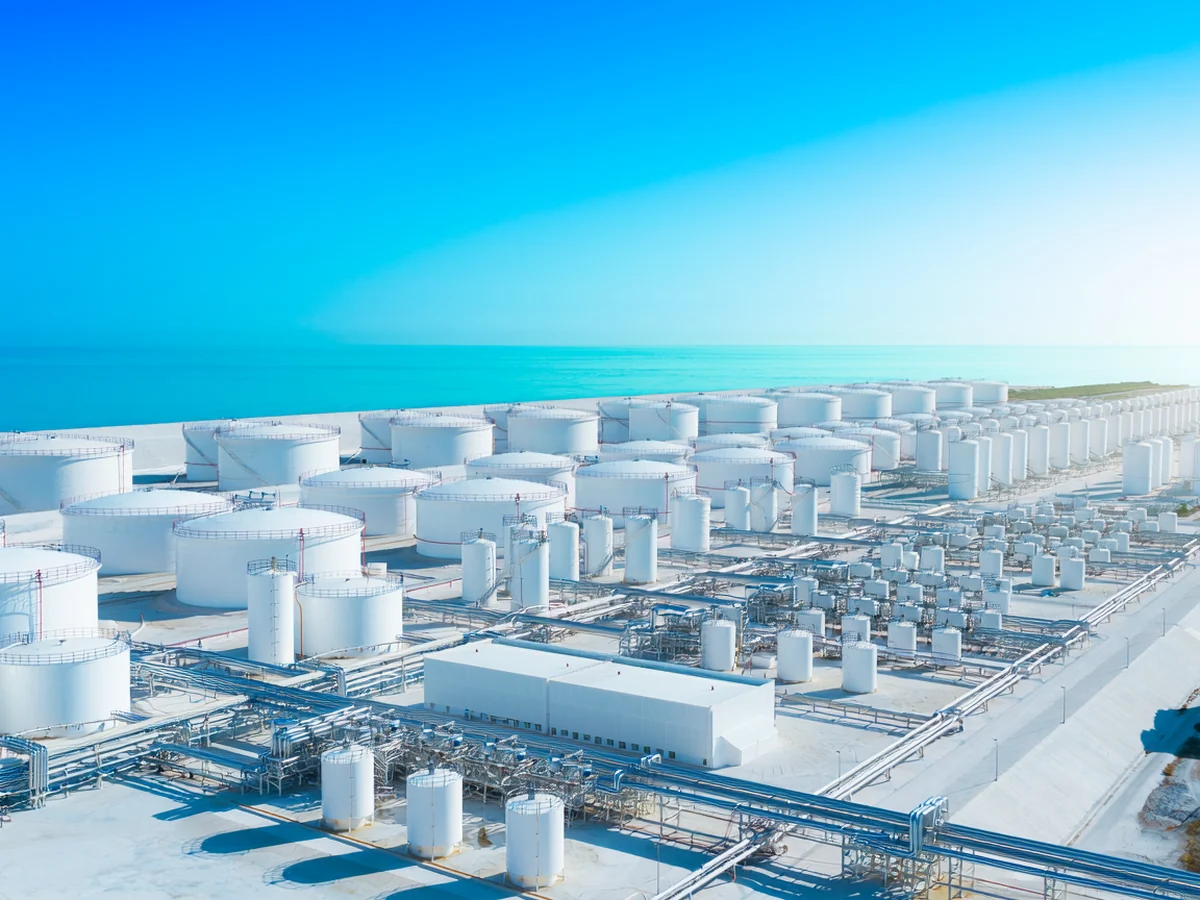
Water from the sea
The Gulf is one of the most water-scarce regions on Earth, with little rainfall and few rivers. Countries such as the UAE, Saudi Arabia, Qatar and Kuwait rely heavily on desalination, which removes salt from seawater to produce drinking water. The region accounts for a large share of the world's desalination capacity. Desalination is reliable but uses a lot of energy, much of it historically from fossil fuels, and produces concentrated salty brine.
A shift in technology
Older Gulf plants mainly used thermal desalination, boiling seawater and condensing the steam, often linked to power stations. Many countries are now switching to reverse osmosis, which pushes seawater through fine membranes at high pressure, leaving salt behind. Reverse osmosis uses much less energy. The UAE has invested heavily in large reverse osmosis plants, including the Taweelah plant in Abu Dhabi, one of the world's largest.
The membrane problem
Reverse osmosis membranes can become clogged by salts, particles and bacteria that form slimy layers called biofilms, a problem known as fouling. Fouling makes plants use more energy, reduces water output and requires costly cleaning or membrane replacement. Detecting it early is difficult because it develops gradually. AI can analyse data from pressure, flow and water-quality sensors to spot early warning signs that human operators might miss.
Research in Saudi Arabia
At King Abdullah University of Science and Technology, KAUST, the desalination research group led by Professor Noreddine Ghaffour works with ACWA Power, a major Saudi developer and operator of power and water plants, on an AI framework for detecting early biofilm formation on seawater reverse osmosis membranes. In 2026, the partners presented their joint research at ACWA Power's Innovation Days in Riyadh.
Cutting chemical use
Desalination plants add chemicals to treat water and protect membranes. Using too much wastes money and can harm the marine environment when discharged; using too little can damage equipment. ACWA Power reported that an in-house artificial neural network contributed to about a 12% cost reduction in chemical dosing at one of its desalination plants. Other reported examples in Saudi Arabia suggest AI monitoring can cut power and chemical use while increasing output.
Power and water together
In the UAE, many power stations also produce desalinated water. In Dubai, DEWA and Siemens Energy developed what they described as the world's first AI Plant Intelligent Controller at the Jebel Ali Power and Desalination Complex, the largest power plant in the UAE. It uses AI and digital twin technology to help power blocks adapt to changing grid needs. The first phase achieved a 2.2% improvement in efficiency and fuel savings, cutting about 35,000 tonnes of carbon emissions a year per power block.
Predictive maintenance
Desalination plants contain pumps, motors, valves and energy recovery devices that run continuously. AI can analyse vibration, temperature and performance data to predict when equipment is likely to fail, so it can be repaired during planned maintenance rather than breaking down unexpectedly. This improves reliability, an essential requirement when a plant supplies drinking water to millions of people.
Solar-powered desalination
To reduce emissions, Gulf countries are increasingly powering desalination with solar energy. Because solar output varies through the day, AI can help schedule water production when electricity is cheapest or cleanest and store water rather than electricity. Researchers are also developing new low-energy desalination methods. The Saudi Water Authority published a 2025 report on AI applications in desalination, describing AI as a vital step towards sustainable water supply.
Environmental concerns
Desalination produces brine, which is saltier and sometimes warmer than seawater and can contain chemical residues. Discharging it back into the Gulf, a shallow sea with limited water exchange, can harm marine life. AI can help reduce chemical use and optimise how brine is discharged and diluted. Experts say water conservation, recycling wastewater and reducing leaks are just as important as making desalination more efficient.
Why it matters
For millions of people in the Gulf, desalinated water is essential for daily life. Even small improvements in efficiency, of a few per cent, can save large amounts of energy, money and emissions when applied across huge plants. AI is becoming an important tool for running desalination more sustainably, helping secure the region's water future as populations grow and the climate warms.
Sources & further reading
- Arab News · How AI is reshaping the desalination industry in Saudi Arabia (2026) ↗
- KAUST DESAL · DESAL and ACWA Power advance AI-based research for early membrane fouling detection (2026) ↗
- Zawya · DEWA, Siemens Energy begin phase 2 of AI Plant Intelligent Controller project ↗
Results are as reported by companies and may not apply to all plants. Photograph: original AI-generated illustration (Adobe Firefly). Reference organisations do not endorse this website.