How do you measure a library?
Measuring a library sounds simple: count the books. In practice, the largest libraries hold far more than books. Their collections include newspapers, maps, sheet music, manuscripts, photographs, prints, sound recordings, films, patents and digital files. Some count every individual item; others count volumes or titles. Some include items stored in remote warehouses. Because there is no single standard, lists of the world's largest libraries should be read as approximate rankings rather than exact scores.
The Library of Congress
The Library of Congress in Washington, D.C., is usually named the largest library in the world. Founded in 1800 to serve the United States Congress, it lost most of its early collection when British troops burned the Capitol in 1814. Former president Thomas Jefferson sold his personal library of more than 6,000 books to restart it. Guinness World Records listed it at about 174 million items in 2021, including millions of books, maps, photographs and manuscripts.
The British Library
The British Library in London is the national library of the United Kingdom and a close rival for the top spot. It holds around 170 million items, according to its own published figures, including some of the world's most famous documents, such as copies of Magna Carta and early printed books. Its main building at St Pancras opened in 1997, and it has a huge storage site at Boston Spa in Yorkshire. It receives a copy of every book published in the UK.
Legal deposit
National libraries grow so large because of legal deposit, a rule that requires publishers to send copies of everything they publish. In the United Kingdom, this applies to the British Library and several other deposit libraries. In the United States, copyright deposits feed the Library of Congress. Many countries now include websites and e-books in legal deposit, so national libraries also archive large parts of the internet to preserve them for future researchers.
New York and Canada
The New York Public Library is one of the largest public library systems in the world, with tens of millions of items across research libraries and dozens of neighbourhood branches. Its main building on Fifth Avenue, guarded by two stone lions called Patience and Fortitude, is a city landmark. Library and Archives Canada in Ottawa, which combines the national library with the national archives, also holds tens of millions of items documenting Canadian history.
Russia, France and China
Other giant collections include the Russian State Library in Moscow, one of the largest in Europe, and the National Library of Russia in Saint Petersburg. The National Library of France traces its roots to the royal library of the fifteenth century and holds tens of millions of items. The National Library of China in Beijing is the largest library in Asia by many measures, and its collections include ancient oracle bones and rare classical texts.
Libraries in the UAE
The UAE has invested in major libraries in recent years. The Mohammed bin Rashid Library in Dubai, which opened in 2022 in a building shaped like a traditional wooden book stand, called a rehal, holds more than a million books and other items in print and digital form. Abu Dhabi has a network of public libraries, and Sharjah has a long tradition as a cultural centre, hosting one of the world's largest book fairs every year.
Preserving fragile treasures
Big libraries are as much about preservation as about lending. Paper, parchment and film decay over time, especially in heat and humidity. Libraries store rare items in climate-controlled vaults, repair damaged books and make digital copies so that originals are handled less. Large digitisation projects now let anyone view manuscripts, maps and newspapers online, opening collections to people who will never visit in person.
Libraries in the digital age
With so much information online, some people ask whether giant libraries are still needed. Librarians argue that they are more important than ever. They preserve sources that may disappear from the web, guarantee free and fair access to knowledge, and help people judge what is reliable. Reading rooms, children's programmes, exhibitions and quiet study spaces keep libraries at the centre of many communities, whatever their size.
Sources & further reading
- Guinness World Records · Largest library ↗
- Wikipedia · List of largest libraries ↗
- British Library · Facts and figures ↗
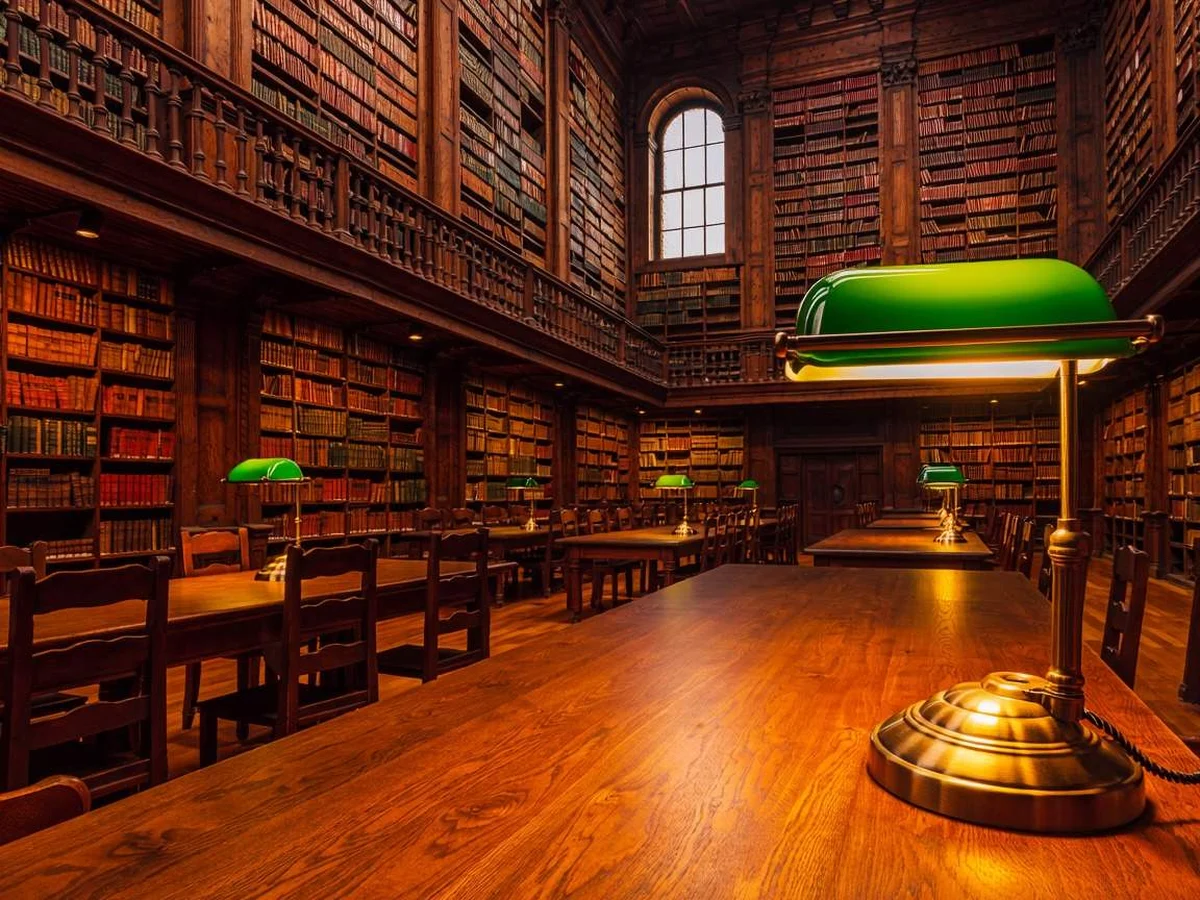
Library sizes are approximate and counted differently by each institution. Photograph: original AI-generated illustration (Adobe Firefly). Reference organisations do not endorse this website.