Why recycle batteries
Batteries power phones, laptops, tools and, increasingly, electric cars and grid storage. Many contain metals that are costly to mine and refine, such as lithium, cobalt, nickel and manganese, along with copper and aluminium. Throwing batteries away wastes these materials and can be dangerous, because damaged lithium-ion batteries can catch fire in rubbish trucks and landfill sites. Recycling recovers valuable metals, reduces mining and keeps toxic substances out of the environment.
Different batteries, different methods
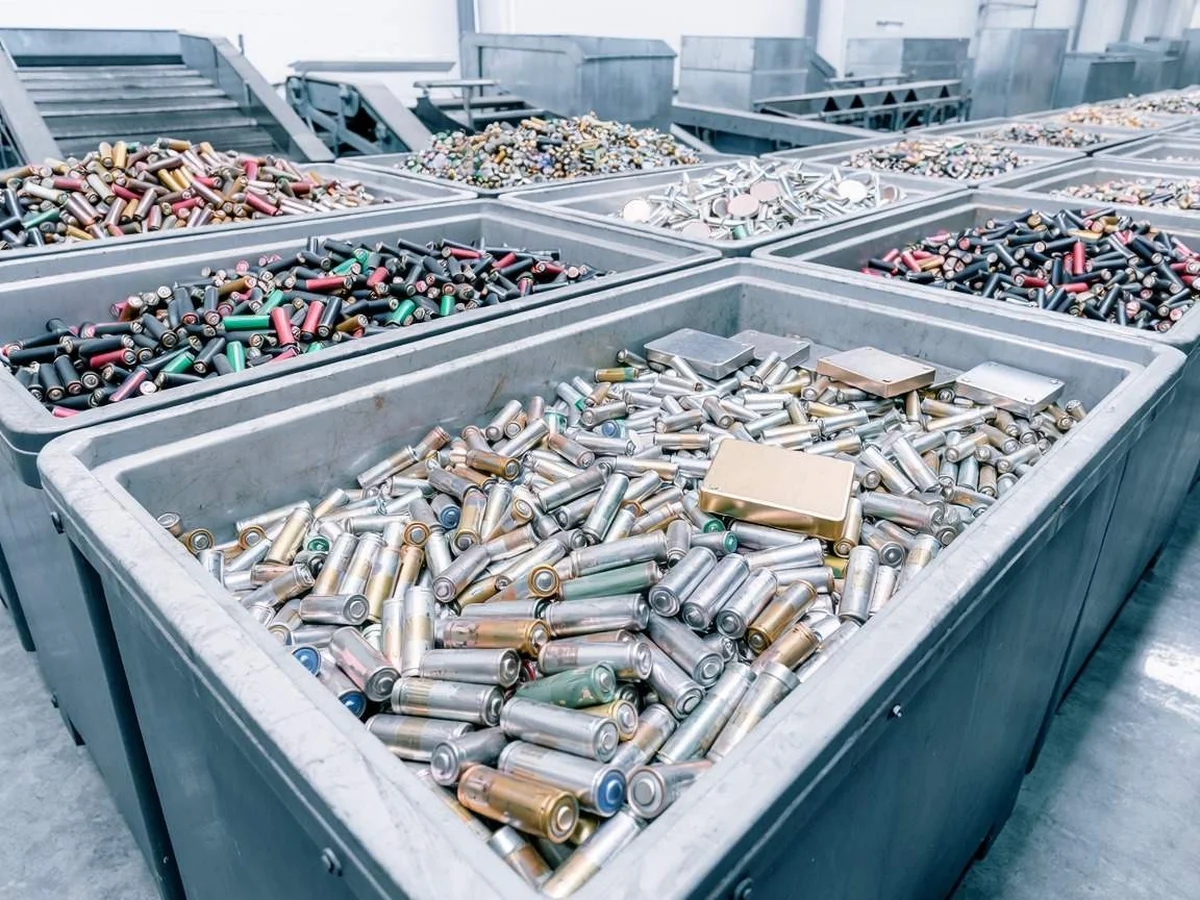
Not all batteries are the same. Lead-acid batteries, used in most petrol cars, have a simple design and a long-established recycling industry. Alkaline batteries in remote controls and toys contain zinc and manganese. Lithium-ion batteries, found in phones and electric vehicles, are more complex and come in many chemistries. Recyclers must first sort batteries by type, because each needs a different process to recover materials safely.
The lead-acid success story
Lead-acid batteries are among the most recycled products in the world. In the United States, the recycling rate is often reported at around 99%. The batteries are broken apart, the lead is melted and purified, the plastic cases are turned into pellets for new cases, and the sulphuric acid is neutralised or converted into other useful chemicals. A new car battery typically contains a large share of recycled lead and plastic.
Collecting and discharging
Lithium-ion recycling starts with safe collection. Shops, councils and car makers run take-back schemes, and electric vehicle batteries are removed by trained technicians. Because a battery can still hold energy, it is discharged before processing, sometimes by connecting it to a load, sometimes by soaking it in a salt solution. Large electric car packs are dismantled into modules and cells, separating out electronics, cables and casings that can be recycled on their own.
Making black mass
The cells are then shredded, often under an inert gas or liquid to prevent fires. Magnets and sieves separate steel, copper foil, aluminium foil and plastics. What remains is a dark powder known as black mass, which contains the most valuable metals: lithium, cobalt, nickel and manganese, along with graphite from the battery's negative electrode. Black mass has become a traded material in its own right, shipped to specialised refineries.
Smelting with heat
One way to process black mass, or even whole cells, is pyrometallurgy, which uses very high temperatures in a furnace. The organic materials and graphite burn off, providing some of the heat, and the metals melt into an alloy containing cobalt, nickel and copper. These metals are then separated chemically. The method is robust and handles mixed batteries well, but it uses a lot of energy, and lithium often ends up in the slag, where it is harder to recover.
Dissolving with chemistry
The other main route is hydrometallurgy, which dissolves the black mass in acids and then separates the metals step by step using precipitation and solvent extraction. This approach can recover lithium as well as cobalt and nickel at high purity, often good enough to make new battery materials directly. It generally uses less energy than smelting but produces liquid waste that must be treated. Many modern plants combine mechanical, heat and chemical steps.
Rules and targets
Governments are pushing for more recycling. The European Union's Battery Regulation, adopted in 2023, sets collection and recovery targets and requires new batteries to contain minimum shares of recycled cobalt, lithium, nickel and lead in the coming years. Battery passports will track materials through a product's life. China, the United States and other countries are also expanding recycling capacity, partly to secure supplies of critical minerals.
What you can do
Never put lithium-ion batteries in household rubbish or recycling bins. Tape over the terminals of small batteries and take them to a collection point, such as a shop drop-off box or a municipal recycling centre. In the UAE, recycling initiatives and collection points for batteries and electronic waste are available in many malls and through municipal programmes. Before recycling a phone or laptop, back up and wipe your data, then hand it in as a whole device.
Sources & further reading
- U.S. EPA · Used lithium-ion batteries ↗
- Wikipedia · Battery recycling ↗
- European Commission · Batteries regulation ↗
General information; rules and collection schemes vary by country and emirate. Photograph: original AI-generated illustration (Adobe Firefly). Reference organisations do not endorse this website.