Boiling depends on pressure
Water boils when its vapour pressure matches the pressure of the air above it. At sea level that happens at 100 °C. If the surrounding pressure is higher, water must get hotter before it can boil, which is the principle the pressure cooker exploits.
Building pressure
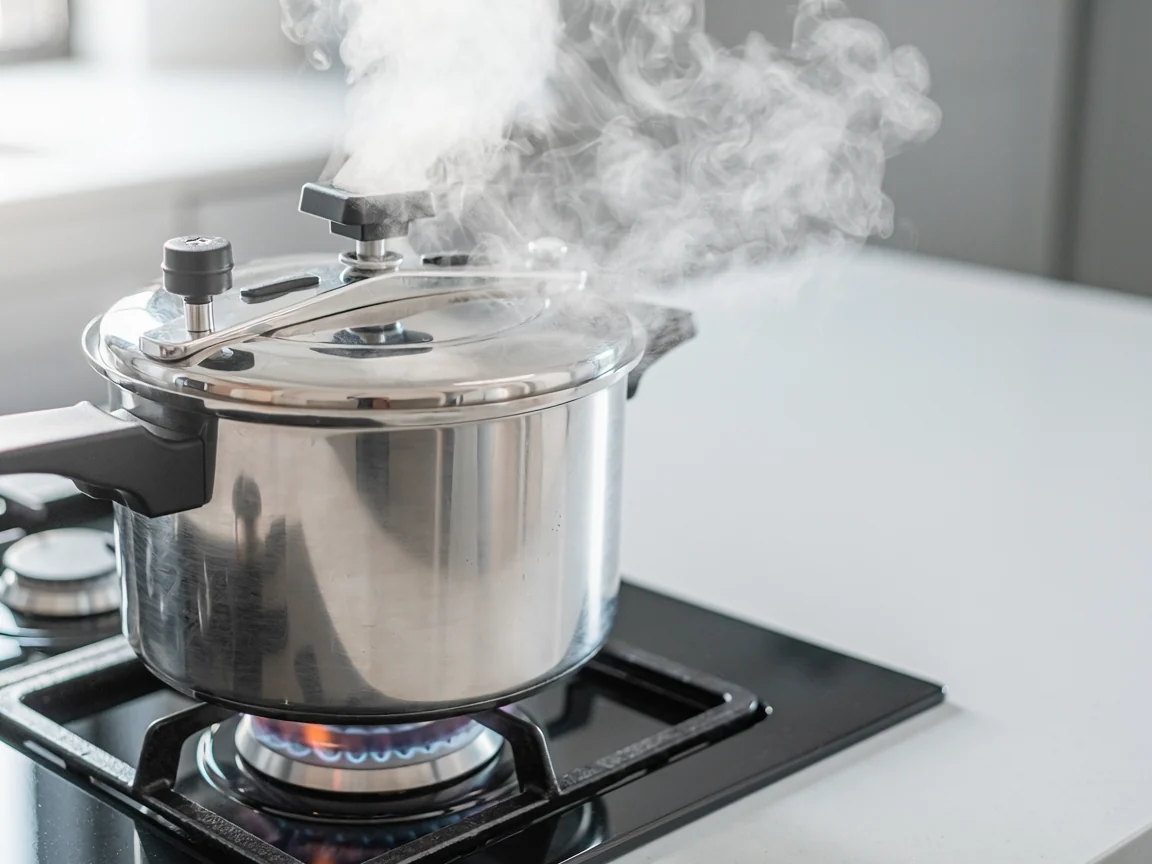
As the pot heats, water turns to steam, but the locked lid and rubber gasket stop it escaping. Pressure climbs until it reaches about one bar above atmospheric pressure, and the temperature inside reaches roughly 120 °C.
Faster cooking
Cooking speed rises steeply with temperature, so tough cuts of meat, pulses and stocks cook in a fraction of the usual time. Using less water and time can also save energy compared with long simmering.
Staying safe
A regulator valve vents steam to keep pressure at the set level. Secondary safety valves and a lid lock that will not open while pressurised prevent accidents. Older designs without these features are why the appliance once had a risky reputation.
Sources & further reading
Temperatures are approximate. Photograph: original AI-generated illustration (Adobe Firefly). Reference organisations do not endorse this website.