Atoms never vary
Every atom of a given type has the same energy levels. When an atom jumps between two levels, it absorbs or emits radiation at one exact frequency. Unlike a pendulum or a quartz crystal, this frequency does not depend on manufacturing quality or wear.
How a caesium clock works
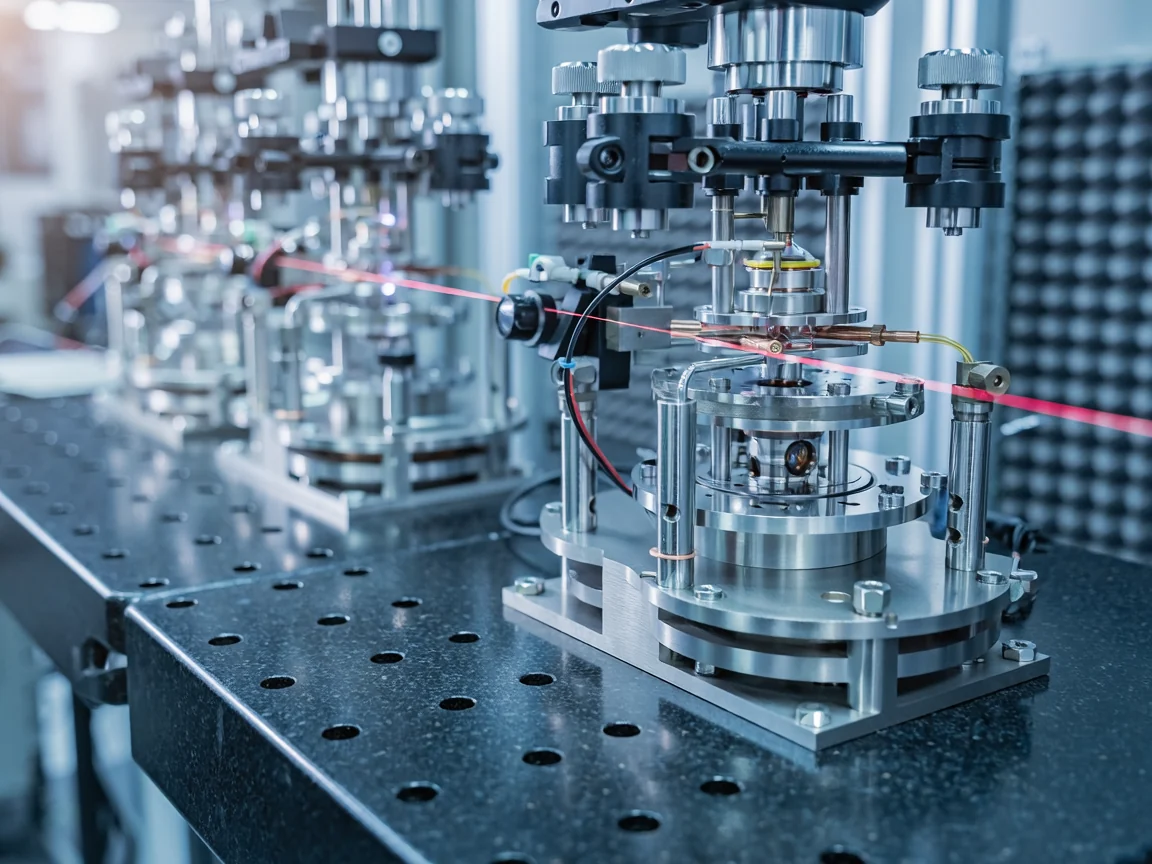
Caesium atoms are prepared and passed through microwave radiation from an oscillator. If the microwaves match the atoms' transition frequency, many atoms change state. A detector counts them, and a feedback loop keeps adjusting the oscillator to maximise that count. Counting the cycles produces seconds.
Global time
Hundreds of atomic clocks in national laboratories around the world are averaged to produce International Atomic Time. Coordinated Universal Time, or UTC, is based on it, with occasional leap seconds added to stay close to Earth's rotation.
Everyday uses
GPS satellites carry atomic clocks because position is calculated from tiny differences in signal timing. Telecoms networks, power grids and financial markets also rely on precisely synchronised atomic time. Newer optical clocks using lasers may one day redefine the second.
Sources & further reading
Drift comparisons are approximate orders of magnitude. Photograph: original AI-generated illustration (Adobe Firefly). Reference organisations do not endorse this website.