Two kinds of power
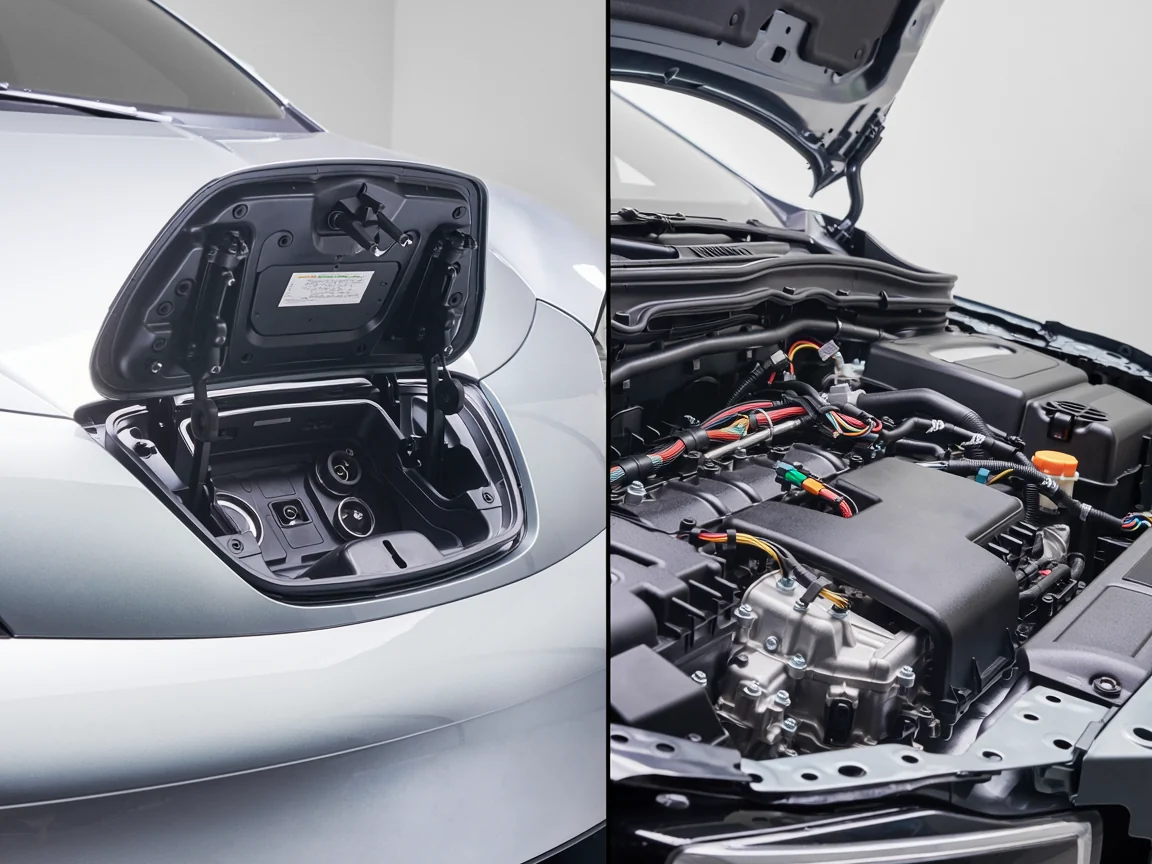
A full hybrid has a petrol engine, at least one electric motor and a battery much smaller than an electric car's. A power-split device or clutch system lets the wheels be driven by the engine, the motor, or both at once.
Using each where it is best
Petrol engines are inefficient at low speeds and when idling. A hybrid uses electric power for pulling away and creeping in traffic, switches the engine off at standstill, and runs the engine mainly in its efficient range, using surplus power to charge the battery.
Regenerative braking
When the driver brakes or lifts off, the electric motor runs in reverse as a generator, turning the car's motion into electricity. Ordinary friction brakes add stopping power when needed. This recaptures energy that a conventional car wastes as heat.
Plug-in hybrids
Plug-in hybrids have bigger batteries that can be charged from the mains and offer tens of kilometres of electric-only driving. Their real-world fuel use depends heavily on how often owners actually charge them.
Sources & further reading
Fuel savings vary with driving conditions. Photograph: original AI-generated illustration (Adobe Firefly). Reference organisations do not endorse this website.