Early fire-starters
Early friction matches of the 1820s and 1830s used white phosphorus, which ignited very easily but was highly poisonous. Factory workers suffered a disfiguring bone disease known as phossy jaw, and white phosphorus matches were eventually banned by international agreement.
The safety match
The safety match separated the chemistry. The head holds an oxidiser, usually potassium chlorate, with sulphur and binders. The striking strip on the box holds red phosphorus and powdered glass. Neither part ignites easily on its own.
What happens when you strike
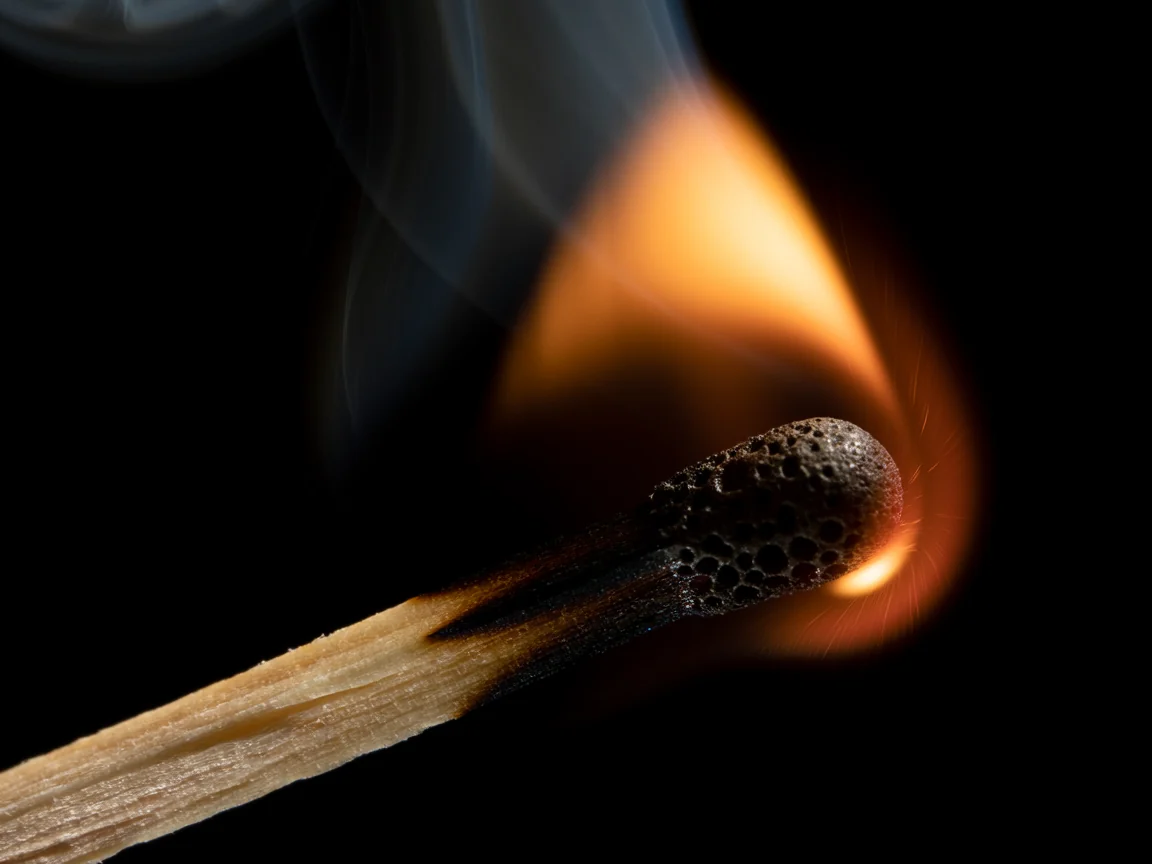
Rubbing the head across the strip creates friction heat and converts a tiny amount of red phosphorus into a more reactive form, which ignites in air. That flash heats the potassium chlorate, which releases oxygen and makes the sulphur and other fuels burn vigorously.
Keeping the flame
The wooden stick is treated with paraffin wax so the flame transfers smoothly from the head to the wood. Many sticks are also soaked in a solution that stops them smouldering once blown out.
Sources & further reading
Formulations vary by manufacturer. Photograph: original AI-generated illustration (Adobe Firefly). Reference organisations do not endorse this website.