Two numbers
Systolic pressure is the peak when the heart contracts; diastolic is the lowest pressure between beats. Both are measured in millimetres of mercury, a unit from the original mercury gauges.
The traditional method
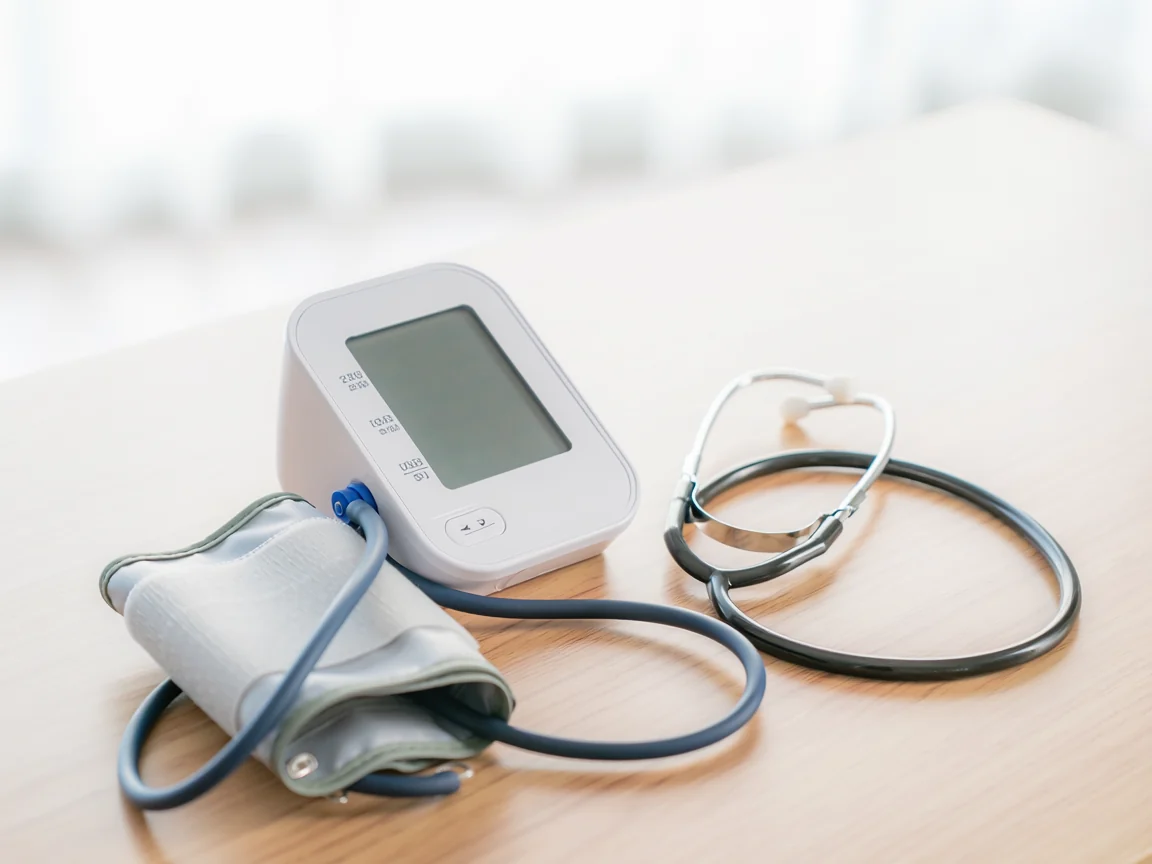
With a manual cuff, a clinician inflates it and listens with a stethoscope below it. As pressure falls, tapping sounds called Korotkoff sounds begin at systolic pressure and fade at diastolic pressure.
How digital monitors do it
Automatic monitors use the oscillometric method. As the cuff deflates, blood pulsing through the artery makes the cuff pressure oscillate. A sensor records these oscillations, and software estimates systolic and diastolic pressure from their pattern.
Getting it right
Cuff size matters: a cuff that is too small reads high. Measurements should be taken after resting, without talking, at the same time of day. Home monitoring helps detect white-coat hypertension, where readings rise only at the clinic.
Sources & further reading
- American Heart Association · Understanding blood pressure readings ↗
- Wikipedia · Blood pressure measurement ↗
Not medical advice; categories vary between guidelines. Photograph: original AI-generated illustration (Adobe Firefly). Reference organisations do not endorse this website.