Haemoglobin changes colour
Red blood cells carry oxygen bound to haemoglobin. Oxygenated haemoglobin absorbs more infrared light and lets more red light through, which is why arterial blood looks bright red. Deoxygenated haemoglobin absorbs more red light.
Two lights, one sensor
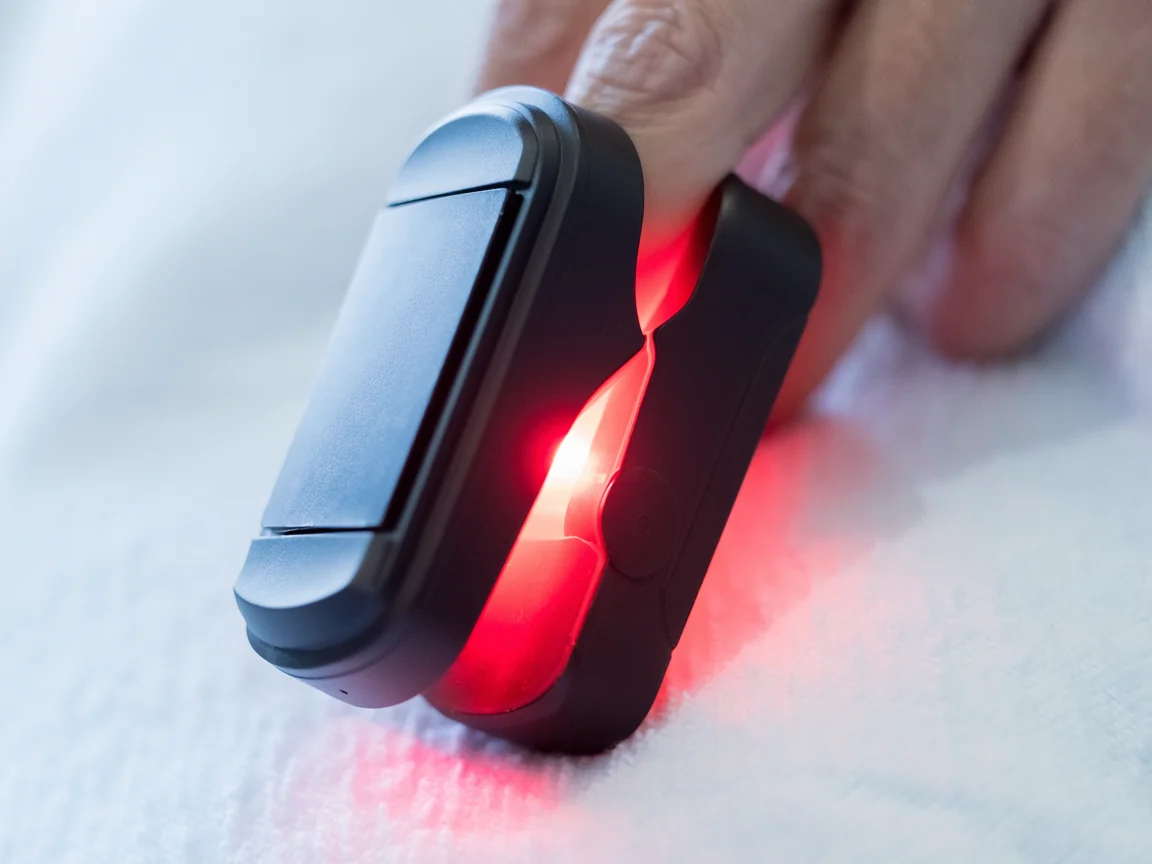
The oximeter has two LEDs on one side of the clip, one red and one infrared, and a light detector on the other. They flash many times a second, and the detector measures how much of each wavelength gets through the finger.
Following the pulse
Skin, bone and veins absorb light constantly, but arterial blood swells slightly with each heartbeat. By focusing on the changing part of the signal, the device isolates arterial blood, and also reports pulse rate.
Known limitations
Poor circulation, cold hands, movement, bright light and nail varnish can cause errors. Studies have found that oximeters can overestimate oxygen levels in people with darker skin, prompting regulators to review accuracy standards.
Sources & further reading
Not medical advice; readings should be interpreted by a health professional. Photograph: original AI-generated illustration (Adobe Firefly). Reference organisations do not endorse this website.