Invisible glow
All objects emit electromagnetic radiation depending on their temperature. At body temperature, most of it is infrared, which our eyes cannot see. The warmer the object, the more infrared energy it emits.
Inside the device
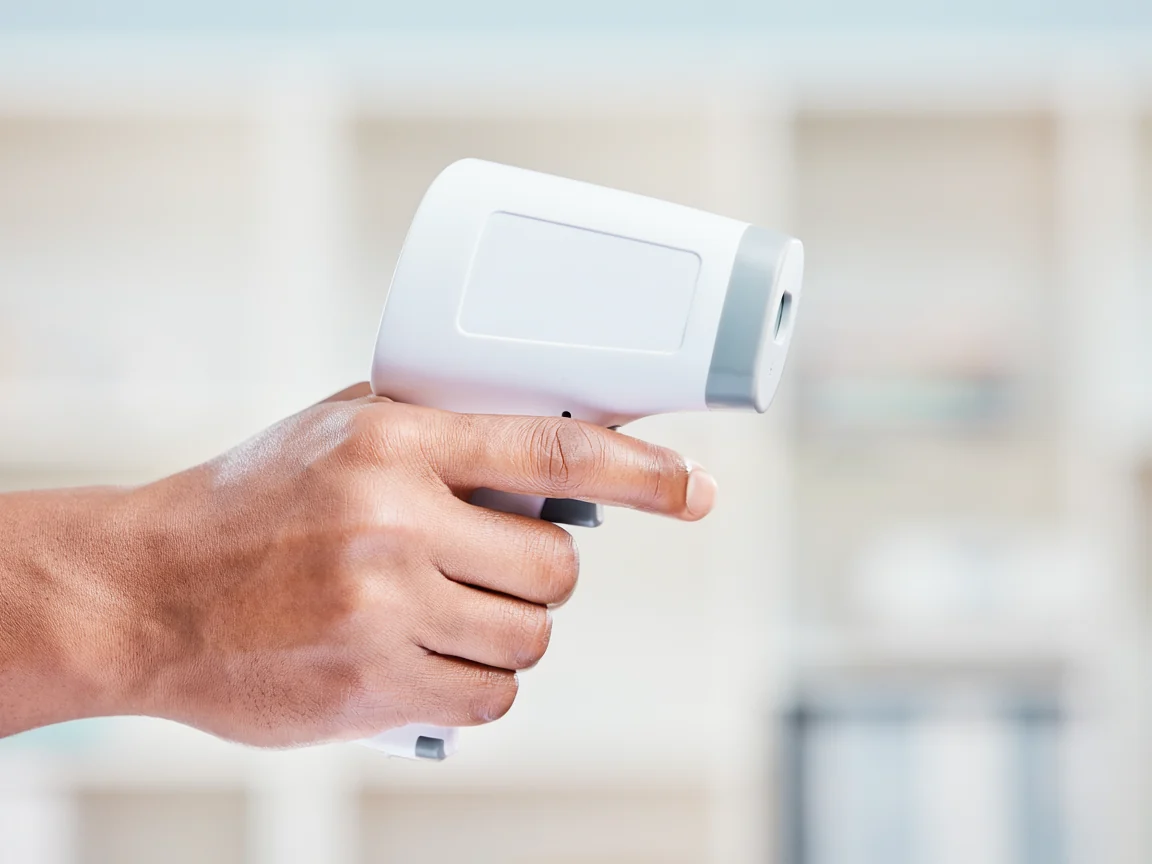
The thermometer's lens focuses infrared radiation onto a thermopile, a cluster of tiny thermocouples. As it absorbs the energy it warms slightly, generating a voltage proportional to the incoming radiation. A processor converts this into a temperature.
Emissivity and accuracy
Different surfaces emit infrared with different efficiency, a property called emissivity. Medical thermometers are set for human skin, which is close to a perfect emitter. Industrial models let users set emissivity for metals, food or other materials.
Where they are used
Ear and forehead thermometers became widespread in clinics and homes, and especially for quick screening during the COVID-19 pandemic. In industry, infrared thermometers check engines, electrical panels and cooking temperatures safely from a distance.
Sources & further reading
Normal ranges vary; consult a doctor about fever. Photograph: original AI-generated illustration (Adobe Firefly). Reference organisations do not endorse this website.