Echolocation for cars
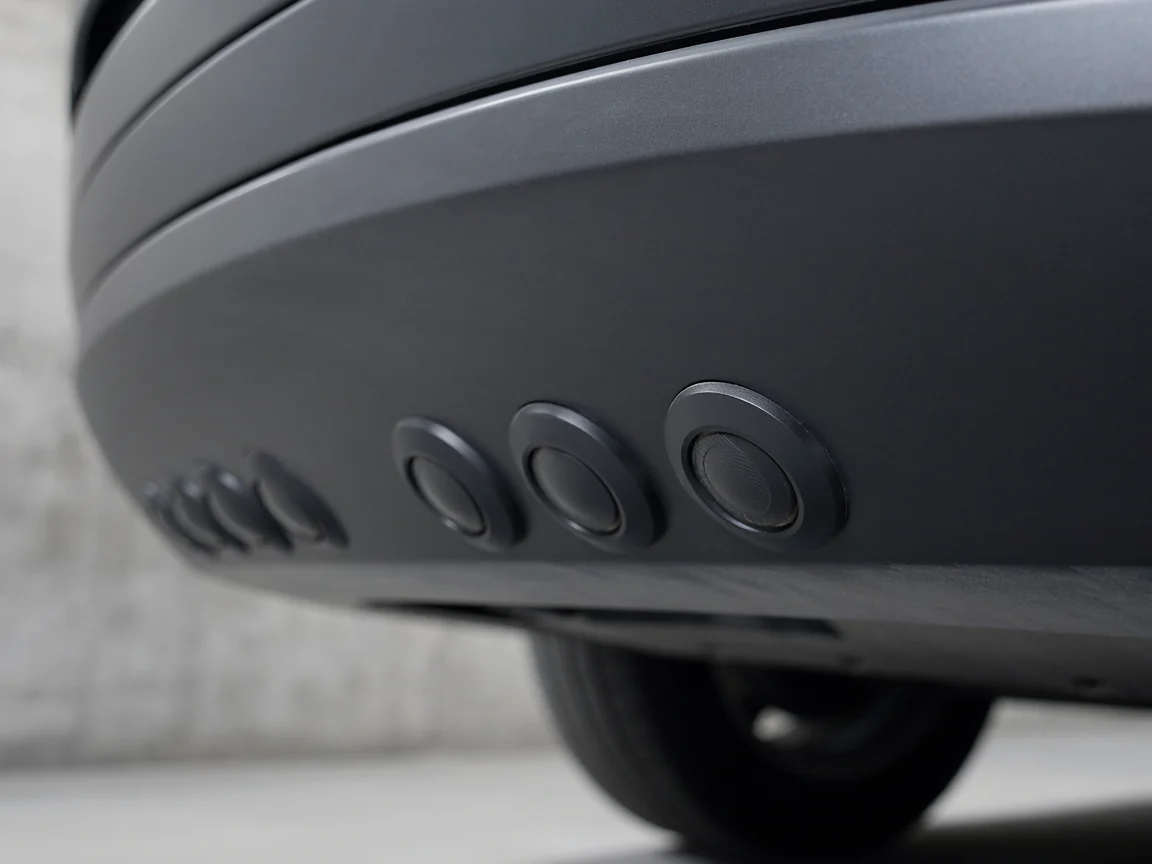
Each round sensor in the bumper contains a piezoelectric element that vibrates to produce an ultrasonic click and then listens for the echo. Bats and dolphins use the same principle to navigate.
Working out distance
The car's control unit measures how long the echo takes to return. Since sound travels at roughly 343 metres per second in air, the distance is half the round-trip time multiplied by that speed. Several sensors working together can estimate where the obstacle lies.
Beeps and screens
Drivers hear beeps that speed up as the gap closes, becoming a continuous tone when very near. Many cars also show coloured zones on a screen, often combined with a rear camera and guide lines.
Other systems
Some cars use electromagnetic sensors hidden behind the bumper, or rely on cameras and radar for automatic parking and surround-view images. Sensors can be confused by mud, ice, heavy rain or sloping ground, so drivers still need to look.
Sources & further reading
Warning distances vary by vehicle. Photograph: original AI-generated illustration (Adobe Firefly). Reference organisations do not endorse this website.