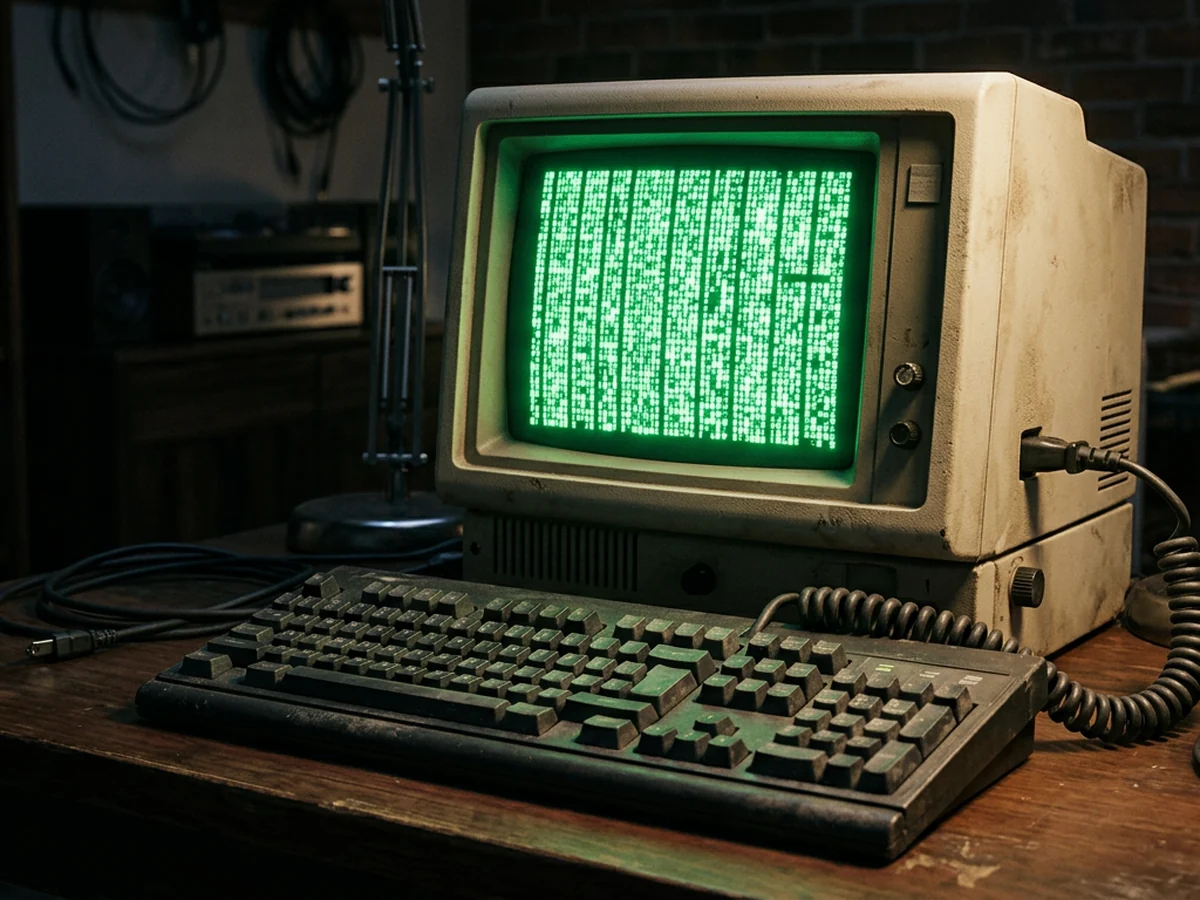
A program named after a character
Joseph Weizenbaum, a computer scientist at MIT, wrote ELIZA between 1964 and 1966. He named it after Eliza Doolittle, the flower seller in George Bernard Shaw's play Pygmalion who learns to speak like an aristocrat. Like her, the program could produce convincing speech while understanding little of it. ELIZA ran on MIT's time-sharing mainframe, and users typed their messages on a terminal, receiving replies printed or displayed back.
The DOCTOR script
ELIZA's best-known script, called DOCTOR, imitated a psychotherapist in the style of the psychologist Carl Rogers, who encouraged patients to explore their own feelings. That was a clever choice, because a therapist can respond to almost anything with a question. If a user wrote I am feeling sad, ELIZA might reply why do you think you are feeling sad? If the user mentioned a family member, it might say tell me more about your family. When nothing matched, it fell back on phrases such as please go on.
How it worked
ELIZA had no knowledge of the world and no memory of meaning. It scanned each input for keywords, ranked them by importance, and applied transformation rules that rearranged the sentence, swapping pronouns such as I and you. A few tricks made conversations feel more natural, such as occasionally returning to something the user had said earlier. The whole program was small by modern standards, a few hundred lines of rules, and worked entirely through surface patterns in text.
People believed in it
What surprised Weizenbaum was how people reacted. Many users, including some who knew how it worked, confided in ELIZA and felt understood. In a much-repeated story, his secretary asked him to leave the room so she could talk to the program privately. Some psychiatrists even suggested that programs like it could one day provide automated therapy. Weizenbaum was alarmed by how readily people attributed understanding and empathy to a simple program.
The ELIZA effect
The tendency to read human qualities into computer outputs is now called the ELIZA effect. It is stronger than ever with modern chatbots, which are far more capable and fluent. People thank voice assistants, feel hurt by chatbot replies and sometimes form deep attachments to AI companions. Understanding this tendency helps users keep perspective: a system can produce warm, sympathetic language without the experiences or care that such words imply in a human.
ELIZA meets PARRY
ELIZA inspired other experiments. In 1972 the Stanford psychiatrist Kenneth Colby created PARRY, a program that simulated a person with paranoid schizophrenia and held its own surprisingly well when psychiatrists were asked to tell its transcripts from real patients'. In 1973 ELIZA and PARRY were connected over the ARPANET, the forerunner of the internet, and held a conversation with each other, an early and slightly absurd glimpse of machines talking to machines.
Weizenbaum's warning
Weizenbaum became one of the earliest and most prominent critics of AI. In his 1976 book Computer Power and Human Reason he argued that some tasks, especially those requiring judgement, compassion and respect, such as therapy, judging people or making life-and-death decisions, should never be handed to computers, even if they could perform them. His concerns about over-trust, accountability and the human role in decisions remain central to debates about AI ethics today.
From ELIZA to modern assistants
Modern chatbots are fundamentally different. Rather than hand-written rules, they learn from vast amounts of text and can answer questions, write code and reason through problems. Yet the lineage is visible in their conversational format and in the questions they raise. Mental health apps now use AI to offer support, under debate about safety and evidence. Many clinicians see a role for AI in supplementing care, such as between appointments, but not in replacing human professionals.
Why ELIZA still matters
ELIZA shows that conversational fluency can create an illusion of understanding, and that people's trust can run ahead of a system's real abilities. In 2021 researchers recovered the original program code from Weizenbaum's archived papers at MIT, and it has since been restored to run again, an important artefact of computing history. For anyone using AI today, ELIZA is a reminder to judge systems by what they can reliably do, not by how human they sound.
Sources & further reading
Historical overview. Photograph: original AI-generated illustration (Adobe Firefly). Reference organisations do not endorse this website.