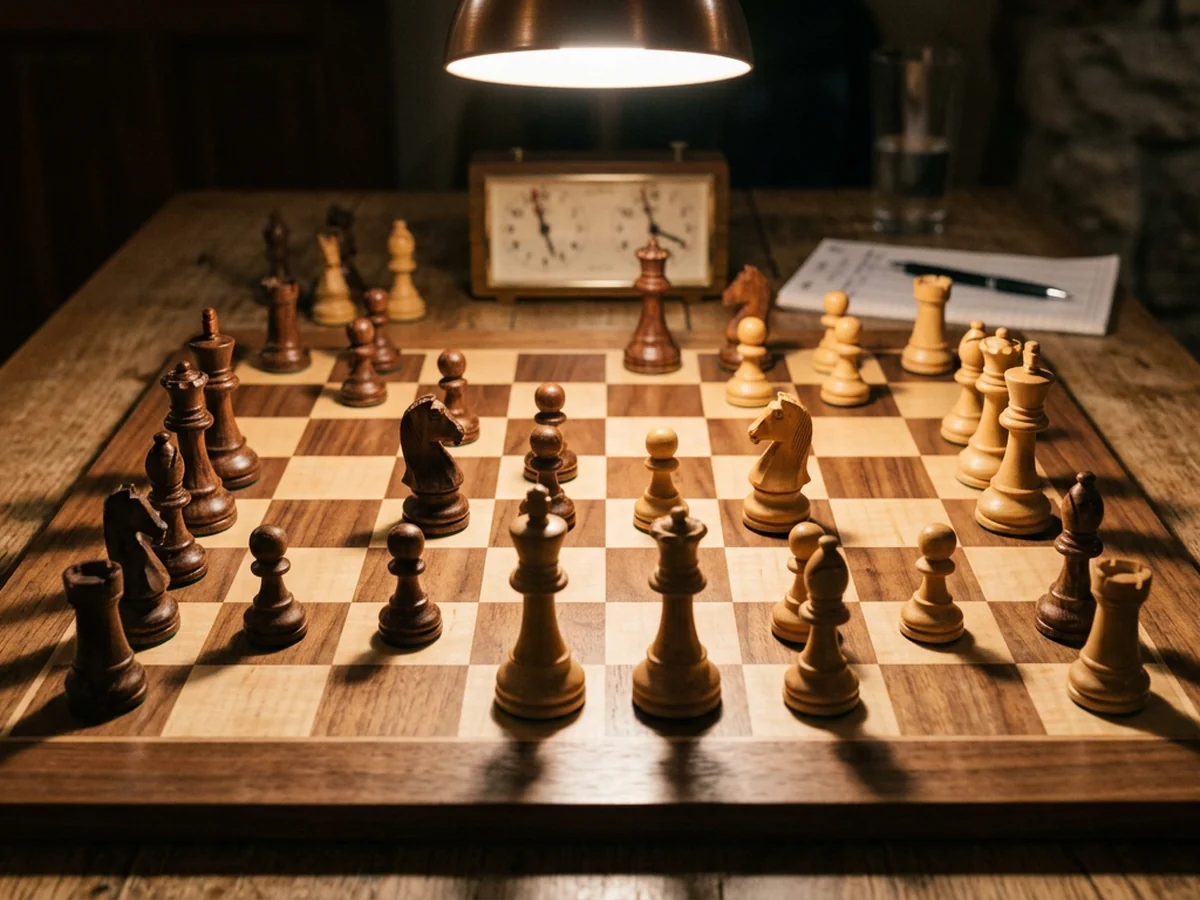
Why chess mattered
For centuries chess has been seen as a test of intellect, combining calculation, strategy and creativity. Early computer scientists, including Alan Turing and Claude Shannon, wrote about chess-playing machines, and building one that could beat the best human became a symbolic goal for AI. Chess programs improved steadily from the 1950s onwards, and by the 1980s they could beat strong amateurs. The question was whether a machine could defeat the world champion.
The machine
Deep Blue grew out of a project called ChipTest at Carnegie Mellon University, later developed at IBM by a team including Feng-hsiung Hsu, Murray Campbell and Joseph Hoane. It was a supercomputer fitted with hundreds of custom chips designed specifically for chess. The 1997 version could evaluate around 200 million positions per second, searching many moves ahead. Its evaluation function, which judged how good a position was, was tuned with the help of grandmasters, and it used a large library of opening moves.
The first match
In February 1996 Deep Blue played Garry Kasparov, the reigning world champion and widely considered one of the greatest players in history, in Philadelphia. Deep Blue won the first game, the first time a computer had beaten a world champion in a game under classical time controls. But Kasparov adapted, winning three games and drawing two to take the match 4–2. He had shown the machine's weaknesses, and IBM went back to improve it.
The rematch
The rematch took place in New York in May 1997. Kasparov won the first game, but Deep Blue won the second with a style of play that seemed surprisingly human and strategic, unsettling him. The next three games were drawn. In the decisive sixth game, Kasparov made an early error and resigned after just 19 moves. Deep Blue won the match 3.5 to 2.5, becoming the first computer to defeat a reigning world champion in a match under standard conditions.
Controversy
Kasparov was shocked and suggested that humans might have helped the machine during games, pointing to moves he felt were uncharacteristic of computers. IBM denied this, and later analysis found no evidence of cheating; one puzzling move may even have been the result of a software bug. IBM declined a rematch and retired Deep Blue. Kasparov later wrote about the experience and came to embrace the idea of humans and computers working together, a style of play he called advanced chess.
The human side
Kasparov, world champion from 1985 to 2000, had beaten computers for years and said before the 1997 rematch that he expected to win. The loss affected him deeply, and the psychological pressure of facing an opponent that never tired or showed emotion was part of the story. Two decades later, in his book Deep Thinking, he reflected more generously, arguing that the match was a beginning rather than an end and that the future lay in people working with intelligent machines.
Brute force, not understanding
Deep Blue did not learn from experience the way modern AI does. Its strength came from enormous computing speed, expert-designed rules and careful engineering. Critics argued this showed that chess could be solved by calculation rather than intelligence. In 2017 DeepMind's AlphaZero took a different approach, teaching itself chess from scratch by playing against itself and reaching superhuman strength within hours, using far less search but a learned understanding of positions.
What happened to chess
Rather than killing the game, computers transformed it. Today's free chess engines running on a phone are far stronger than Deep Blue, and no human can beat them. Players use engines to prepare openings and analyse games, raising the overall standard. Online chess has boomed. At the same time, computers created new challenges, such as preventing cheating with hidden devices in tournaments. Human chess remains popular precisely because it is a contest between people.
A turning point
Deep Blue's victory was a cultural milestone. It made headlines worldwide and forced many people to reconsider what machines could do. Its lasting lesson is that machines can outperform humans at specific tasks without replicating human thinking, a pattern seen again and again since, from Go to protein folding. It also showed how quickly a human advantage can disappear once a problem is cracked, a theme that runs through the story of AI.
Sources & further reading
- IBM · Deep Blue ↗
- Wikipedia · Deep Blue versus Garry Kasparov ↗
- Campbell, Hoane & Hsu · Deep Blue (Artificial Intelligence, 2002) ↗
Historical account. Photograph: original AI-generated illustration (Adobe Firefly). Reference organisations do not endorse this website.