The announcement
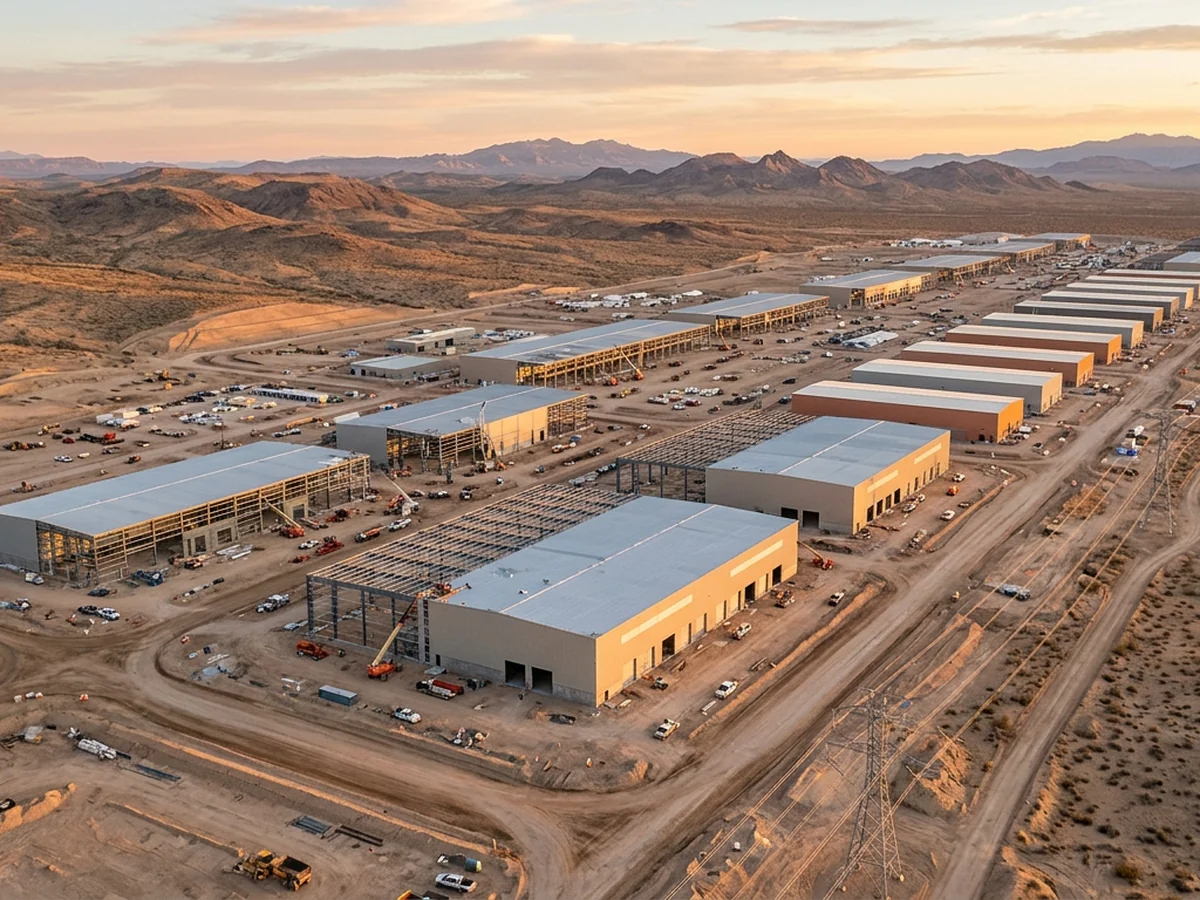
In May 2025, during a visit by the US President to the Gulf, the UAE and the United States announced a new UAE–US AI Campus in Abu Dhabi. Spanning about 10 square miles, or 26 square kilometres, it is planned to provide 5 gigawatts of AI data centre capacity, which its backers described as the largest such deployment outside the United States. A week later, the Abu Dhabi AI company G42 and the US firms OpenAI, Oracle, Nvidia and Cisco, together with Japan's SoftBank, announced Stargate UAE, a 1-gigawatt computing cluster that forms the campus's first major phase.
Who does what
G42, through its data centre company Khazna, is building the facilities. OpenAI and Oracle will operate the Stargate UAE cluster. Nvidia is supplying its most advanced AI servers, the Grace Blackwell GB300 systems, and Cisco is providing networking. SoftBank is a partner in the broader Stargate initiative. The project was described as being agreed in close coordination with the US government, reflecting the strategic importance of advanced AI chips, whose export is controlled by Washington.
The timeline
The first 200 megawatts of capacity were scheduled to go live in 2026, with construction reported to be progressing on an accelerated timeline through 2025. In October 2025 G42 said it expected the full 1-gigawatt Stargate UAE cluster to be built out within about three years, developed in five phases. The remainder of the 5-gigawatt campus is expected to be built over a longer period and could host other technology companies alongside OpenAI and Oracle.
How big is a gigawatt?
A gigawatt is roughly the output of a large conventional power station, enough electricity for hundreds of thousands of homes. AI data centres are now measured in such units because their chips draw so much power. Reports at the announcement suggested the first phase alone could involve around 100,000 Nvidia chips. At full scale, a 5-gigawatt campus would rank among the largest computing facilities on Earth, comparable to the biggest projects under way in the United States.
Why the UAE wants it
The UAE's national strategy aims to make the country a global AI leader by 2031. Hosting large-scale computing gives it a central role in serving AI to the Middle East, Africa and South Asia, regions with billions of people within a few thousand kilometres. Officials also see sovereign computing capacity, under local control, as important for government services, national companies and Arabic-language AI. The project complements large UAE investments in AI companies and infrastructure in the United States.
Reciprocal investment
The campus forms part of a wider economic relationship. Alongside the announcement, the UAE confirmed plans for very large investments in the United States, including in AI infrastructure, energy and manufacturing, as part of a commitment by the UAE to invest 1.4 trillion dollars in the US over a decade. US companies, in turn, gain a major new market and a base to serve AI customers across a large region. Officials on both sides described the arrangement as a model for trusted AI partnerships.
Energy and cooling
A campus of this scale needs enormous, reliable power and efficient cooling in one of the hottest climates on Earth. The UAE has large solar parks, natural gas and the Barakah nuclear power plant, which supplies about a quarter of the country's electricity, and it plans for the campus to draw on a mix of nuclear, solar and gas. Cooling AI chips in desert heat is a major engineering challenge, making liquid cooling and water-efficient designs especially important for the project's environmental footprint.
Partners and safeguards
The campus is being built with a group of international partners, and its arrangements reflect the security standards that come with advanced AI hardware. G42 has said it removed Chinese hardware from its operations and agreed security commitments as part of its partnerships with United States companies, including a 1.5 billion dollar investment by Microsoft in 2024. Those agreements govern how the most advanced chips are housed, secured and operated on the site, and how the campus reports on its use of them.
What it means
Stargate UAE signals a shift in the geography of AI. Computing power, once concentrated in the United States and China, is spreading to countries with capital, energy and ambition. For the UAE, it is a bet that being a hub for AI computing will bring investment, jobs, influence and expertise. For residents of the region, it could mean faster, more capable AI services delivered from nearby data centres, with more support for local languages and needs.
Sources & further reading
- Abu Dhabi Media Office · Global tech alliance launches Stargate UAE (2025) ↗
- The National · Stargate UAE progress (2025) ↗
- Business Wire · Global Tech Alliance Launches Stargate UAE ↗
Timelines and capacities are as announced and may change. Photograph: original AI-generated illustration (Adobe Firefly). Reference organisations do not endorse this website.