A new kind of AI lab
DeepMind was founded in London in 2010 by Demis Hassabis, Shane Legg and Mustafa Suleyman, with the ambitious goal of building general-purpose AI. Rather than programming specific rules, the team believed AI should learn from experience, much as humans and animals do. They chose video games as a testing ground, because games offer rich, varied challenges with a clear measure of success: the score.
Learning from pixels
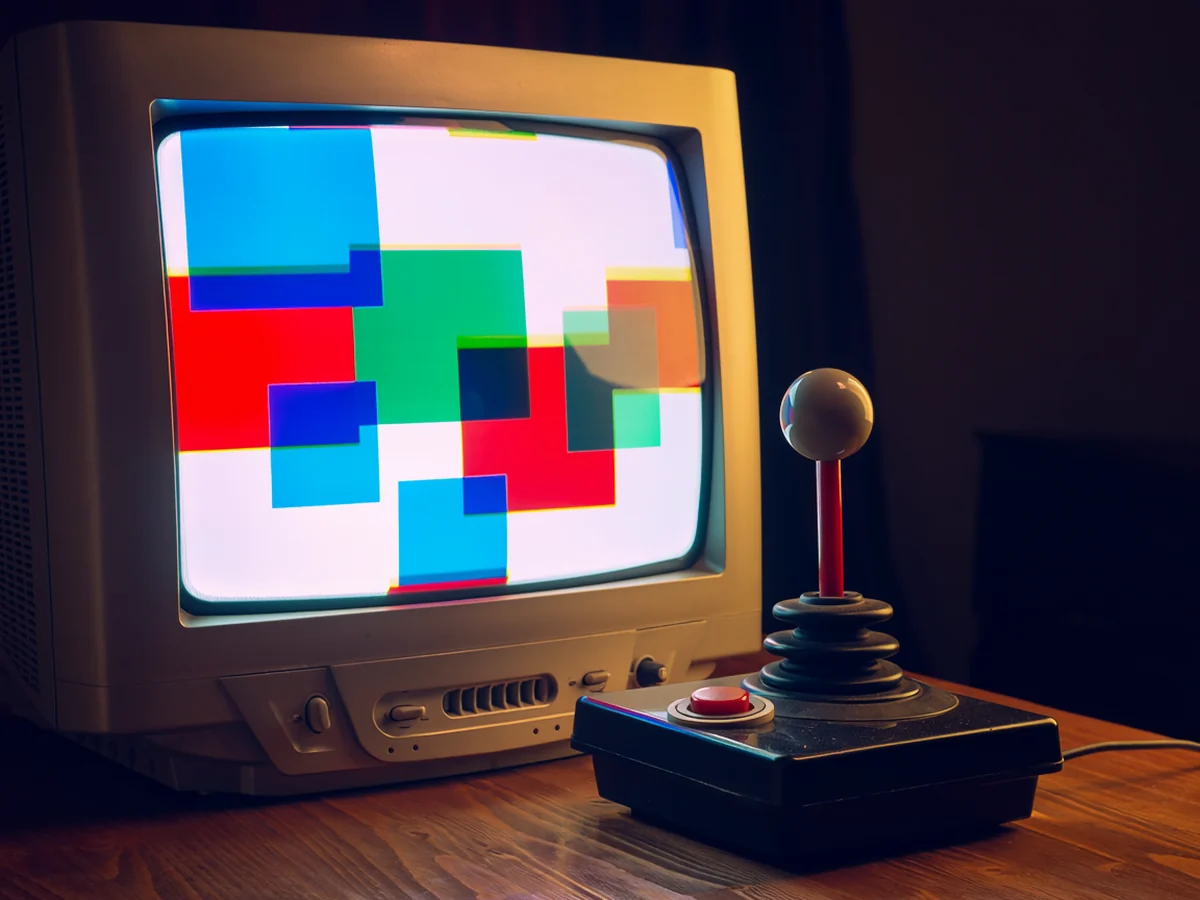
In December 2013, DeepMind researchers published a paper describing an AI that learned to play several classic Atari 2600 games directly from the pixels on the screen. The AI was not told the rules, what the objects on the screen meant or how to win. It received only the images and the game score, and could choose from the joystick's possible actions. Through trial and error, it discovered how to play.
Deep learning meets reinforcement learning
The system, called a Deep Q-Network, or DQN, combined two ideas. Deep neural networks, which had recently transformed image recognition, allowed it to understand what was on the screen. Reinforcement learning, in which an agent learns to take actions that maximise rewards, taught it which moves led to higher scores. Previous attempts to combine the two had been unstable, but DeepMind introduced techniques that made learning reliable.
Remembering past experience
One key technique was experience replay. Instead of learning only from its most recent moves, the AI stored past experiences in memory and repeatedly learned from random samples of them, much like reviewing past games. Another technique used a separate, slowly updated copy of the network to provide stable learning targets. These innovations allowed the network to learn steadily rather than forgetting or becoming confused.
49 games, one algorithm
In February 2015, DeepMind published its results in the journal Nature. Using the same algorithm, network design and settings, the DQN learned to play 49 different Atari games, from Pong and Breakout to Space Invaders. On many of them, it performed at a level comparable to or better than a professional human games tester. It was a striking demonstration that one learning system could adapt to many different tasks.
Surprising strategies
In Breakout, a game where players bounce a ball to break bricks, the AI discovered a strategy that expert players use: digging a tunnel through one side of the wall so the ball bounces behind the bricks and destroys many of them automatically. No one taught it this strategy; it found it by learning which actions led to higher scores. This showed that AI could discover clever solutions on its own.
Google takes notice
DeepMind's early work attracted the attention of large technology companies. In January 2014, Google acquired DeepMind, reportedly for around 500 million dollars, one of its largest purchases in Europe at the time. With Google's resources, DeepMind went on to develop AlphaGo, which defeated Go champion Lee Sedol in 2016, and later AlphaFold, which transformed protein structure prediction and earned a Nobel Prize.
Hard games remained
The DQN struggled with some games, especially those requiring long-term planning or exploration, such as Montezuma's Revenge, where rewards are rare and players must explore many rooms. Researchers spent years developing better methods. In 2020, DeepMind's Agent57 became the first AI to outperform a standard human benchmark on all 57 games in a widely used Atari test suite, including the hardest ones.
From games to the real world
The techniques pioneered with Atari games influenced AI far beyond entertainment. Reinforcement learning has been used to reduce energy use in data centre cooling, control robots, design computer chips and train AI models, including the chatbots that learn from human feedback. Games remain an important research tool because they let AI practise millions of times safely and quickly.
Why it matters
DeepMind's Atari AI was a turning point, showing that deep learning could be combined with reinforcement learning to create systems that learn complex behaviours from raw experience. It helped launch a decade of breakthroughs, from AlphaGo to AlphaFold. For many researchers, it was the moment when the dream of general learning machines began to seem achievable.
Sources & further reading
- Nature · Human-level control through deep reinforcement learning (Mnih et al., 2015) ↗
- arXiv · Playing Atari with deep reinforcement learning (Mnih et al., 2013) ↗
- Google DeepMind · Agent57: Outperforming the human Atari benchmark (2020) ↗
Historical overview. Photograph: original AI-generated illustration (Adobe Firefly). Reference organisations do not endorse this website.