An ageing world
Around the world, people are living longer, and the share of older people is growing rapidly. In countries such as Japan, Italy and South Korea, a large proportion of the population is already over 65. Many older people want to stay in their own homes, but they may need help with daily tasks and health. At the same time, many countries face shortages of care workers. Technology, including AI, is being explored as part of the answer.
Staying safe at home
Falls are a major risk for older people, sometimes leaving them unable to call for help. Smartwatches and pendants with AI-based fall detection can automatically alert family members or emergency services. Some homes use sensors on doors, beds and appliances, or radar devices that detect movement without cameras, to notice unusual patterns, such as someone not getting up in the morning, and alert carers while respecting privacy.
Medicines and routines
Many older people take several medicines, and missing doses or taking the wrong ones can be dangerous. Smart pill dispensers and voice assistants can remind people when to take medicines and alert carers if doses are missed. AI assistants can also help with reminders for appointments, meals and drinking enough water, which is especially important in hot climates such as the Gulf, where dehydration is a risk for older people.
Robots in Japan
Japan, which has one of the world's oldest populations, has been a pioneer in care robots. Paro, a robotic baby seal developed by Japan's National Institute of Advanced Industrial Science and Technology, responds to touch and voice and has been used in care homes in Japan and other countries for years, including for people with dementia. Other robots help carers lift patients or lead group exercises, though adoption has been slower than expected.
ElliQ in New York
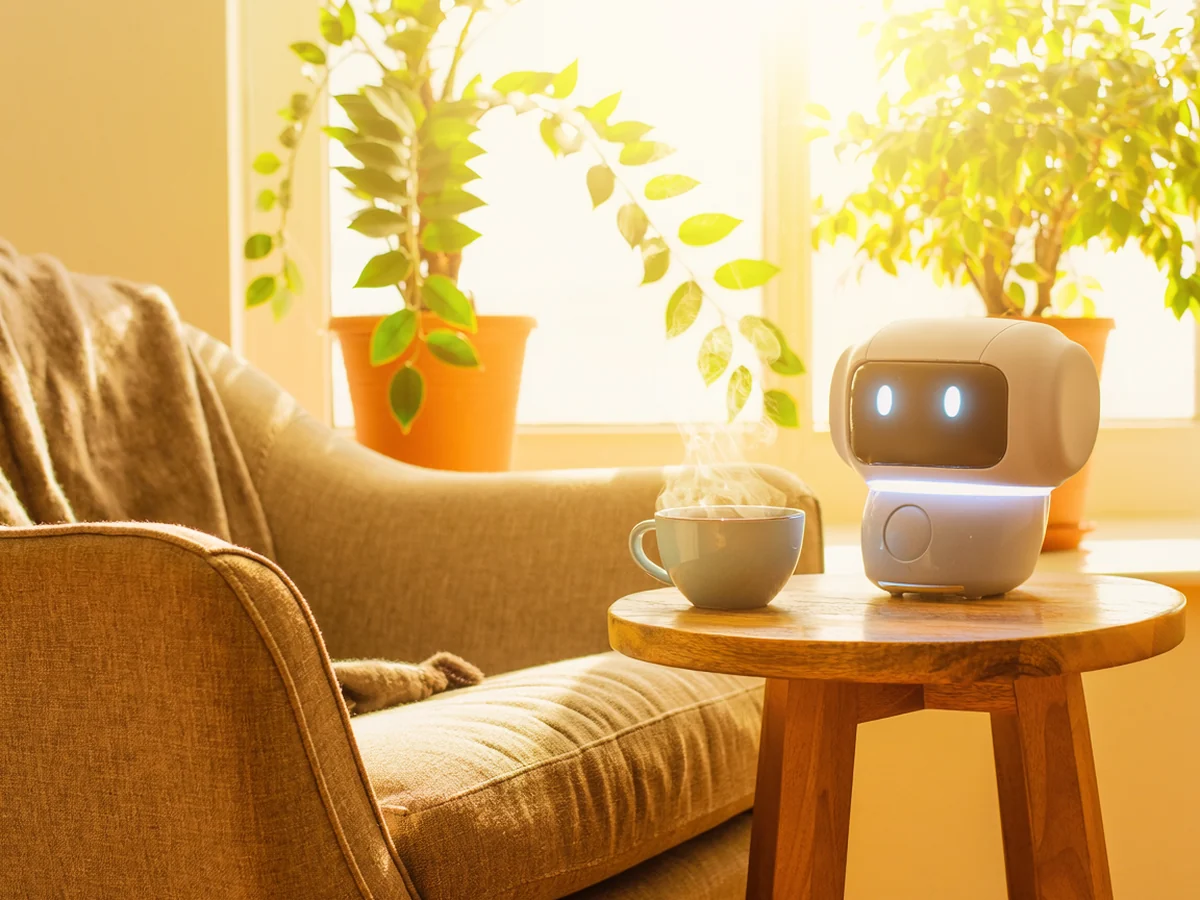
In 2022, New York became the first US state to partner with Intuition Robotics, the maker of ElliQ, a tabletop AI companion designed for older adults. ElliQ starts conversations, suggests activities, tells jokes, leads exercises, reminds users about medicines and helps them contact family. The New York State Office for the Aging has given free ElliQ devices to more than 900 older residents, focusing on people living alone or at risk of isolation.
Reported results
In 2023, the New York State Office for the Aging and Intuition Robotics reported that participants experienced a 95% reduction in loneliness, based on their programme data, and later reports said most surveyed users felt less lonely living with the robot. These results come from surveys and programme reports rather than controlled trials, so researchers say more rigorous studies are needed to understand the real benefits and for whom they work best.
Generative AI companions
Newer AI companions use large language models to hold more natural conversations, remember past discussions and adapt to each person. This could make them more engaging, but also raises concerns. Older people with memory problems might not fully understand they are talking to a machine, and companies must protect sensitive personal information shared in conversations. Clear consent, privacy safeguards and honest design are essential.
Human connection matters
Experts emphasise that technology should support, not replace, human care. Loneliness among older people is linked to poorer physical and mental health, and human relationships, community activities and visits from family and carers remain vital. Some worry that robots could be used as a cheap substitute for human care workers. Others see AI as a way to free carers from routine tasks so they can spend more time with people.
Ageing in the Gulf
Gulf countries have relatively young populations, but the number of older citizens is growing as life expectancy rises. The UAE has policies to support senior citizens, and families traditionally play a central role in caring for elderly relatives. Home care services and telehealth are expanding, and AI tools such as fall detection, remote monitoring and reminders could help families and health services care for older people at home.
Why it matters
How societies care for older people is one of the biggest challenges of the century. AI and robots could help older adults live safely and independently for longer, ease pressure on families and support care workers. But their value depends on careful design, strong evidence, respect for dignity and privacy, and a commitment to keeping human warmth at the heart of care.
Sources & further reading
- New York State Office for the Aging · ElliQ proactive care companion initiative ↗
- PMC · ElliQ, an AI-driven social robot to alleviate loneliness (2024) ↗
- World Health Organization · Ageing and health ↗
General information, not medical advice. Reported results are from programme data, not controlled trials. Photograph: original AI-generated illustration (Adobe Firefly). Reference organisations do not endorse this website.