Two words for similar shapes
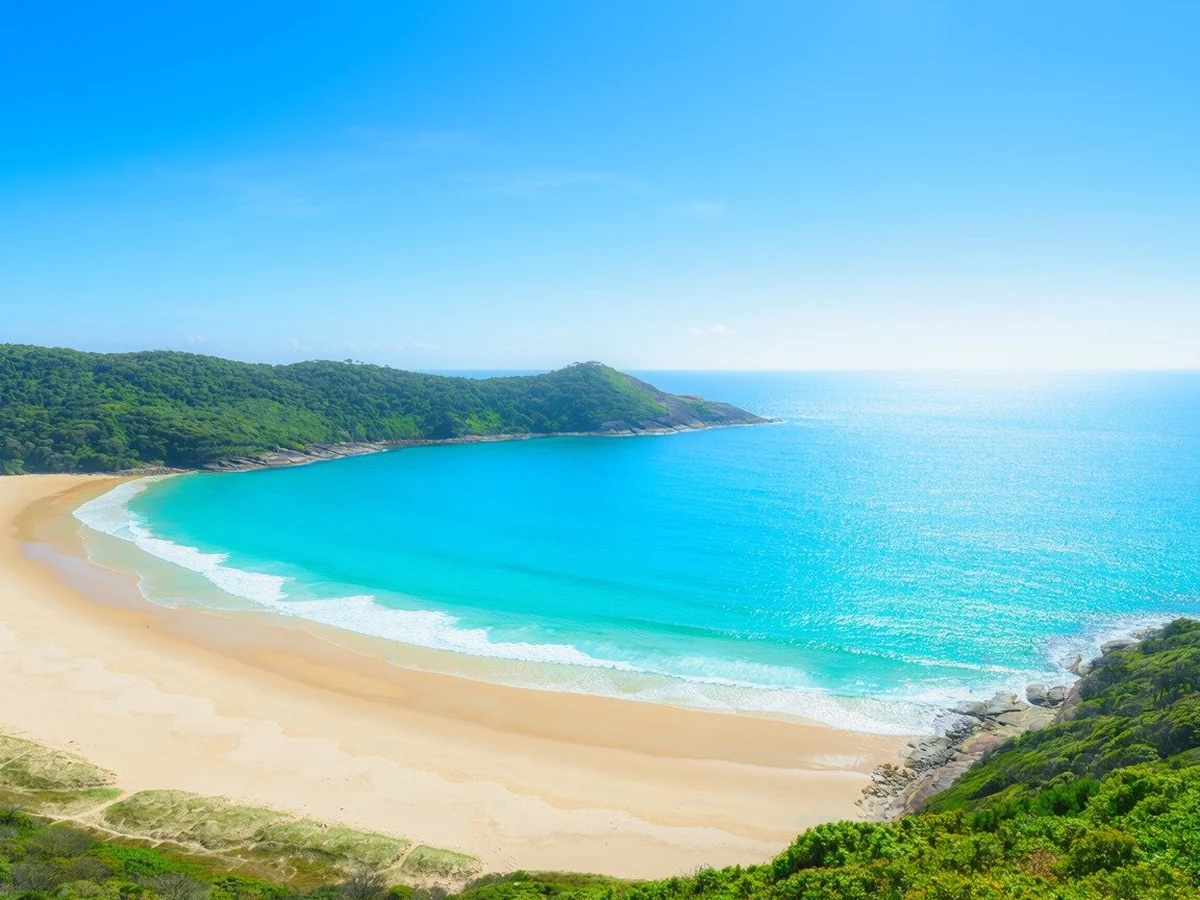
Look at a world map and you will see bays and gulfs on almost every coast. Both describe a part of the sea that cuts into the land, surrounded by coastline on three sides. Geographers use the words loosely, and there is no strict international definition that separates them. Still, there is a general pattern. A bay tends to be a broad, open curve in the coast, while a gulf is usually larger, deeper into the land and connected to the open sea by a narrower passage.
What makes a bay
A bay is typically an indentation in the coastline with a wide mouth, so its waters mix freely with the ocean. Bays range from small coves sheltered by headlands to enormous areas of sea. Their calmer water has made them natural harbours for thousands of years, and many great port cities grew up around them. Bays often form where softer rock erodes faster than the harder rock on either side, leaving a curved shoreline between two headlands.
What makes a gulf
A gulf is usually a large body of water that reaches deep into the land, often almost enclosed. Because the opening is narrow, a gulf can have its own currents, temperature and saltiness, different from the open ocean beyond. The Gulf between the Arabian Peninsula and Iran, for example, connects to the Gulf of Oman only through the Strait of Hormuz. High evaporation and limited exchange with the ocean make its water saltier than average seawater.
When the names break the rules
The neat pattern breaks down quickly. The Bay of Bengal is huge and open, larger than most gulfs. Hudson Bay in Canada is almost completely surrounded by land, which by the general rule should make it a gulf. Many of these names were given centuries ago by sailors, mapmakers or explorers who simply used the word that seemed right at the time, or that was common in their language. Once a name appears on maps for long enough, it tends to stick.
Famous examples
The Bay of Bengal, east of India, is often called the largest bay in the world, covering roughly 2.2 million square kilometres. The Gulf of Mexico, bordered by the United States, Mexico and Cuba, covers around 1.6 million square kilometres and is one of the largest gulfs. Hudson Bay covers about 1.2 million square kilometres. The Gulf in the Middle East is much smaller, at around 250,000 square kilometres, but it is one of the most important waterways for global energy trade.
Related words
Geographers use several other terms for similar features. A cove is a small, sheltered bay, often with a narrow entrance. A sound can be a wide inlet or a channel between an island and the mainland. A fjord is a long, deep inlet carved by glaciers. A bight is a gentle, wide curve in the coastline. As with bays and gulfs, these words describe general shapes, and individual places are named by history as much as by geography.
How bays form
Bays form in several ways. Some are carved by waves eroding softer rock between harder headlands. Others are drowned river valleys, flooded when sea levels rose after the last ice age. Glaciers carved some deep bays, while others sit in old volcanic craters or in areas where the land has sunk. Over time, rivers may deposit sediment in a bay, creating beaches, marshes and mudflats along its edges.
Life in sheltered waters
Because bays and gulfs are partly protected from the open ocean, their waters are often calmer and warmer. Nutrients washed from rivers can make them very productive, supporting fish, shellfish and seabirds. In the Gulf, coral reefs, seagrass beds and mangroves support dugongs, turtles and many fish species. At the same time, limited water exchange means pollution and heat can build up more easily than in the open ocean.
Why it matters
Whether called a bay or a gulf, these partly enclosed seas are among the busiest and most productive places on Earth. Their sheltered waters support fisheries, shipping lanes and coastal cities, and their shallow edges often host mangroves, seagrass and coral reefs. Understanding their shape also helps explain local weather, tides and water quality. The names may be inconsistent, but the role these waters play in human life is remarkably similar everywhere.
Sources & further reading
General information; areas are approximate and differ between sources. Photograph: original AI-generated illustration (Adobe Firefly). Reference organisations do not endorse this website.