The hidden backbone
When you stream a video from another continent or send a message abroad, your data most likely travels along the sea floor. Satellites play a useful role, especially for remote places, but undersea fibre-optic cables carry the overwhelming majority of data between continents, often estimated at around 99%. Research firm TeleGeography tracks several hundred active cable systems worldwide, stretching well over a million kilometres in total.
Light in glass
An undersea cable contains a small number of pairs of optical fibres, each thinner than a human hair. Data is encoded as pulses of laser light, which travel through the glass by bouncing off its inner walls. Modern systems send many different colours of light down each fibre at once, a technique called wavelength division multiplexing. A single modern cable can carry hundreds of terabits per second, enough for many millions of video streams at the same time.
Layers of protection
Around the fibres are layers designed to protect them from water, pressure and damage: a steel or copper tube, strength wires, a copper layer that carries electricity, and an outer plastic sheath. In the deep ocean, where few people or ships disturb the sea bed, cables are surprisingly thin, roughly the size of a garden hose. Near the shore, where anchors and fishing nets are a risk, extra steel armour is added and the cable is often buried.
Repeaters along the way
Light weakens as it travels through glass, so cables include devices called repeaters, placed every few dozen kilometres along the route. Each repeater amplifies the light signal so it can continue across the ocean. Repeaters need power, which is fed through the cable's copper layer from stations on land at each end. The whole system is designed to work for 25 years or more without anyone touching the parts on the sea bed.
Laying and fixing cables
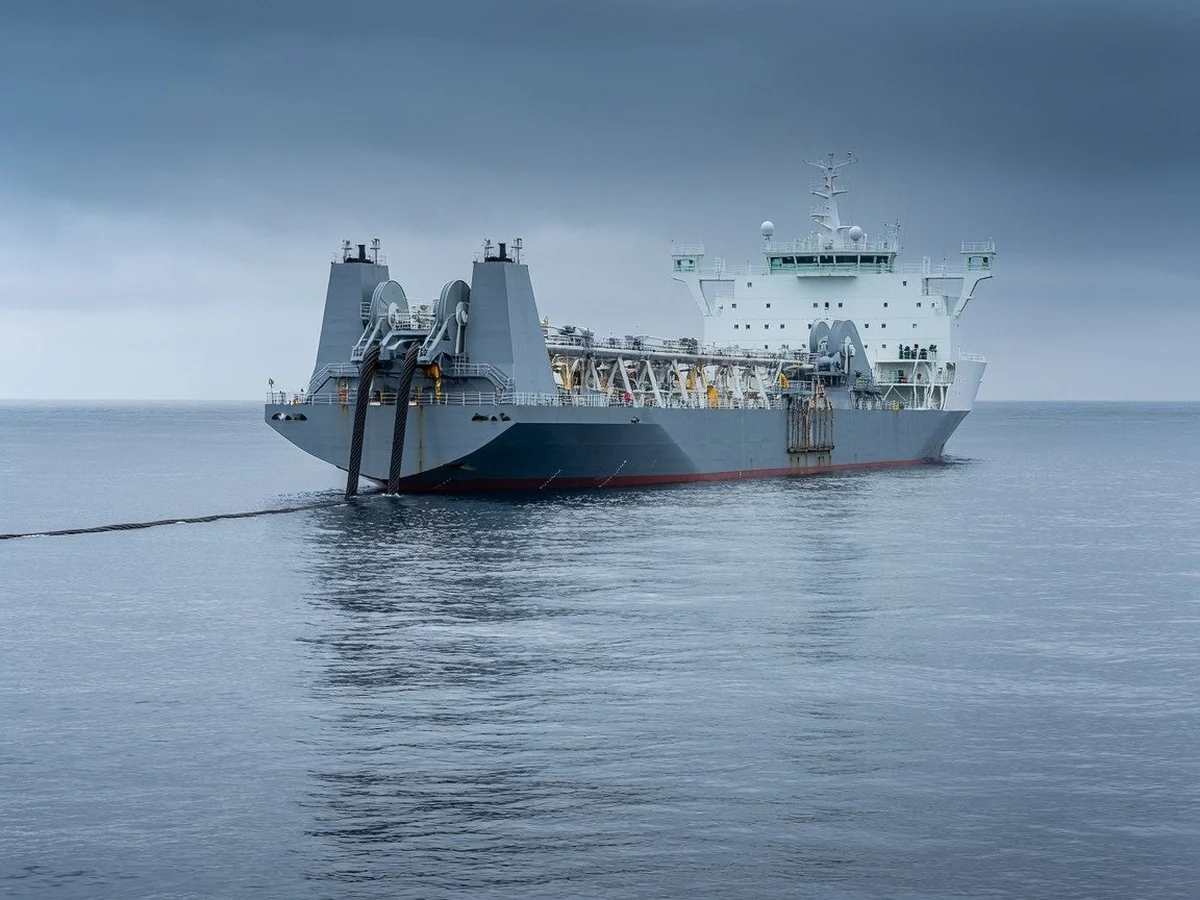
Cables are laid by specialised ships that carry thousands of kilometres of cable in huge tanks. Before laying, surveyors map the sea floor to choose a safe route away from hazards. When a cable is damaged, often by ship anchors, fishing gear or undersea landslides, a repair ship locates the fault, lifts the cable with a grappling hook, splices in a new section and returns it to the sea bed. Repairs can take days or weeks.
Landing stations and hubs
Where a cable comes ashore, it connects to a landing station, which links it to national networks and data centres. Some places have become important crossroads because many cables land there. The Gulf region, including the UAE, is a key junction where cables linking Europe, Asia and Africa meet. Having several cables on different routes means that if one is cut, traffic can be rerouted, keeping countries connected.
A history going back to the telegraph
Undersea cables are not new. The first successful transatlantic telegraph cable carried messages between Ireland and Newfoundland in 1858, though it failed within weeks. A durable link followed in 1866. Telephone cables crossed the oceans in the 1950s, and the first transatlantic fibre-optic cable, TAT-8, entered service in 1988. Each generation carried far more information than the last.
Who builds and owns them
Cables were once mostly built by groups of telecom companies sharing the cost. Today, large technology companies that run cloud services and video platforms invest in many new cables, sometimes owning them outright. Building a long cable can cost hundreds of millions of dollars and take several years, including surveys, permits, manufacturing and laying. Specialist firms make the cable and the repeaters.
Faster than satellites
Fibre-optic cables have a big advantage over most satellites: lower delay. A signal to a satellite in geostationary orbit must travel about 36,000 kilometres up and back down, adding a noticeable pause. Low Earth orbit satellite networks have reduced this delay, but undersea cables still carry far more data, at lower cost per bit, than any satellite system.
Why it matters
Global finance, business, education and entertainment depend on these cables. Their importance has grown with cloud computing and AI, and large technology companies now fund many new cables. Because so much depends on them, governments and companies increasingly treat them as critical infrastructure to be protected. The next time a video loads instantly from across the world, it is likely travelling as light along the ocean floor.
Sources & further reading
- TeleGeography · Submarine cable map ↗
- Wikipedia · Submarine communications cable ↗
- International Cable Protection Committee ↗
General information; figures are approximate and change as new cables are built. Photograph: original AI-generated illustration (Adobe Firefly). Reference organisations do not endorse this website.