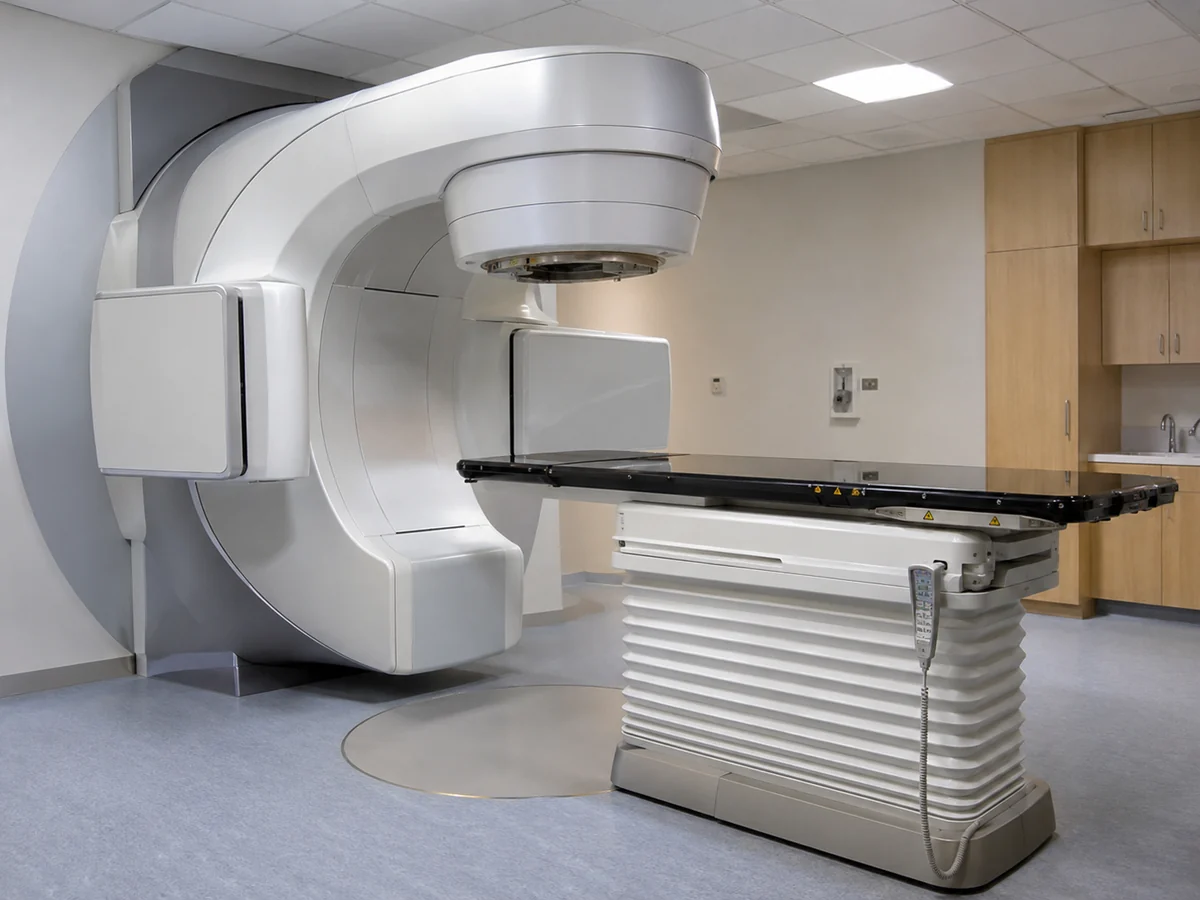
A key cancer treatment
Radiotherapy uses high-energy radiation to destroy cancer cells. It is one of the main treatments for cancer, alongside surgery and drug therapies, and is used to cure many cancers, shrink tumours before surgery and relieve symptoms. Estimates suggest that around half of all people with cancer could benefit from radiotherapy at some stage, yet many countries lack enough machines and specialists to meet demand.
Hitting the target
Modern radiotherapy shapes radiation beams to match the tumour precisely, delivering a high dose to the cancer while limiting damage to nearby healthy organs. To do this, doctors must first outline, or contour, the tumour and the organs at risk on dozens or hundreds of scan slices. For complex cancers, such as head and neck tumours, where many delicate structures sit close together, contouring can take several hours.
A bottleneck
Contouring is slow, repetitive and requires highly trained specialists. Different doctors may outline the same structure slightly differently, which can affect treatment. Because contouring takes so long, it can delay the start of treatment, which matters because waiting allows some cancers to grow. In many health systems, shortages of clinical oncologists make the delays worse. In low- and middle-income countries, where there may be only a handful of specialists for millions of people, the shortage is far more severe, and many patients who need radiotherapy never receive it.
AI draws the outlines
AI auto-contouring tools, usually based on deep learning models trained on thousands of expert-contoured scans, automatically outline organs and sometimes tumours within minutes. Doctors then review the outlines and correct any errors, rather than drawing everything from scratch. Studies have found that this can save a large share of contouring time and make outlines more consistent between doctors.
A Cambridge example
At Addenbrooke's Hospital in Cambridge, England, doctors worked with Microsoft Research on InnerEye, an AI research project for medical imaging. The hospital developed a tool called OSAIRIS from this work and began using it in routine care, reporting that it helped prepare some radiotherapy plans around two and a half times faster. Microsoft released InnerEye code as open source so others could build on it.
Wider adoption
Many companies now offer AI contouring software, and it has been approved by regulators in several countries. In England, the National Health Service has funded the rollout of AI contouring tools to radiotherapy centres to reduce waiting times. Hospitals in the United States, Europe and Asia increasingly use such tools, and professional bodies have published guidance on safely introducing and checking them.
Adaptive radiotherapy
Tumours and organs can move and change shape during weeks of treatment, as patients lose weight or the bladder fills differently each day. Adaptive radiotherapy updates the treatment plan based on new images taken before each session. AI makes this practical by quickly recontouring the anatomy and adjusting the plan while the patient waits on the treatment couch, potentially improving precision and reducing side effects.
AI in dose planning
AI can also help design the radiation plan itself, predicting the best beam arrangement and dose distribution based on previous high-quality plans. This speeds up planning and can improve consistency. Medical physicists check all plans carefully, and the final decisions remain with doctors. AI is also used to predict which patients are more likely to experience side effects.
Cancer care in the UAE
The UAE has expanded its cancer centres, including advanced radiotherapy facilities in Abu Dhabi and Dubai, as cancer cases rise with an ageing population. Hospitals in the country have adopted modern radiotherapy technologies, and the UAE's health strategy promotes the use of AI in diagnosis and treatment. AI planning tools could help the region's specialists treat more patients efficiently.
Why it matters
Radiotherapy is essential for treating cancer, and AI can make it faster, more consistent and more precise, helping patients start treatment sooner and potentially reducing side effects. By freeing specialists from repetitive tasks, AI lets them focus on complex decisions and patient care. In countries with few cancer specialists, AI planning tools could help expand access to life-saving treatment. Organisations such as the International Atomic Energy Agency, which supports radiotherapy services in developing countries, see AI as one way to stretch scarce expertise further.
Sources & further reading
- Cambridge University Hospitals · Addenbrooke's uses AI to speed up cancer treatment ↗
- Microsoft Research · Project InnerEye ↗
- IAEA · Radiotherapy in cancer care ↗
General information, not medical advice. Photograph: original AI-generated illustration (Adobe Firefly). Reference organisations do not endorse this website.