An unusual idea
The idea of underwater data centres came from a Microsoft employee during an internal event in 2014 where staff share unconventional ideas. More than half the world's population lives near the coast, so placing data centres offshore near coastal cities could bring computing closer to users. The sea could provide free cooling, and offshore wind or wave power could supply clean electricity. Microsoft named the research Project Natick.
First test
In 2015, Microsoft tested a small prototype vessel off the coast of California for 105 days, showing that an underwater data centre could work. The success led to a much larger second phase. Microsoft partnered with Naval Group, a French company experienced in building submarines, to design a pressure vessel that could hold servers safely on the seabed for years.
Northern Isles
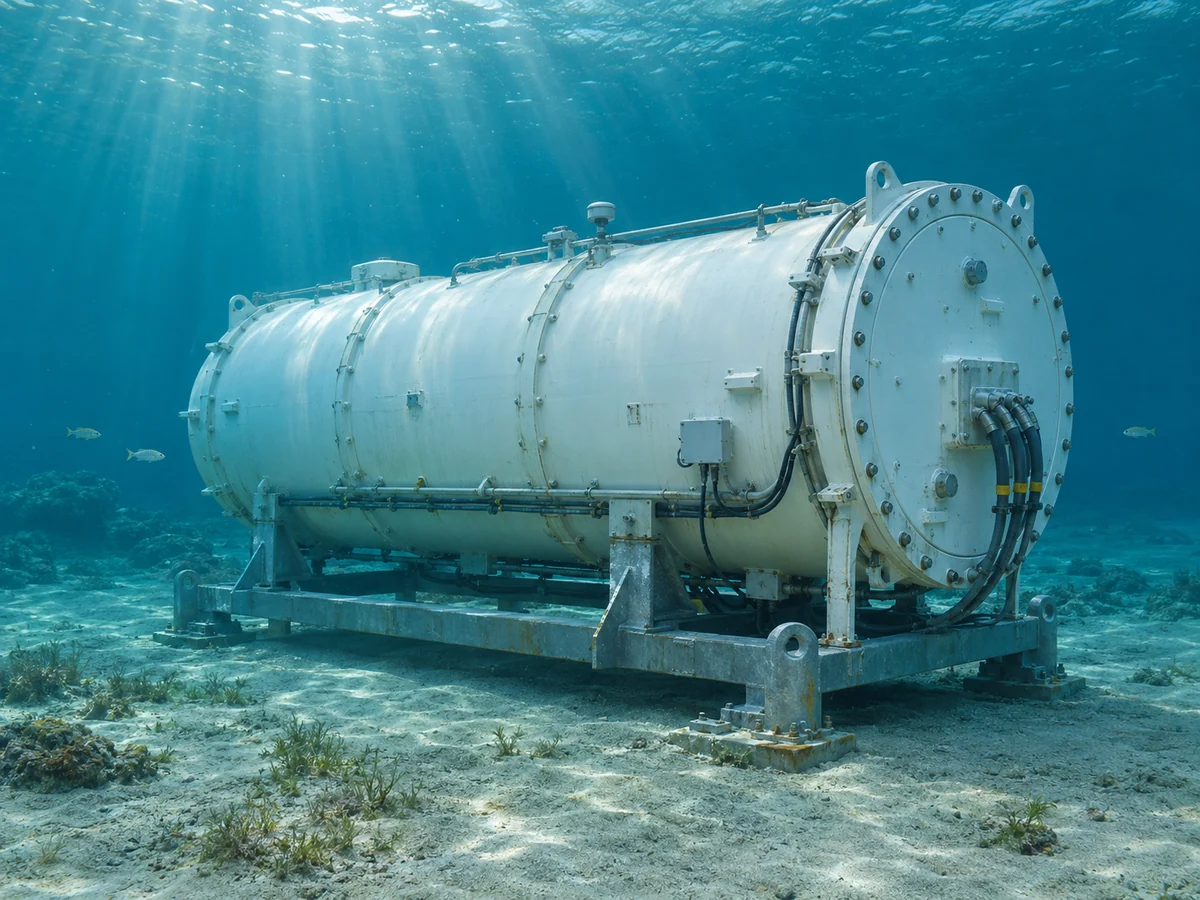
In June 2018, Microsoft lowered a white, 12-metre-long cylindrical data centre called Northern Isles to the seabed about 36 metres deep near the Orkney Islands, off the north coast of Scotland. It held 864 servers in 12 racks and was connected to the shore by a cable supplying power and data. Orkney's grid is supplied largely by wind and solar power, and the European Marine Energy Centre hosts tests of tidal and wave energy there.
Raised from the deep
In the summer of 2020, after two years, the vessel was hauled back to the surface, covered in algae, barnacles and sea anemones. Researchers examined the servers and compared them with an identical group of servers that had run the same workloads in a land-based data centre. During its time underwater, the data centre had run real computing tasks, including research on COVID-19.
Remarkably reliable
Microsoft reported that the underwater servers had a failure rate one-eighth that of the land-based servers. According to reports, only a handful of the several hundred underwater servers failed, compared with a higher proportion on land. Researchers believed the reasons were the sealed vessel's dry nitrogen atmosphere, which is less corrosive than oxygen and humidity, its stable temperatures and the absence of people bumping into equipment.
Lessons for land
Microsoft said the findings could help improve data centres on land, for example by using sealed, nitrogen-filled containers or reducing human handling of equipment. The idea of lights-out data centres, which run with minimal human presence, gained support. Microsoft also explored using the concept for deployable data centres that could be placed quickly wherever needed, such as for disaster response or military operations.
The end of Natick
In 2024, Microsoft confirmed that it no longer had any underwater data centres and was not continuing the project, though it said it would use the insights in other work. Possible reasons include the difficulty of repairing or upgrading equipment underwater, since the vessel must be raised to fix anything, and the rapid pace of change in computing hardware, especially for AI chips that are replaced every few years.
China goes deeper
Chinese companies have taken the idea further. According to Chinese state media, a commercial underwater data centre was deployed off the island of Hainan in southern China, with modules on the seabed used for computing services, and a project linked to offshore wind power has been developed off Shanghai. Supporters say the sea's cooling reduces energy use substantially compared with land-based data centres in hot climates.
Environmental questions
Underwater data centres raise environmental questions. They release heat into the surrounding water, which could affect local marine life, although studies of small deployments found limited effects. Their construction and installation disturb the seabed. Regulators would need to assess their impacts carefully if they were deployed at large scale. Researchers have also examined risks such as sound waves potentially affecting servers.
Why it matters
Project Natick showed that rethinking where and how we build data centres can bring surprising benefits, from greater reliability to lower cooling energy. As AI drives rapid growth in data centres, ideas such as using the sea for cooling, building in cooler climates or even putting computers in space are being explored. Not all will succeed, but each experiment adds to knowledge about making computing more sustainable and reliable.
Sources & further reading
- Microsoft · Microsoft finds underwater datacenters are reliable, practical and use energy sustainably (2020) ↗
- Microsoft Research · Project Natick ↗
- The Register · Microsoft hauls Natick data centre up from the seabed (2020) ↗
Figures are as reported by Microsoft and news outlets. Photograph: original AI-generated illustration (Adobe Firefly). Reference organisations do not endorse this website.