A famous hard problem
Finding the shortest route that visits a set of places and returns home is known in mathematics as the travelling salesman problem. With just a few stops, it is easy, but the number of possible routes grows astronomically as stops are added: for 25 stops, there are more possible routes than there are seconds since the universe began. Real delivery routes add complications such as time windows, traffic and vehicle capacity, making the problem even harder.
Good enough, fast
Because finding the perfect solution for large problems is practically impossible, companies use clever algorithms that find very good routes quickly. Techniques from operations research, such as heuristics and optimisation methods, have been used for decades. Machine learning adds the ability to predict factors such as travel times at different hours, how long each delivery will take and where demand will arise, making plans more realistic.
UPS and ORION
UPS, one of the world's largest delivery companies, developed a system called ORION, short for On-Road Integrated Optimisation and Navigation, which it rolled out across its US routes between 2012 and 2016. ORION analyses each driver's stops and suggests an optimised route. UPS has said the system saves about 100 million miles and 10 million gallons of fuel a year, reducing emissions by about 100,000 metric tonnes of carbon dioxide.
Avoiding left turns
UPS became famous for designing routes that minimise left turns in countries that drive on the right, because turning across oncoming traffic wastes time and fuel waiting at junctions and increases the risk of accidents. Route optimisation systems take such factors into account. The idea illustrates how small changes, repeated across millions of deliveries, can add up to big savings.
Real-time adaptation
Modern routing systems increasingly update plans during the day as conditions change, responding to traffic jams, road closures, new orders or failed deliveries. Navigation apps already use AI to predict traffic based on data from millions of phones. Delivery companies combine these predictions with their own data to give drivers updated routes and give customers accurate delivery windows.
Groceries and food
Rapid grocery delivery and food delivery apps rely heavily on AI to assign orders to riders, predict preparation times at restaurants, batch orders going in the same direction and estimate arrival times. Ride-hailing companies use similar techniques to match drivers with passengers and to predict where demand will rise next. In the UAE, delivery platforms such as Talabat, Noon and Careem operate large fleets of riders coordinated by algorithms.
Vans, drones and robots
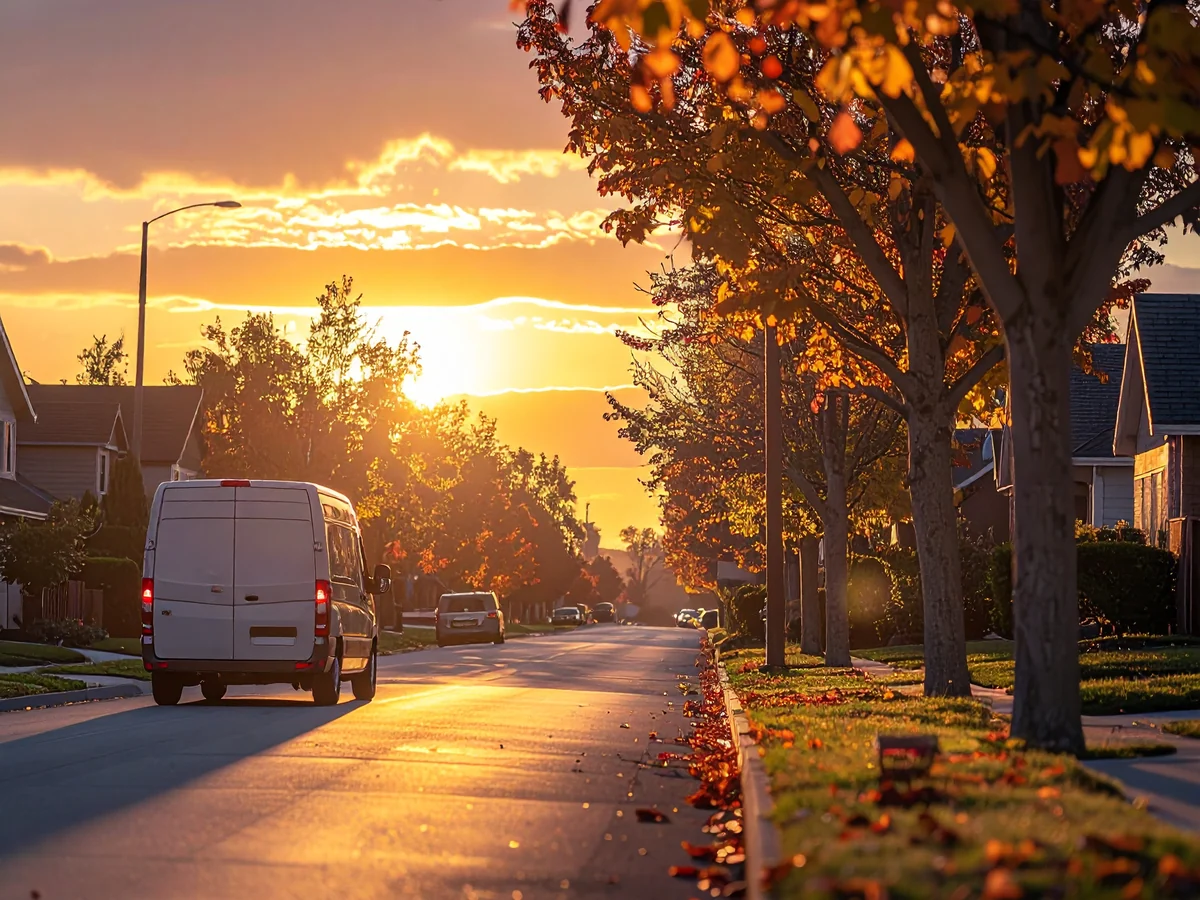
Delivery is evolving with new vehicles. Electric vans need routes that consider charging. Some companies are testing delivery drones and small sidewalk robots, which require their own route planning and safety systems. In Dubai, authorities have tested delivery robots and drones as part of plans for smart logistics, and the Roads and Transport Authority has worked with companies on autonomous delivery vehicles.
Workers and algorithms
Routing algorithms affect the working lives of millions of delivery drivers and riders. Efficient routes can reduce stress and help drivers finish their shifts on time, but algorithms that set tight targets can increase pressure, especially in hot climates such as the Gulf's summer. In the UAE, rules require a midday break from outdoor work in direct sun during the hottest months, and air-conditioned rest areas have been provided for delivery riders in Dubai.
Environmental benefits
Transport is a major source of greenhouse gas emissions, and freight delivery is a significant part of it. Fewer miles mean less fuel burned and lower emissions, as well as less traffic congestion and noise. Route optimisation is one of the most cost-effective ways for logistics companies to reduce their environmental impact, alongside switching to electric vehicles and consolidating deliveries.
Why it matters
The parcels, groceries and meals that arrive at our doors each day depend on algorithms solving hard mathematical problems. AI-driven route planning saves companies money, reduces emissions and helps deliveries arrive on time. It shows how AI often creates value not through dramatic breakthroughs but through countless small improvements in everyday operations that most people never notice.
Sources & further reading
- UPS · ORION: the algorithm proving that left isn't right ↗
- Wikipedia · Travelling salesman problem ↗
- Wikipedia · Vehicle routing problem ↗
Figures are as reported by the companies concerned. Photograph: original AI-generated illustration (Adobe Firefly). Reference organisations do not endorse this website.