Preventing bowel cancer
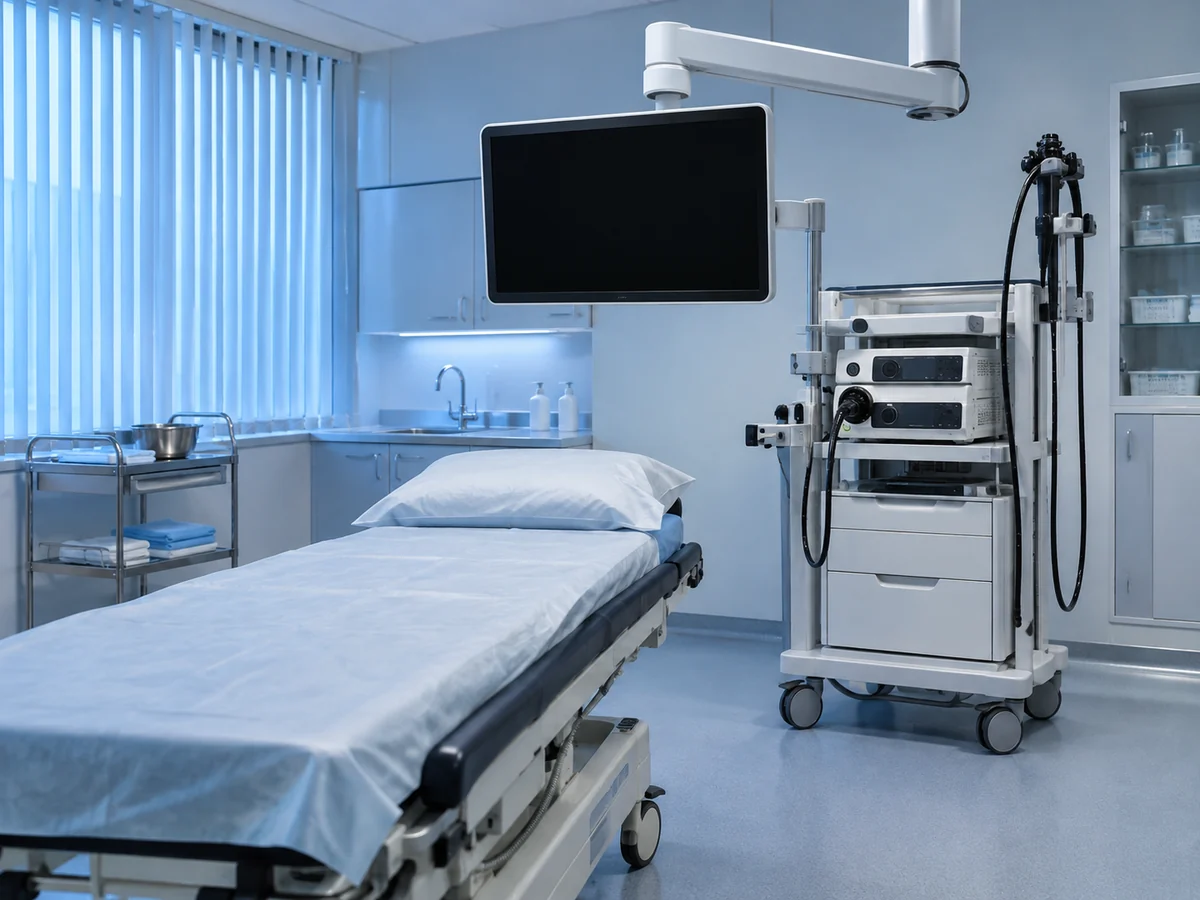
Colorectal, or bowel, cancer is one of the most common cancers worldwide. Most cases develop slowly from growths called polyps, particularly a type called adenomas. During a colonoscopy, a doctor guides a flexible tube with a camera through the large bowel, looking for polyps and removing them before they can become cancerous. Colonoscopy is one of the most effective ways to prevent bowel cancer.
Missed polyps
Colonoscopy is not perfect. Small or flat polyps can be hard to see, and doctors vary in how many they find. A key quality measure is the adenoma detection rate, the percentage of colonoscopies in which at least one adenoma is found. Research has shown that doctors with higher detection rates have patients with lower rates of cancer developing later, so improving detection could save lives. Factors such as the doctor's experience, the time spent examining the bowel and how well it was cleaned beforehand all affect detection.
AI on the screen
Computer-aided detection systems, sometimes called CADe, analyse the colonoscopy video in real time and draw a box or signal around areas that may be polyps, alerting the doctor to look more carefully. Several systems have been approved by regulators in the United States, Europe and elsewhere since 2021. They are trained on many thousands of colonoscopy images and videos labelled by experts.
More polyps found
Many randomised trials have found that AI assistance increases the adenoma detection rate, especially for small polyps, and reduces the number of polyps missed. Analyses combining trials have reported meaningful relative increases in detection. However, some real-world studies have found smaller or no benefits, and it is not yet clear how much AI reduces cancer cases and deaths in the long term, which is what ultimately matters.
The deskilling study
In August 2025, a study published in The Lancet Gastroenterology & Hepatology examined four endoscopy centres in Poland that introduced AI in late 2021. Among 19 experienced doctors, the adenoma detection rate in colonoscopies done without AI fell from 28.4% in the three months before AI was introduced to 22.4% in the three months after. The authors suggested that doctors might have become reliant on the AI's prompts.
A debated finding
The study drew wide attention as possible evidence of AI-related deskilling, but other experts pointed out limitations. It was observational rather than a randomised trial, involved a small number of doctors, the patient groups before and after differed, and some other measures did not decline significantly. Some authors had links to the company that made the AI system. Researchers called for larger, randomised studies.
Why deskilling matters
If doctors lose skills when AI is unavailable, patients could be harmed during system failures, in places without AI or when the AI misses something. Similar concerns have been raised in aviation, where pilots relying on autopilot may lose manual flying skills. Medical educators are considering how to train doctors to work with AI while maintaining their own abilities, for example by regularly practising without assistance.
Beyond detection
AI in colonoscopy is moving beyond simply finding polyps. Computer-aided diagnosis systems aim to predict whether a polyp is likely to be harmless or precancerous, which could allow some small harmless polyps to be left in place, saving time and costs. AI can also measure the quality of the procedure, such as how thoroughly the bowel was examined and how long the doctor spent withdrawing the camera.
Screening in the UAE
The UAE has promoted bowel cancer screening, including home stool tests and colonoscopy, particularly for adults from around age 40 or 45, depending on guidelines. Several hospitals in the country have adopted AI-assisted colonoscopy. Raising awareness and increasing screening rates remain important, since many people delay or avoid screening until symptoms appear.
Why it matters
AI-assisted colonoscopy shows both the promise and the pitfalls of medical AI. It can help doctors find more precancerous growths and potentially prevent cancers, but it also raises important questions about how human skills change when people work alongside AI. Getting the balance right, using AI to enhance rather than replace human expertise, will be vital as AI spreads through medicine. The lessons learned in colonoscopy are likely to apply to radiology, pathology and other fields where doctors increasingly rely on AI prompts.
Sources & further reading
- The Lancet Gastroenterology & Hepatology · Endoscopist deskilling risk after exposure to AI in colonoscopy (2025) ↗
- World Health Organization · Colorectal cancer ↗
- University of Warwick repository · Endoscopist deskilling after exposure to AI in colonoscopy ↗
General information, not medical advice. Ask your doctor about bowel cancer screening. Photograph: original AI-generated illustration (Adobe Firefly). Reference organisations do not endorse this website.