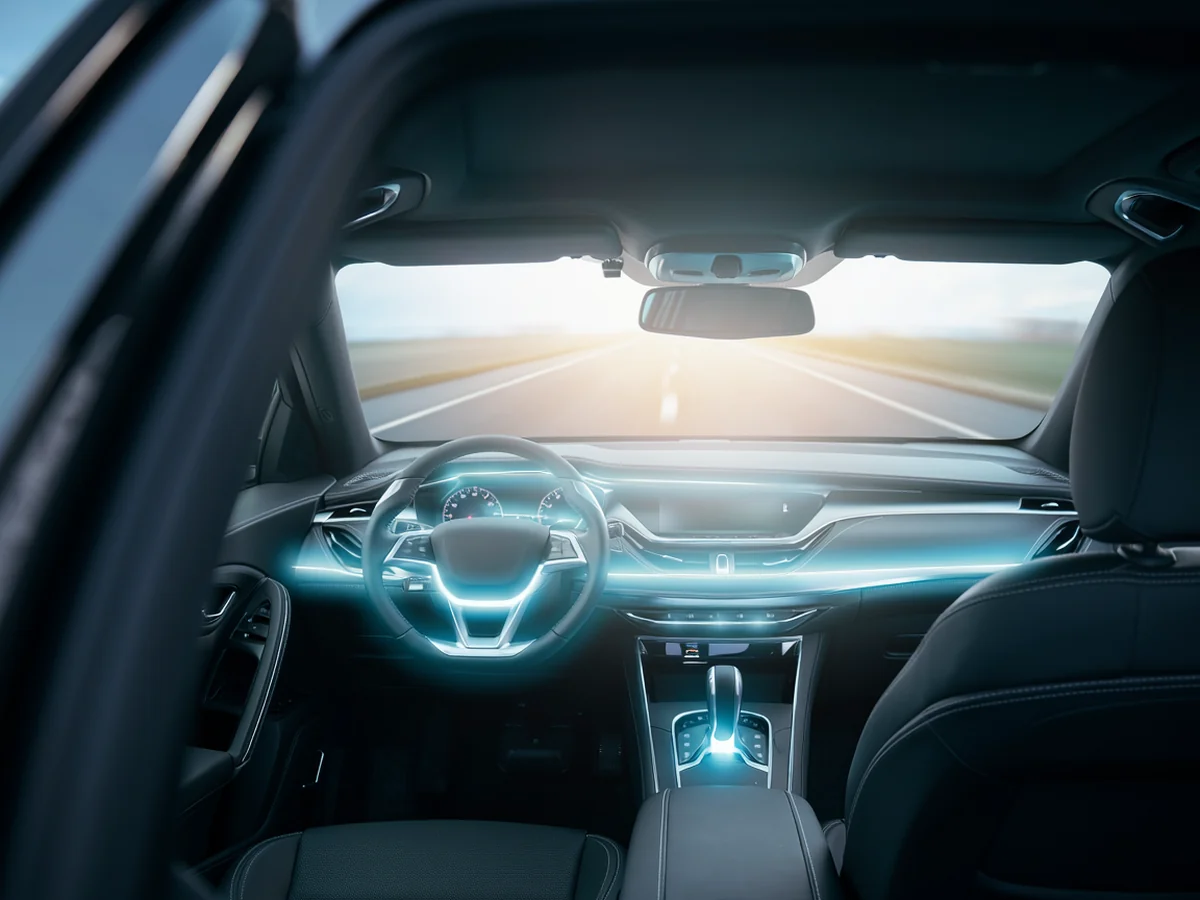
From cruise control to AI
Cars have assisted drivers for decades, from anti-lock brakes to cruise control. Modern advanced driver-assistance systems, known as ADAS, go much further. Using cameras, radar and sometimes lidar and ultrasonic sensors, together with AI software that interprets what the sensors detect, they can recognise other vehicles, pedestrians, cyclists, lane markings and traffic signs, and intervene to help avoid crashes. Such features are now standard on many new cars.
Automatic emergency braking
Automatic emergency braking detects an imminent collision and warns the driver, then applies the brakes if the driver does not react. The Insurance Institute for Highway Safety in the United States has found that systems combining forward collision warning with automatic braking reduce front-to-rear crashes by about half. Newer systems also detect pedestrians and cyclists. US regulators have finalised a rule requiring automatic emergency braking, including pedestrian detection, on new passenger cars from 2029.
Staying in lane
Lane departure warnings alert drivers who drift out of their lane without signalling, while lane-keeping assistance gently steers the car back. Lane-centring systems keep the car in the middle of the lane on motorways. Combined with adaptive cruise control, which automatically maintains a safe distance from the car ahead, these features can make long motorway drives less tiring. In some systems, drivers can briefly take their hands off the wheel on approved roads while still watching the road.
Reading the road
AI-powered cameras can read speed limit signs and display them on the dashboard, warn drivers about vehicles in blind spots, detect cross traffic when reversing out of a parking space and help with parking by steering automatically. Some cars monitor the driver with an inward-facing camera, detecting signs of drowsiness or distraction, such as eyes closing or looking at a phone, and issue warnings. The European Union now requires several of these features on new cars.
Levels of automation
SAE International defines six levels of driving automation, from 0 to 5. Most driver-assistance features are level 1 or 2: the car can help with steering and speed, but the driver must supervise constantly. At level 3, the car can drive itself in specific conditions, such as slow motorway traffic, and the driver can look away but must take over when asked. Mercedes-Benz received approval for a level 3 system in Germany and some US states. Level 4 vehicles, such as robotaxis, drive without humans in defined areas.
The danger of over-trust
A major concern is that drivers may overestimate what level 2 systems can do, relaxing their attention or misusing them. Marketing names that suggest full self-driving have been criticised by safety organisations. Crashes have occurred when drivers relied on assistance systems that could not handle situations such as stationary vehicles or unusual road layouts. Regulators have investigated several systems and required changes such as stronger driver monitoring.
How the AI learns
ADAS software is trained on huge collections of driving images and sensor data labelled to show cars, people, lanes and signs. Car makers and suppliers, such as Mobileye, collect data from millions of vehicles to improve their systems and test them in simulation on rare and dangerous scenarios. Some companies rely mainly on cameras with neural networks, while others combine cameras with radar and lidar for redundancy, a debate that continues in the industry.
Limits in bad conditions
Driver-assistance systems can struggle in heavy rain, fog, sandstorms, glare, darkness or when sensors are dirty, and they may not recognise faded lane markings or unusual objects. In the Gulf, fine dust and intense sunlight can affect sensors. Drivers should read their car's manual, understand which features it has and their limitations, keep sensors and cameras clean and never assume the car will always react correctly.
Towards self-driving
Driver assistance is a stepping stone towards autonomous vehicles. Robotaxi services operate without safety drivers in several cities in the United States and China, and Dubai's Roads and Transport Authority aims for a quarter of all trips in the emirate to be autonomous by 2030, with robotaxi trials under way. Abu Dhabi has also launched autonomous taxi services in selected areas. Technologies developed for robotaxis often find their way into ordinary cars as driver assistance.
Why it matters
Road crashes kill about 1.2 million people worldwide each year, according to the World Health Organization, and most are caused by human error. AI-powered safety features that react faster than people, never get tired and constantly watch the road can prevent many of them. Used wisely, with drivers staying alert and responsible, driver assistance is one of the clearest examples of AI saving lives today.
Sources & further reading
- IIHS · Real-world benefits of crash avoidance technologies ↗
- SAE International · SAE levels of driving automation ↗
- World Health Organization · Road traffic injuries ↗
Features vary by vehicle; always follow your car's manual and local traffic laws. Photograph: original AI-generated illustration (Adobe Firefly). Reference organisations do not endorse this website.