Feeding a growing world
The world's population is expected to approach ten billion by the middle of this century, while farmers face climate change, water shortages, labour shortages and rising costs. Agriculture also has a large environmental footprint, from fertiliser runoff to pesticide use. Precision agriculture aims to grow more with less by using data to treat each part of a field, or even each plant, according to its needs. Artificial intelligence is making that possible at scale.
Seeing every weed
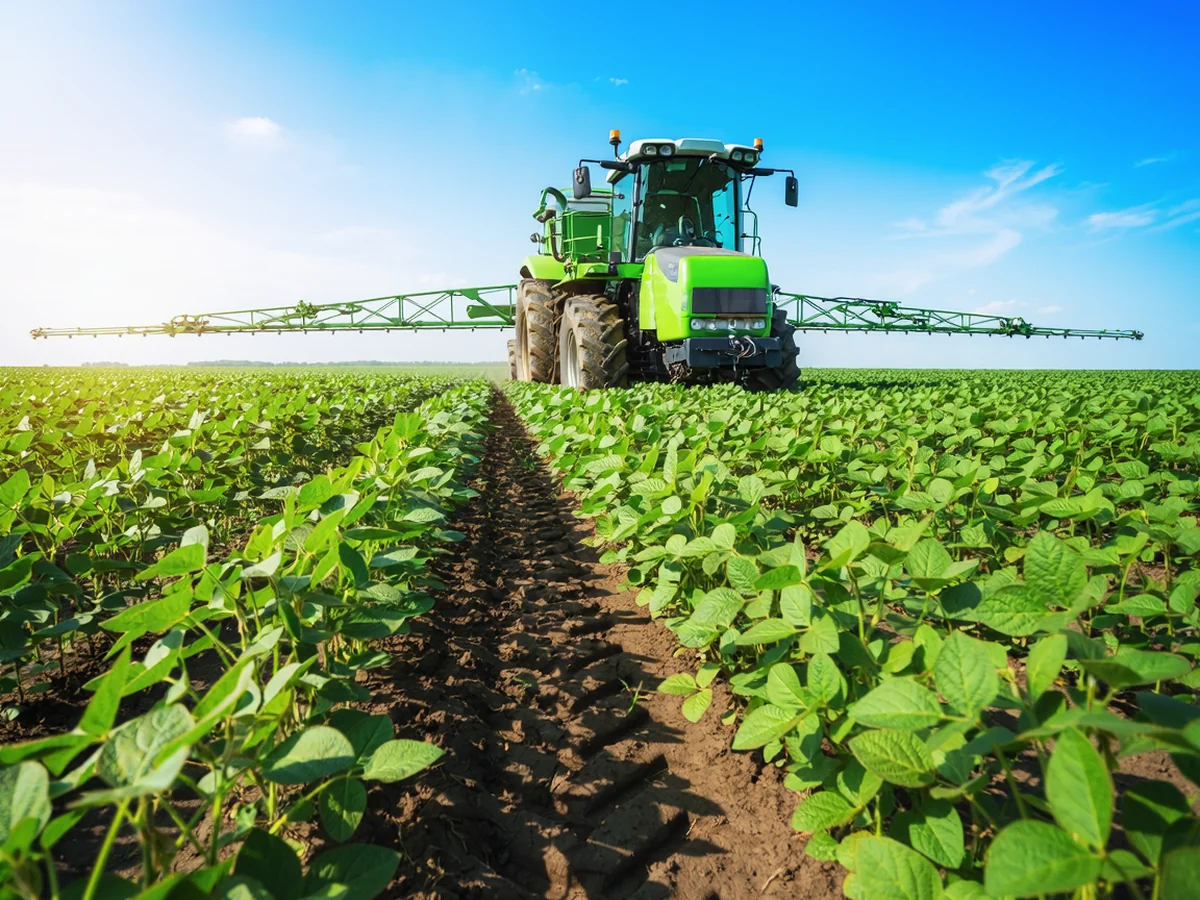
Traditional sprayers cover an entire field with herbicide, even though weeds may occupy only a small fraction of it. AI-powered sprayers mount cameras along their booms and use computer vision to distinguish weeds from crop plants as the machine moves. When a weed is detected, the nozzle directly above it opens for a fraction of a second. The decision happens in milliseconds, allowing the sprayer to travel at normal working speeds across large fields.
John Deere's results
John Deere acquired the start-up Blue River Technology in 2017 for about 305 million dollars and introduced its See & Spray technology in 2021. The company said that in the 2024 season farmers used it on more than one million acres, with average herbicide savings of 59% and an estimated eight million gallons of herbicide mix saved. In 2025 it reported use on more than five million acres, a land area larger than the US state of New Jersey.
Eyes in the sky
Satellites and drones give farmers a bird's-eye view of their land. AI analyses images to spot areas of crops under stress from drought, disease, pests or nutrient shortages, often before problems are visible on the ground. Farmers can then apply water, fertiliser or treatments only where needed. Satellite data combined with AI also helps governments and insurers monitor harvests, predict yields and assess damage after floods or droughts.
Smarter water use
Agriculture uses about 70% of the world's freshwater withdrawals, according to the United Nations Food and Agriculture Organization. AI-driven irrigation systems combine soil moisture sensors, weather forecasts and crop models to decide exactly when and how much to water. In arid regions such as the Gulf, where water is scarce and often comes from energy-intensive desalination, these savings are especially valuable for farms and greenhouses.
Indoor and vertical farms
The UAE imports most of its food and has invested heavily in high-tech agriculture to improve food security. Vertical farms and greenhouses grow crops indoors under controlled conditions, using AI to manage lighting, temperature, humidity, nutrients and water. Dubai hosts some of the world's largest vertical farms. These systems can produce leafy greens and other crops year-round using far less water than open-field farming, though they require significant energy.
Animals and disease
AI also helps livestock farmers. Cameras and sensors monitor animals' movement, feeding and health, detecting lameness or illness early. Computer systems can recognise individual cows by their markings, track milk production and predict when animals need attention. For crops, phone apps can identify plant diseases from photographs, giving small farmers in developing countries access to advice that once required an expert visit.
Robots in the field
Labour shortages are driving the development of agricultural robots. Machines that pick strawberries, apples and tomatoes use computer vision to find ripe fruit and handle it gently. Autonomous tractors can plough and plant with minimal supervision, and small robots can remove weeds mechanically without chemicals. Many of these technologies are still expensive and limited to certain crops, but they are improving quickly.
Barriers for small farmers
Most of the world's farms are small, and advanced AI equipment is expensive. Rural areas often lack reliable internet connections, and farmers may be wary of technology companies collecting data about their land. Some worry that large agricultural firms will control valuable farm data. Efforts to spread AI benefits include low-cost phone apps, government programmes and cooperative models that let farmers share equipment and data.
Why it matters
Precision agriculture powered by AI can increase yields, reduce costs and shrink farming's environmental impact by using fewer chemicals, less water and less fuel. For countries like the UAE, it supports food security in a harsh climate. As the technology becomes cheaper and more widely available, AI could help farmers everywhere produce more food sustainably, one of the most important challenges of the coming decades.
Sources & further reading
- John Deere · See & Spray customers see 59% average herbicide savings in 2024 ↗
- John Deere · See & Spray technology used across five million acres in 2025 ↗
- FAO · Water in agriculture ↗
Savings figures are company-reported averages; results vary by field. Photograph: original AI-generated illustration (Adobe Firefly). Reference organisations do not endorse this website.