
Separate the count from the share
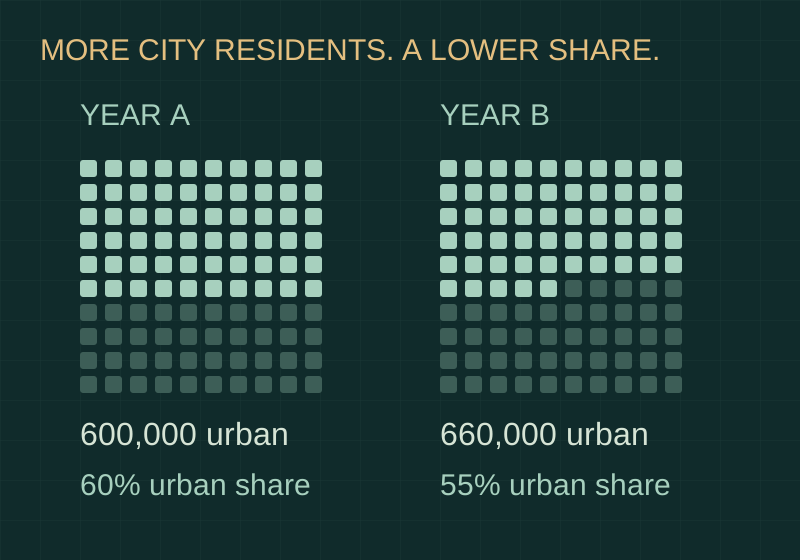
Suppose a country’s urban population rises from 600,000 to 660,000 while its total population rises from one million to 1.2 million. The urban count grows by 10 per cent, yet the urban share falls from 60 to 55 per cent. That is urban population growth without an increase in urbanisation. The example is hypothetical, but the distinction is essential when reading headlines about rapidly growing cities or expanding national urban populations.
The boundary changes the answer
National definitions of urban settlements differ. Administrative status, population size, density and economic characteristics can all matter. The UN’s World Urbanization Prospects 2025 also uses the harmonised Degree of Urbanization approach, classifying cities, towns and semi-dense areas, and rural areas using population grids and common criteria. A city-only percentage from that approach should not be casually compared with a national statistic that groups cities and towns together as urban.
Growth has more than one mechanism
An urban population may increase through births exceeding deaths, movement from other places, or the reclassification and expansion of its statistical boundary. Annexing a neighbouring settlement can raise a city’s recorded population even if nobody moves house. Conversely, residents may live outside a municipality while belonging to the same urban region. For a defensible comparison, hold the definition and geographic extent consistent, or explain the change before interpreting the trend.