A coating with two jobs
Galvanising coats steel with zinc to prevent rust. The coating works in two ways. First, it acts as a barrier, keeping water and oxygen away from the steel. Second, and more unusually, it provides cathodic or sacrificial protection. Zinc is more chemically reactive than iron, so when both are exposed together to moisture, the zinc gives up electrons and corrodes preferentially, while the steel is protected. This means that even if the coating is scratched, the exposed steel nearby does not rust quickly, because the surrounding zinc continues to sacrifice itself. A paint layer, by contrast, offers only a barrier: once scratched, rust can creep beneath it.
How galvanising works
The most common method is hot-dip galvanising. Steel parts are cleaned in alkaline baths, pickled in acid to remove rust and mill scale, treated with a flux, and then dipped into molten zinc at around 450 °C. The zinc reacts with the iron surface to form a series of tightly bonded zinc-iron alloy layers topped with nearly pure zinc. The coating covers corners, edges and the insides of hollow sections. Steel sheet for car bodies and appliances is usually coated continuously on high-speed lines, sometimes by electroplating. The process was developed in France in the 1830s and takes its name from Luigi Galvani, an Italian pioneer of electrical science.
Galvanising in the Gulf
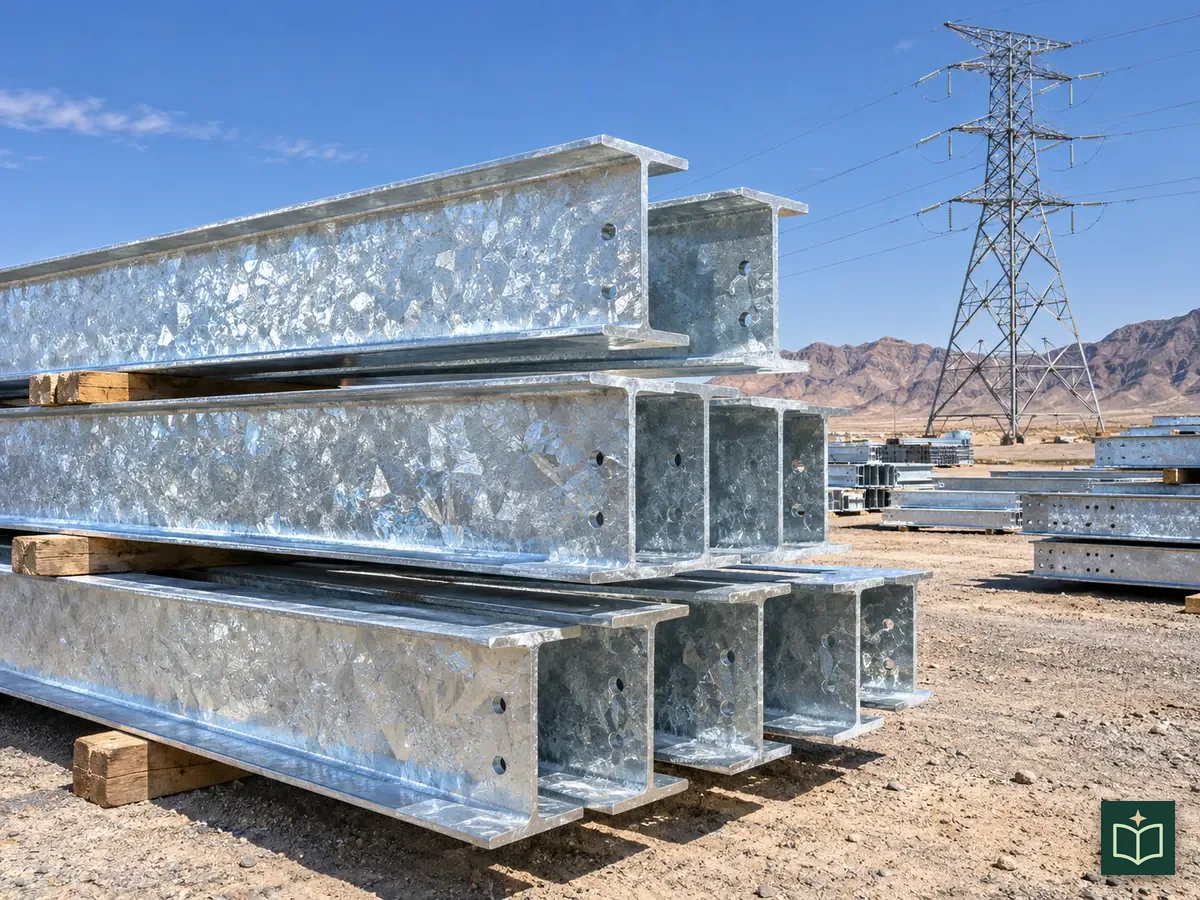
Coastal environments are tough on steel. Salt-laden air, humidity and high temperatures, all familiar along the Gulf coast, accelerate corrosion. Galvanised steel is therefore widely used across the region in transmission towers, lighting poles, structural steel, fencing, scaffolding and industrial facilities. Designers specify coating thickness according to the expected corrosion rate, and in some cases combine galvanising with paint, known as a duplex system, for added life. A related principle protects ships, offshore platforms and pipelines: blocks of zinc or aluminium, called sacrificial anodes, are attached to the steel so that they corrode instead. They must be inspected and replaced as they are gradually consumed over time.
Other roles for zinc
Beyond galvanising, zinc has many uses. Combined with copper, it forms brass, used in fittings, valves and musical instruments. Zinc alloys are cast into precise components, such as door handles, taps and small mechanical parts. Zinc oxide is used in rubber manufacturing, where it helps vulcanisation, as well as in ceramics, paints and sunscreens, where it reflects and scatters ultraviolet light. Zinc is also an essential nutrient for people, plants and animals; it is involved in hundreds of enzymes, and zinc deficiency in soils limits crop yields in some regions, which is why zinc is added to some fertilisers. Zinc-based batteries are another area of ongoing research and development.
Mining and recycling
Most zinc is mined from sphalerite, a zinc sulphide mineral that frequently occurs with lead, silver and copper. China is the largest producer, followed by countries such as Peru, Australia, India and the United States, where the Red Dog mine in Alaska is among the world’s largest zinc mines. Ore is crushed and concentrated, and most refined zinc is produced by roasting the concentrate and then dissolving and electrolysing it. Zinc is also recovered from galvanised steel scrap, particularly from the dust produced when such scrap is melted in electric arc furnaces. Because galvanised products last for decades, the recycled share of supply grows only gradually as old structures are replaced.
Limits and what to watch
Galvanising is not permanent. The zinc layer is gradually consumed, more quickly in polluted, salty or wet conditions, and eventually the steel will need recoating or replacement. Under typical rural conditions, a hot-dip coating can last many decades, while harsh marine sites shorten that life. Welding galvanised steel can release zinc oxide fumes, so ventilation and protective equipment are needed. In markets, zinc demand tracks construction, infrastructure and car manufacturing, while supply depends on mine output and smelter capacity, including energy costs. This explainer is educational and offers no investment advice. Zinc’s main lesson is simple: sometimes the best protection is a material willing to be sacrificed.
Sources & further reading
Figures are rounded and widely published; check the linked organisations for the latest editions. These organisations do not endorse this website.