Predicted before discovery
Gallium and germanium hold a special place in the history of chemistry. When Dmitri Mendeleev published his periodic table in 1869, he left gaps for elements not yet known and predicted their properties. One, which he called eka-aluminium, was discovered in 1875 by the French chemist Paul-Émile Lecoq de Boisbaudran and named gallium. Another, eka-silicon, was found in 1886 by the German chemist Clemens Winkler and named germanium. Both closely matched Mendeleev’s predictions, which helped persuade scientists that the periodic table reflected something real about matter. For decades afterwards, both elements remained laboratory curiosities with few practical uses, until the rise of electronics changed that.
Why they are by-products
Neither metal forms rich deposits of its own. Gallium occurs in trace amounts in bauxite, and most is recovered from the caustic liquor circulating in alumina refineries, the first step in making aluminium. Some also comes from zinc processing. Germanium is mostly recovered from zinc ores and from the ash of certain coals. As a result, supply depends on the alumina, zinc and coal industries, and on whether those plants have invested in recovery circuits. Many alumina refineries worldwide do not recover gallium at all, because at typical prices it has not been worth the cost. Global production is small, measured in hundreds of tonnes per year rather than millions.
Gallium in light and power
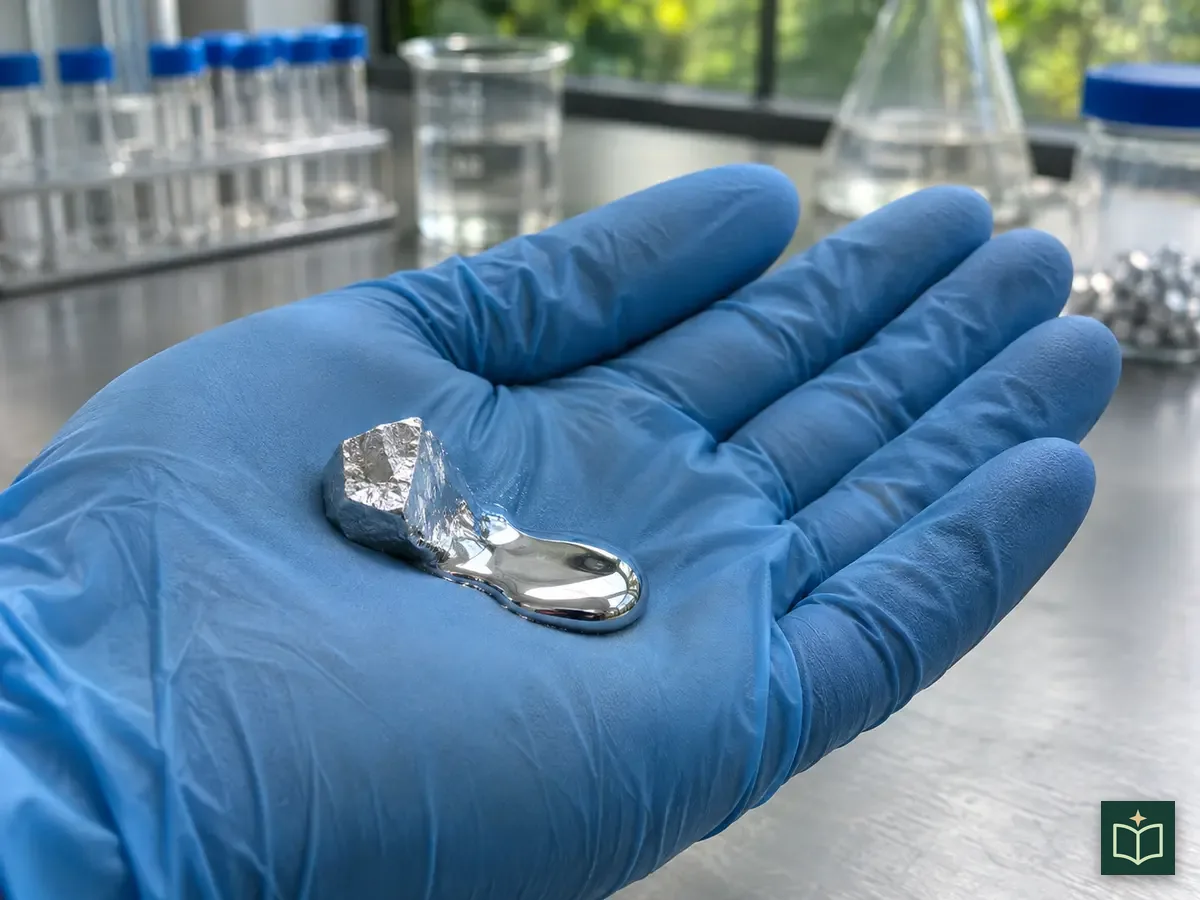
Gallium’s main value lies in compound semiconductors. Gallium arsenide is used in radio-frequency chips for phones and satellite communications and in high-efficiency solar cells. Gallium nitride is central to blue and white LEDs, which earned their inventors the 2014 Nobel Prize in Physics, and it increasingly appears in compact, efficient power electronics, such as fast phone and laptop chargers, as well as in radar and telecommunications equipment. Gallium is also used in some thin-film solar cells and in specialised alloys. The metal itself is unusual: it melts just above room temperature, at about 29.8 °C, but does not boil until well above 2,000 °C.
Germanium in light and space
Germanium has a celebrated electronic past: the first working transistor, built at Bell Labs in 1947, used germanium before silicon became dominant. Today its uses are mainly optical. Germanium is transparent to infrared light, so it is made into lenses and windows for thermal imaging cameras and night-vision systems. Germanium compounds are added to the glass core of optical fibres to adjust how they guide light, supporting the internet’s long-distance links. Many satellites use high-efficiency solar cells built on germanium substrates. Germanium is also used as a catalyst in making some polyester plastics. Recycling of germanium from manufacturing scrap is relatively well developed because of its value.
A concentrated supply
China produces the overwhelming majority of the world’s primary gallium and a large share of germanium, partly because of its large alumina and zinc industries. In 2023, China introduced export licensing requirements for both metals, and further restrictions followed for some destinations, which drew wide attention to supply concentration. In principle, other countries could produce more: the raw material is present in many refineries and smelters elsewhere, and some once produced these metals before closing their recovery units when prices were low. Restarting or building recovery capacity takes investment and time, and it requires confidence that buyers will pay prices high enough to sustain production over the long term.
What to watch
Gallium and germanium illustrate a broader pattern among technology metals: small markets, by-product supply and strategic importance. Governments in the United States, Europe, Japan and elsewhere list both as critical, and several projects to recover them from alumina refineries and zinc smelters have been announced. Demand trends depend on semiconductors, defence electronics, fibre networks, solar technology and satellite constellations. Recycling, stockpiling and substitution, where possible, are also part of policy discussions. This explainer is educational and offers no investment advice. Its main point is that some of the most advanced technologies depend on minor elements recovered from the leftovers of much larger metal industries.
Sources & further reading
Figures are rounded and widely published; check the linked organisations for the latest editions. These organisations do not endorse this website.