A protective reflex
The lining of the nose is packed with nerve endings. When dust, pollen, smoke or a virus irritates them, signals travel to a sneeze centre in the brainstem. It coordinates muscles in the chest, abdomen, throat and face into one rapid, automatic sequence.
The sequence
First comes a deep breath. The throat briefly closes while pressure builds in the lungs. Then the throat opens and air is driven out explosively, while the tongue and soft palate direct much of it through the nose. The eyes close by reflex, and it is almost impossible to stop a sneeze once it has started.
Light and other triggers
Around one in four people sneeze when they step into bright sunlight, a trait called the photic sneeze reflex, which runs in families. Plucking eyebrows, cold air and even a full stomach trigger sneezes in some people. Allergies cause repeated sneezing as the immune system reacts to harmless particles.
Germs in flight
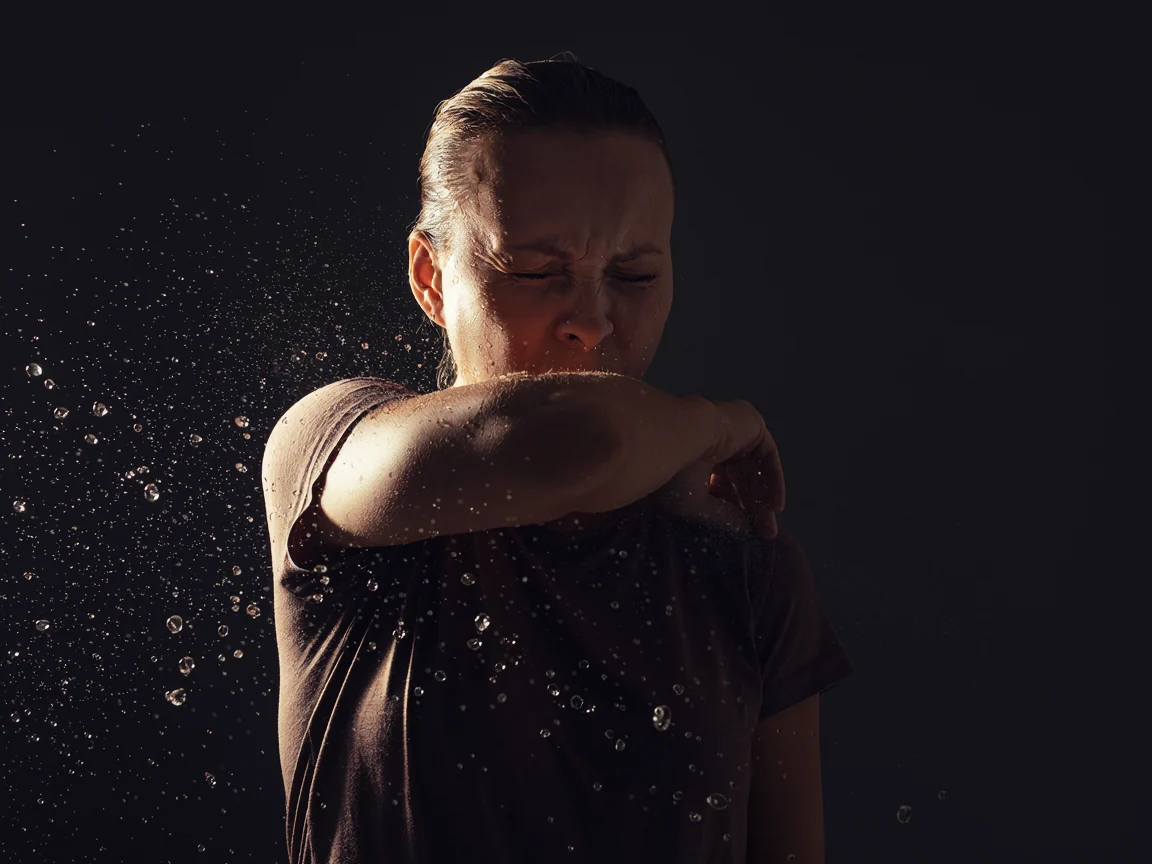
High-speed imaging shows that a sneeze releases a turbulent cloud of droplets of many sizes, some travelling several metres. That is why sneezing into a tissue or the crook of the elbow, and washing hands afterwards, are simple, effective ways to reduce the spread of colds and flu.
Sources & further reading
General information. Droplet distances come from laboratory studies and vary with conditions. Photograph: original AI-generated illustration (Adobe Firefly). Reference organisations do not endorse this website.